
Last updated November 2, 2026
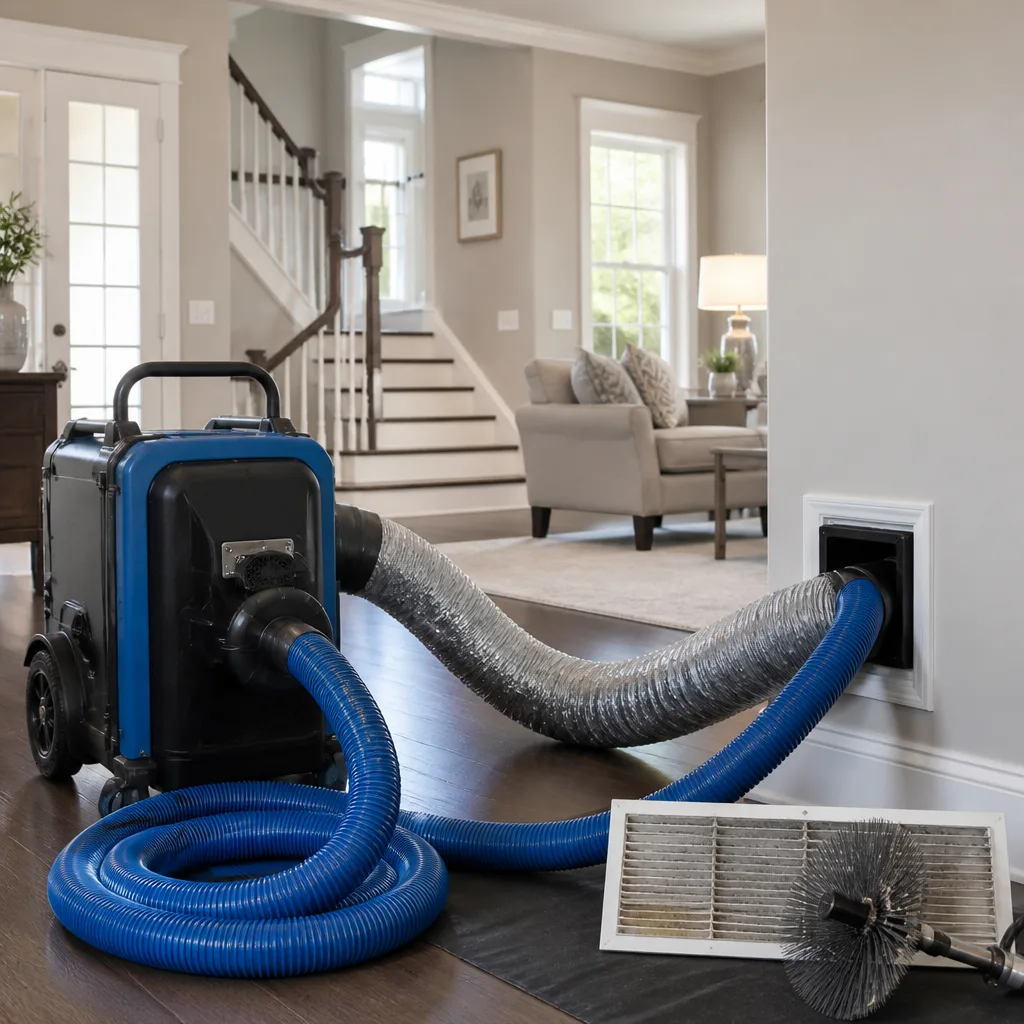 Whole-home duct cleaning
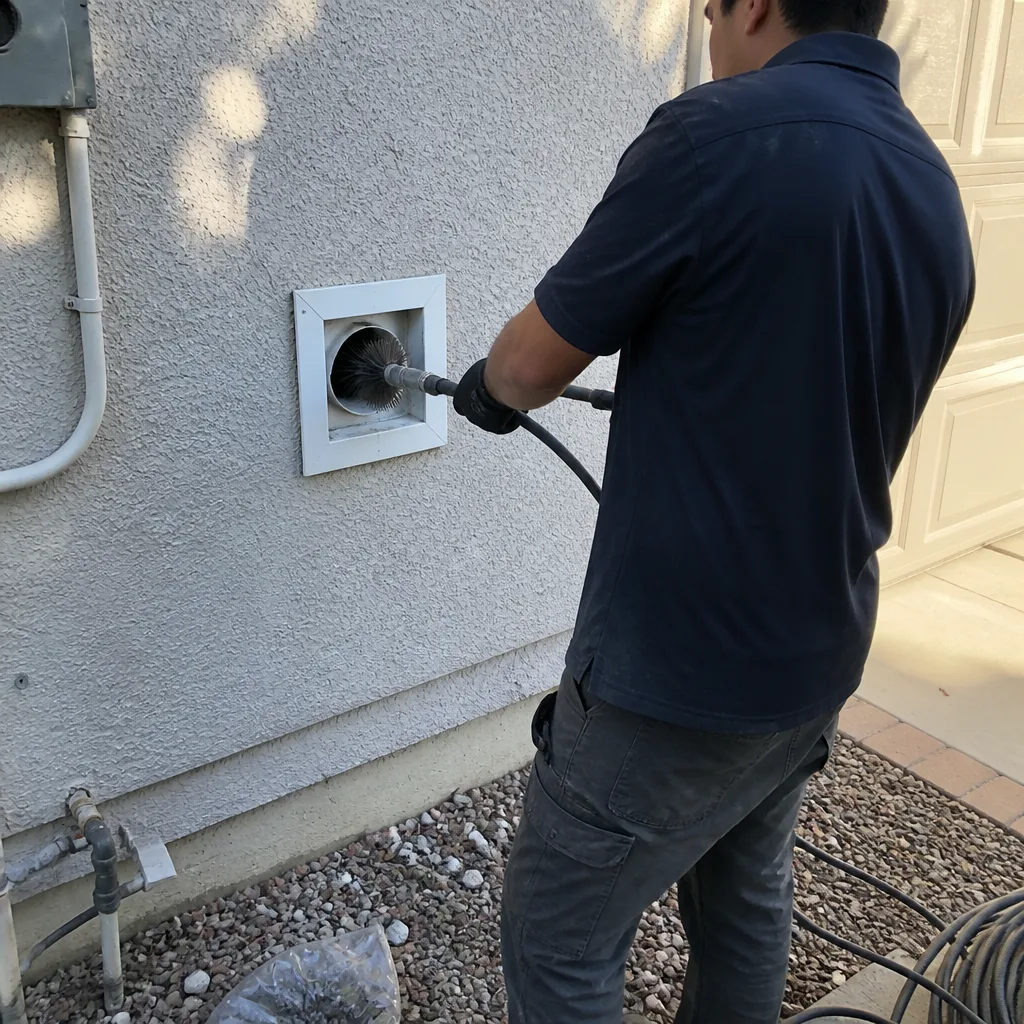
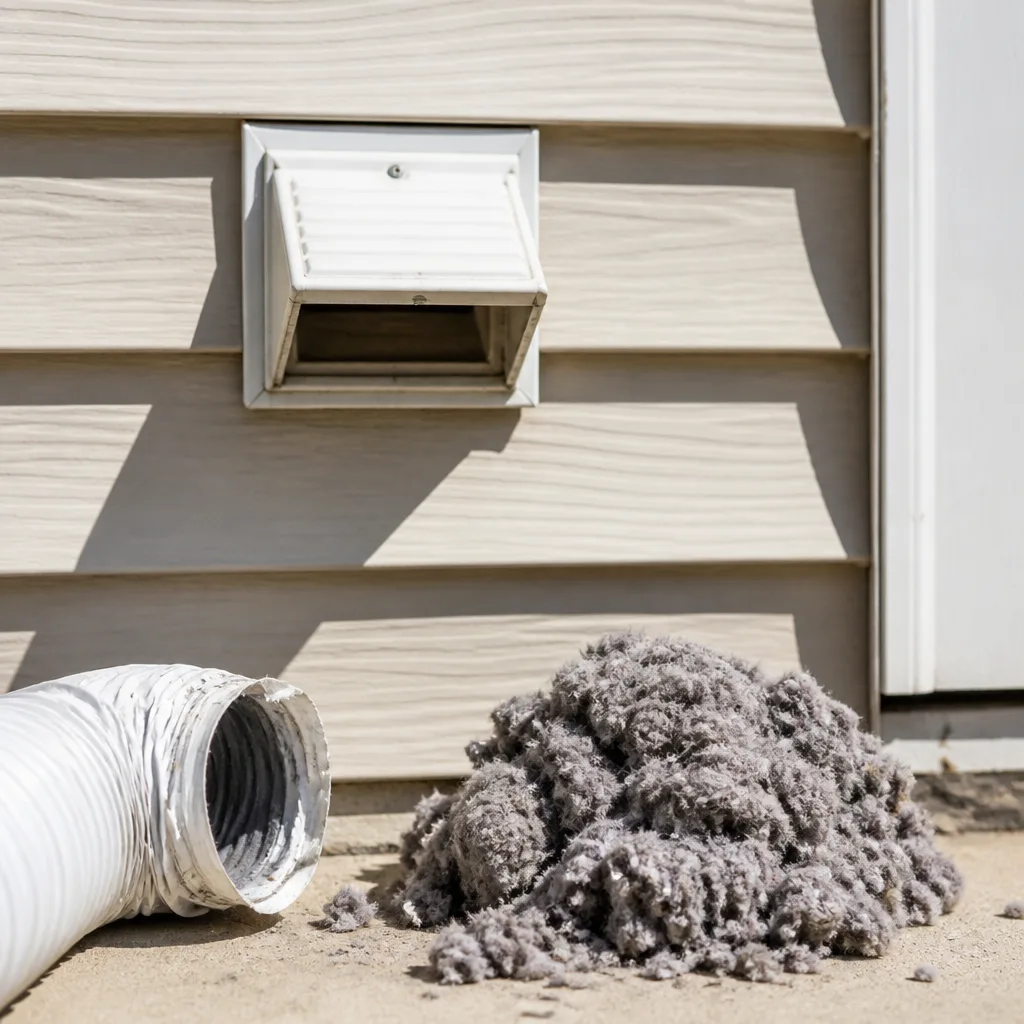 Dryer vent cleaning
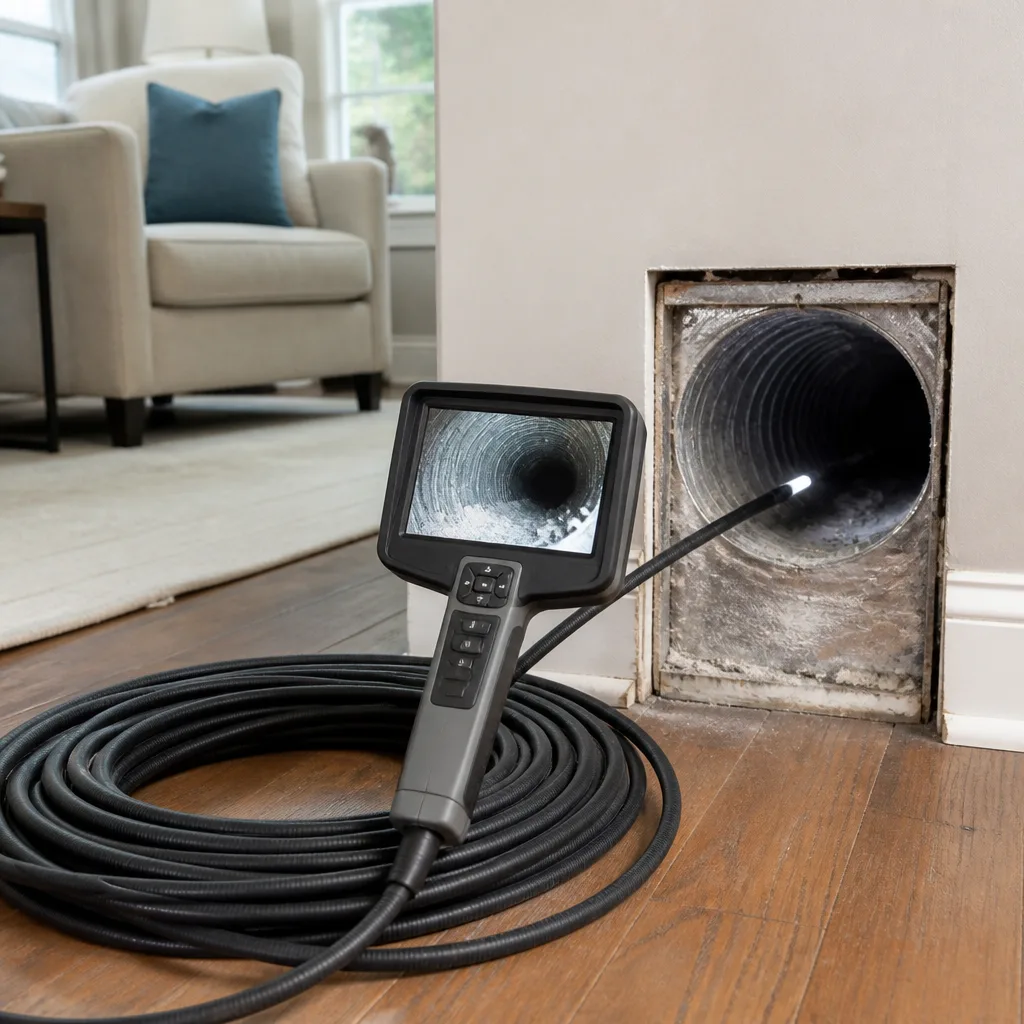 Camera inspection
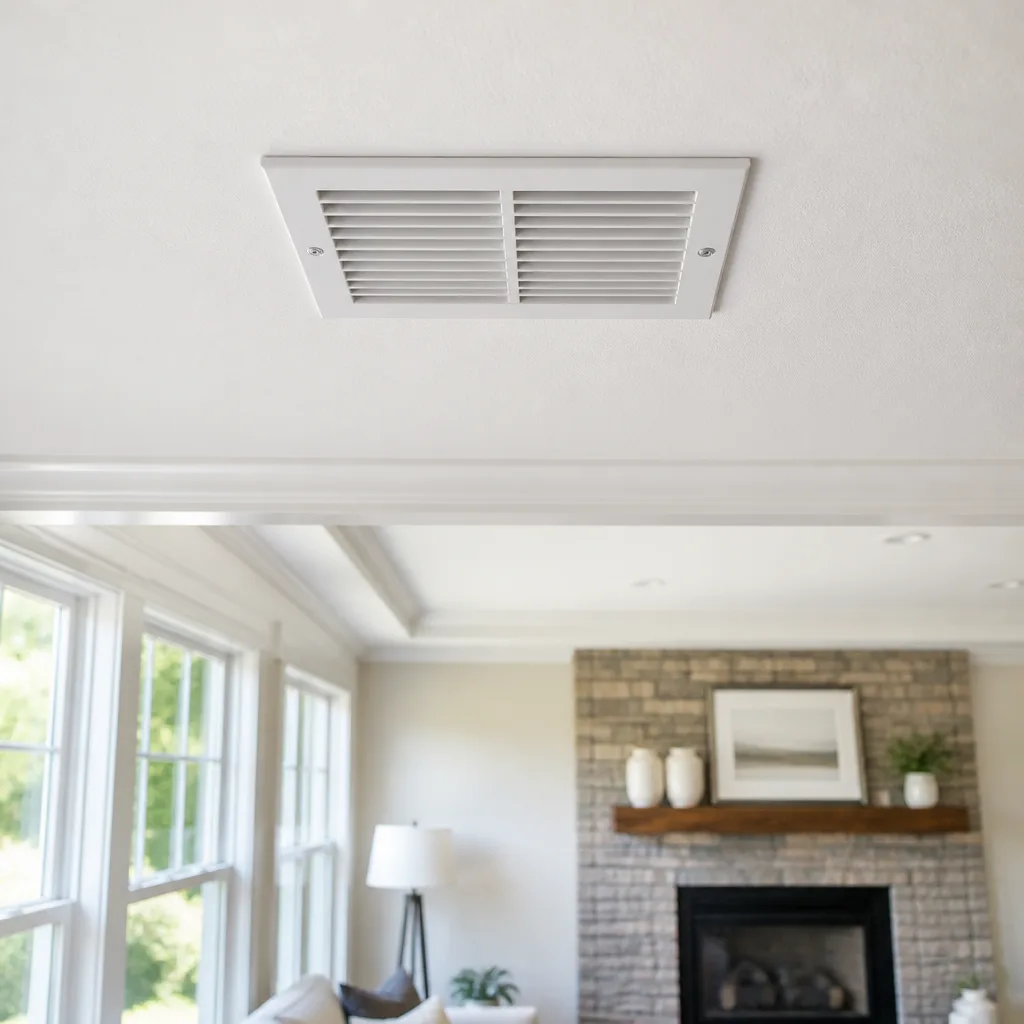 Sanitizing & deodorizing
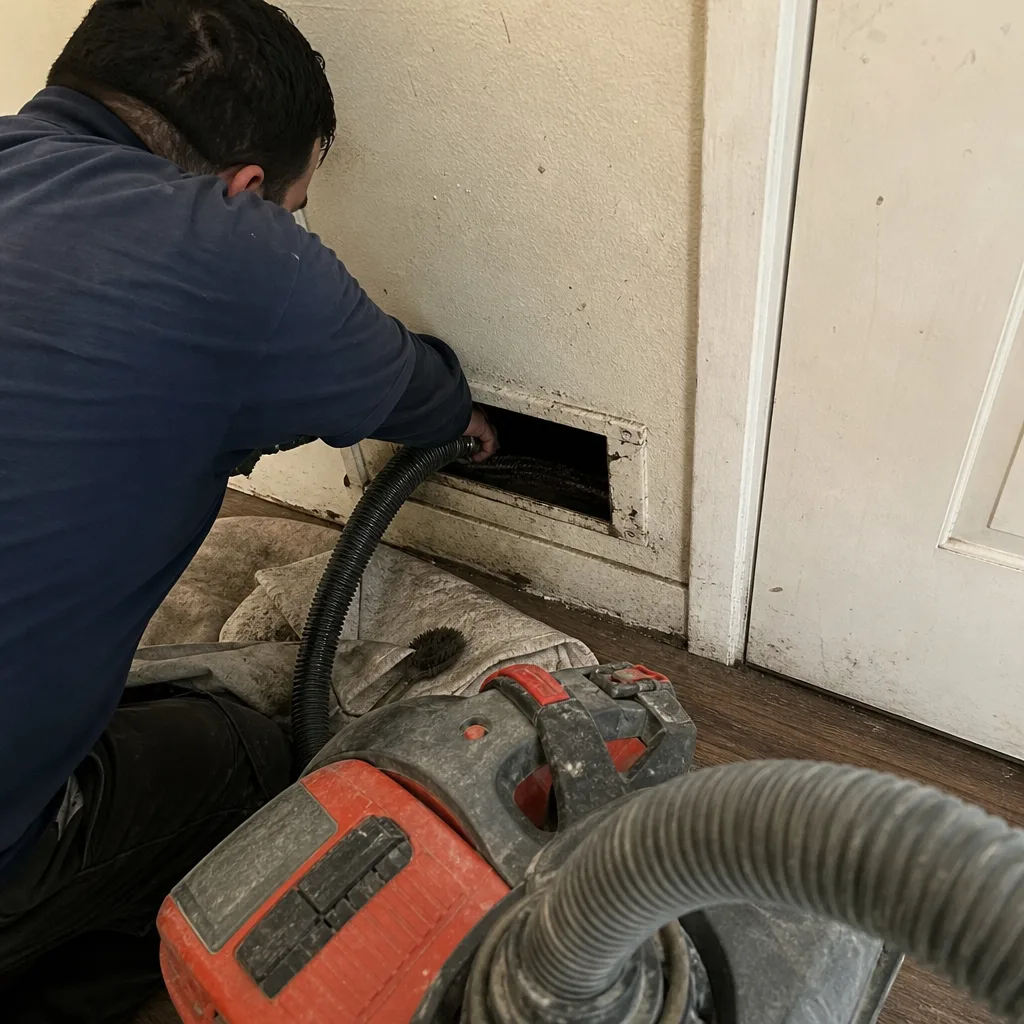
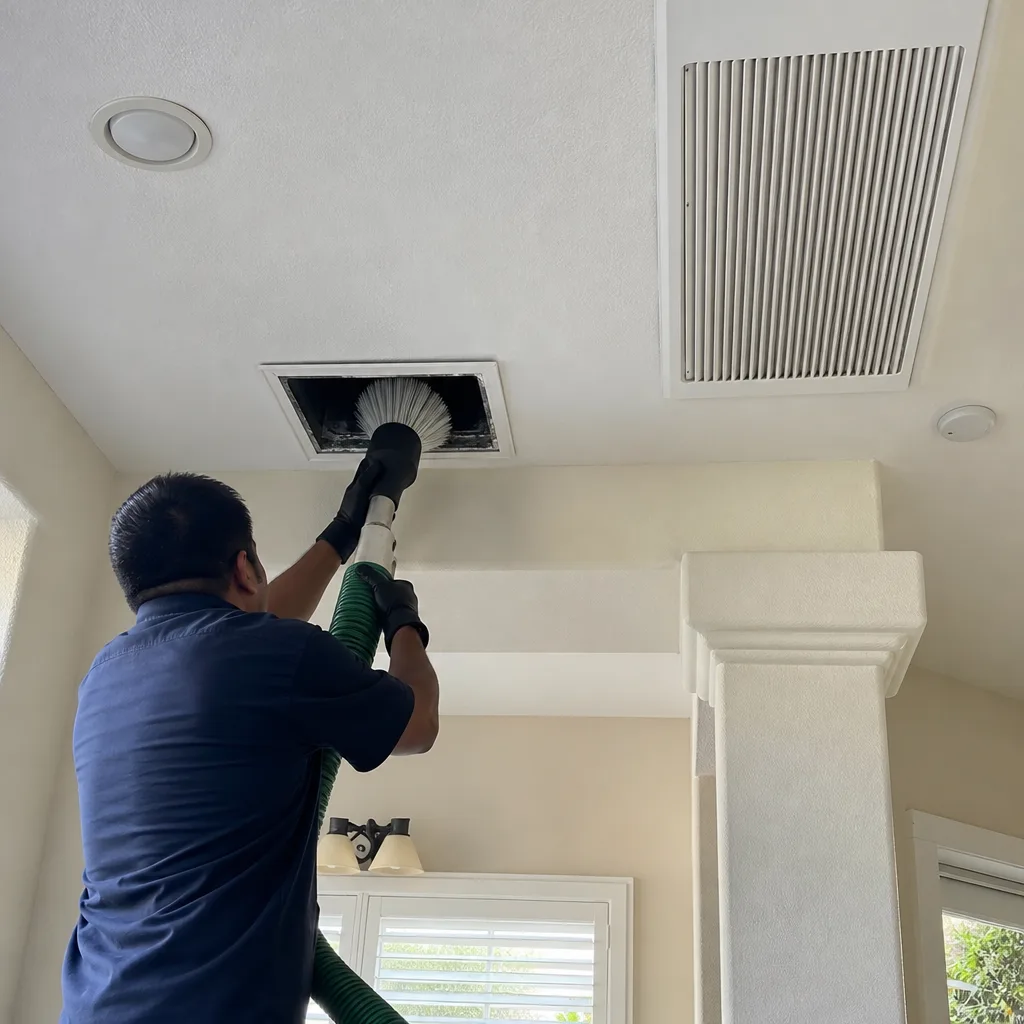
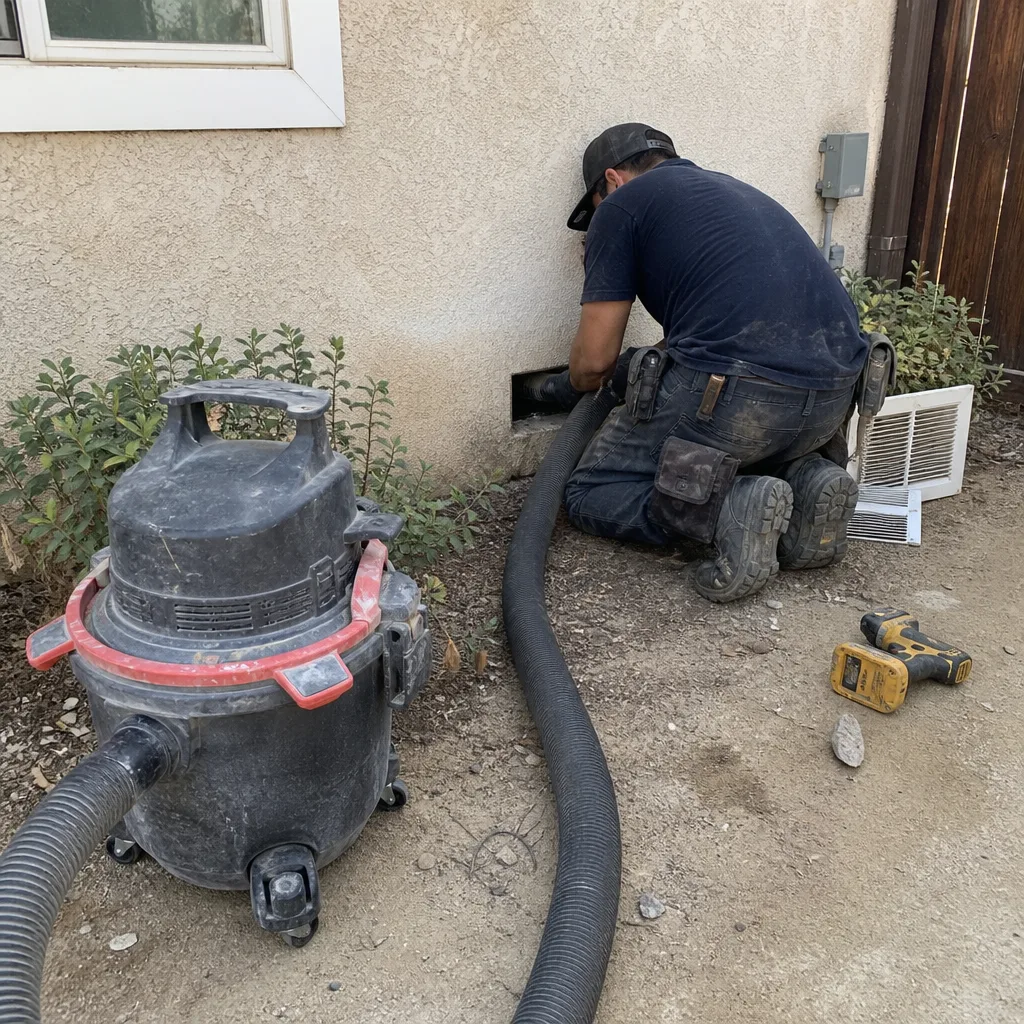
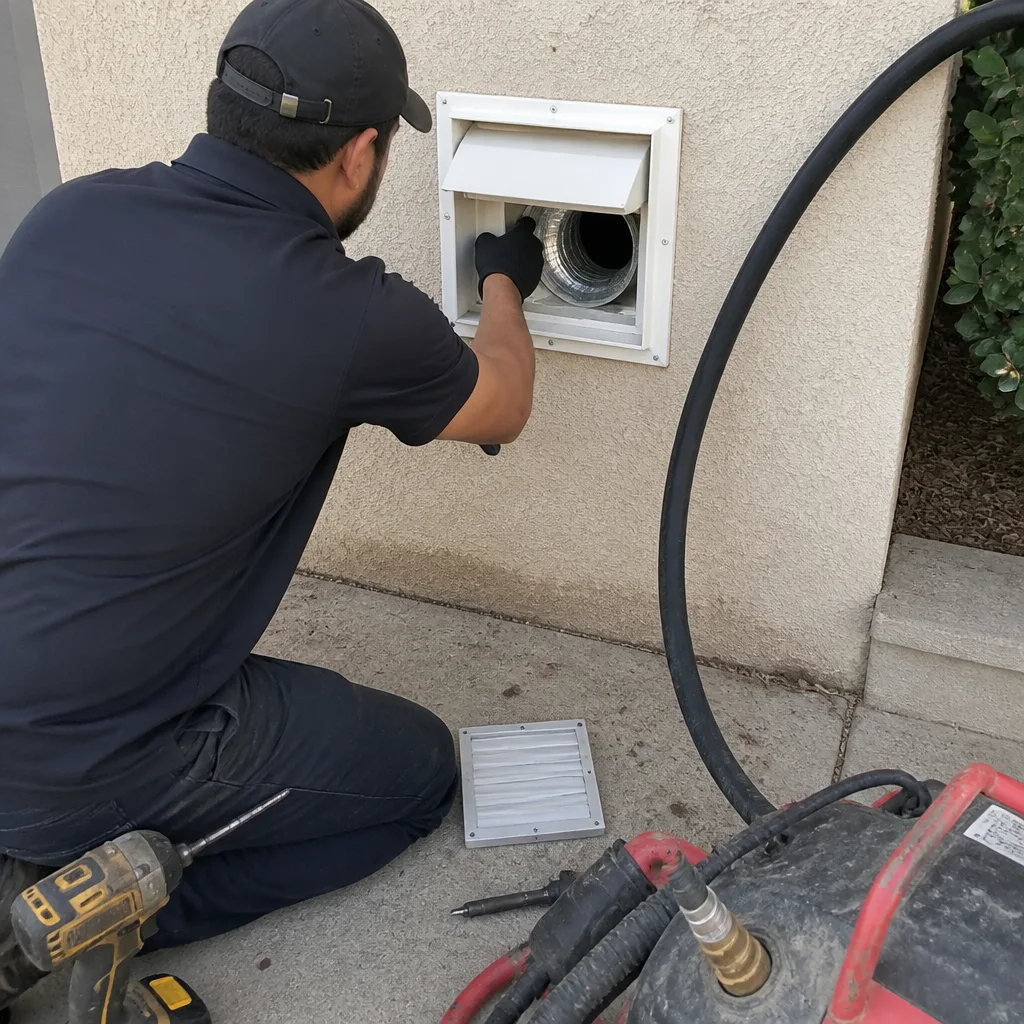
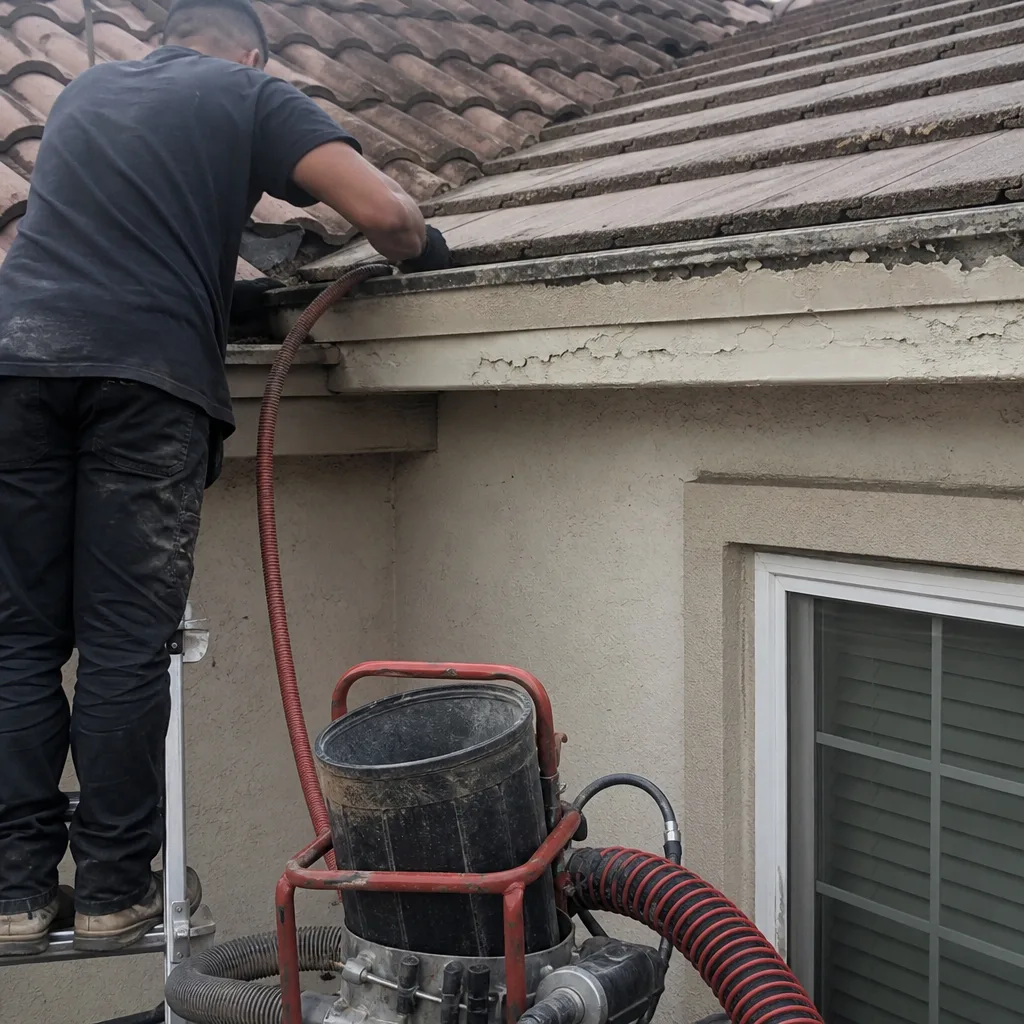
Whole-system duct and dryer vent check with before-and-after photos - you see exactly what came out of your vents
That "$99 whole-house special" is a bait ad - the real number appears once they are in your hallway, or the "clean" is a shop-vac at the register. We photograph the inside of your ducts before and after instead.
Air Duct Cleaning Warning Signs: A Murrieta Homeowner’s Reference Guide
A dusty register face is not a warning sign. It’s decoration. The actual early indicators that a Murrieta duct system needs attention are mostly invisible to homeowners and they show up in energy bills, allergy patterns, and blower noise weeks or months before any visible debris appears. This guide walks through the subtle signals our technicians look for on every service call in Murrieta, the ones that separate a routine cleaning from a system that’s been quietly failing for years. By the time you see dust caked on a vent grille, the problem inside the ductwork is already well established. What you’ll learn here is how to catch it earlier, while the fix is still simple and inexpensive.
Styles & brands we work with
- Whole-home duct cleaning
- Dryer vent cleaning
- Camera inspection
- Sanitizing & deodorizing
Quick Answer
The earliest warning signs that your Murrieta home needs air duct cleaning are usually not visible: cooling-season energy bills that climb year over year without a rate increase, allergy symptoms that improve when you leave the house and return within 30 minutes of coming home, a higher-pitched whine from the blower, a musty smell on first startup after a season change, and room-to-room temperature differences of more than 4°F. None of these requires you to look inside a duct. Each one, on its own, is easy to dismiss. Together, they form a pattern that points directly at restricted airflow from debris-loaded ductwork.
Table of Contents
- Reading Your Utility Bill as a Duct Performance Indicator
- The Allergy Pattern That Points to Ducts, Not Pollen
- Blower Noise Changes That Precede Airflow Loss
- Musty Odor on First Startup: What It Means and What It Doesn’t
- Uneven Room Temperatures as a Duct Diagnostic
- Visible Signs That Appear Only After the Problem Is Established
- Murrieta-Specific Factors That Accelerate Duct Contamination
- Common Mistakes to Avoid
- When to Call a Professional
- Frequently Asked Questions
- The Bottom Line
Reading Your Utility Bill as a Duct Performance Indicator
Your HVAC system’s energy consumption is the most honest report card it produces. Before you ever see dust, before you smell anything, the blower motor and compressor are already working harder than they should be, and Southern California Edison is billing you for every extra watt. The trick is knowing which pattern on the bill points to ducts rather than equipment or weather.
In Murrieta, cooling season runs long. From May through October, a typical two-story home in the 92562 or 92563 zip codes will see kWh usage climb as outdoor temperatures rise. That’s normal. What’s not normal is what we call cooling-season creep: the same house, with the same thermostat settings, using 8 to 15 percent more electricity in August than it did the prior August, with no meaningful change in outdoor temperature patterns. When the bill goes up year over year during cooling months but stays flat during winter months, the culprit is rarely the compressor. A failing compressor would show up as reduced cooling capacity, not just higher consumption. The pattern that points to ductwork is this: cooling costs climb while the house still reaches the set temperature, just more slowly, and the system runs longer cycles to get there.
Here’s why that happens. Debris accumulates on the interior walls of supply ducts and, more critically, on the evaporator coil and blower wheel. Each layer of dust, pet dander, and construction debris acts as insulation inside the system. The coil can’t transfer heat as efficiently, so it runs longer. The blower wheel, loaded with debris, loses aerodynamic efficiency and spins harder to move the same volume of air. A blower wheel carrying even a thin layer of household dust can lose 10 to 15 percent of its airflow capacity. The system compensates by running longer cycles. You don’t notice because the thermostat still satisfies eventually. The bill notices.
The diagnostic step is simple and we recommend it to every Murrieta homeowner during an estimate: pull your last 24 months of bills. Look at cooling-season kWh specifically. If you see a 5 percent or greater year-over-year increase in July and August without a rate hike or a change in occupancy, schedule a duct inspection. It’s the cheapest diagnostic tool you own, and it catches problems months before visible symptoms appear. Our Air Duct Cleaning in Murrieta service regularly reverses that creep within one billing cycle after a thorough cleaning.
One more note for Murrieta specifically: our shoulder seasons are short. We go from heating to cooling quickly, often within a few weeks. That means your system sits idle for less time than in other climates, and the ductwork spends more months actively circulating air. More hours of airflow per year means more particulate matter moving through the system per year, which accelerates loading compared to a coastal home in San Diego. If you’ve lived in your home for more than three years and have never had the ducts cleaned, the bill pattern is probably already there. You just haven’t looked for it.
The Allergy Pattern That Points to Ducts, Not Pollen
Murrieta sits in the Temecula Valley, and the pollen count here is no joke. Grasses, sagebrush, and the agricultural activity to the north all contribute to seasonal allergy loads that can make anyone reach for an antihistamine. So how do you know whether your symptoms are coming from outdoors or from your own ductwork? The answer isn’t in the symptom type. It’s in the pattern.
The telltale signature of duct-contaminated air is a specific temporal pattern: symptoms improve when you leave the house and return within about 30 minutes of coming home. Not immediately, the way a chemical irritant would hit. Not hours later. We’re talking about 15 to 45 minutes after you walk through the door. That’s how long it takes for the HVAC system, in a moderate climate like Murrieta’s, to move a meaningful volume of air from the supply registers into your breathing zone, and for the particulate load in that air to trigger a histamine response. If you notice your eyes itching or your nose running about half an hour after you get home, and those symptoms fade noticeably when you’re at work or running errands, the ductwork is a prime suspect.
Compare that to outdoor pollen exposure. Pollen symptoms track with being outside. They’re worst when you’re in the yard, on a hike at the Santa Rosa Plateau, or driving with the windows down. They tend to improve when you come inside, especially if your home has decent filtration. When the pattern is reversed, when you feel better leaving the house and worse inside it, the source of the irritant is indoors, and the most common reservoir of indoor particulate matter is the duct system.
There’s a second pattern worth knowing. Pay attention to which rooms trigger symptoms. If your eyes itch in the family room but not in the kitchen, and both rooms share the same outdoor exposure, the difference is the supply register in each room. A duct branch serving one room may be carrying a higher particulate load than another, either because it’s longer, has a low point where debris settles, or because the return air path pulls from a dirtier area of the house. Mapping symptoms by room is a genuine diagnostic technique, one that we walk homeowners through on every call because it costs nothing and it stays useful long after we leave. For Murrieta families considering a broader IAQ strategy, we also advise looking at the filtration side. Ducts are only half the equation. A clean duct system feeding a clogged filter, or a clean filter on a dirty duct system, both produce compromised air. Our technicians work with Honeywell and Aprilaire filtration systems regularly, and the interaction between filter media and duct condition is something a general HVAC contractor rarely assesses. When the ducts are clean and the filter is matched to the system, the allergy pattern shifts. Most families notice it within the first week.
Blower Noise Changes That Precede Airflow Loss
Your blower motor has a baseline sound. You’ve heard it thousands of times, to the point where you don’t consciously register it anymore. That’s exactly why the early warning signs hide there. The change is gradual, and if you’re not listening for it, you’ll adapt to the new sound without noticing. But the change is measurable, and it appears weeks or months before airflow loss becomes obvious.
The specific indicator we monitor is a shift in harmonic profile toward higher frequencies. A clean blower wheel produces a dominant low-frequency hum with a broad, soft spectrum. The wheel is balanced, the blades move air cleanly, and the sound is what you’d describe as a “whoosh” with a low thrum underneath. As debris begins to load onto the wheel blades, the aerodynamic balance of the wheel degrades. Dust and pet hair don’t deposit evenly. One side of the wheel picks up more mass than the other, or the leading edge of each blade accumulates a fine layer that disrupts airflow separation. The result is a higher-frequency component that emerges from the noise floor, a whine or a whistle that sits on top of the usual hum. It’s subtle at first. If you listen for it, you’ll hear it as a very faint high tone that follows the blower speed, rising and falling as the system cycles up and down.
Here’s what makes this signal powerful: the whine appears before you can measure any meaningful airflow loss at the registers. The debris load is still light, the wheel is still moving air, but the aerodynamic efficiency has already started to drop. In our experience with Murrieta homes, this harmonic shift typically precedes the first customer-noticeable airflow complaint by four to six weeks. If you catch it at the whine stage, you’re getting ahead of the problem by a month or more. Wait until rooms stop cooling evenly, and the wheel may be carrying enough debris that a simple cleaning turns into a longer service call, or in severe cases, a wheel replacement.
The practical step: next time your system is running, stand in the hallway near the return air intake and close your eyes. Listen past the whoosh. You’re listening for a tone, not a volume. If you hear a high, almost electronic-sounding note layered over the air movement, that’s the wheel. Write down the date you first noticed it. Then call for a duct inspection. A cleaning that includes blower wheel removal and cleaning using professional-grade equipment like our Nikro and Rotobrush systems restores the wheel’s aerodynamic condition and returns the system to its baseline sound profile. If you wait, the fine debris becomes adhered, and the cleaning process moves from routine to involved.
One caveat for Murrieta residents: some amount of high-frequency noise is normal on variable-speed blowers, which are common in newer tract construction across the 92562 and 92563 neighborhoods. Variable-speed motors emit a soft electronic hum from the motor controller itself, unrelated to the wheel. The debris whine is different. It’s mechanical, not electronic, and it changes pitch with the wheel speed, not the motor frequency. If you’re not sure which you’re hearing, record a 30-second clip on your phone and play it for a technician during an estimate. We can usually identify the difference instantly.
Musty Odor on First Startup: What It Means and What It Doesn’t
In Murrieta, we get a condensed version of the seasonal transition. The heating season is short, and the first hot day often arrives while the system is still set for heat or has been idle for only a few weeks. When you switch over to cooling for the first time in spring, or fire up the heat for the first time in late fall, you may catch a brief musty smell from the vents. The question most homeowners ask is whether that smell means mold. The answer is usually no, and the distinction matters because it determines whether you need a filter swap or a full duct cleaning.
What most people smell on first startup is accumulated dust and organic debris burning off or being blown off the heat exchanger and the interior surfaces of the ductwork. During idle periods, fine particulate matter settles on interior surfaces. When airflow resumes, that particulate becomes airborne, and it carries a characteristic smell that most people describe as musty, dusty, or stale. It’s not mold. It’s the odor of settled dust being reintroduced to the living space. This smell typically fades within a few minutes of continuous operation. If it fades, the material has been blown through the system, and a filter change may be all that’s needed on a single occasion.
The pattern that warrants a deeper look is persistence. If the musty odor remains after 10 to 15 minutes of continuous operation, or if it returns every single time the system cycles on, the particulate load inside the ductwork is high enough that each cycle re-suspends more material. That’s a buildup problem, not a filter problem. It points to ducts that have accumulated years of settled dust, pet dander, and possibly moisture-related biological growth. The distinction is simple: single startup smell that clears equals normal seasonal dust. Persistent smell on every cycle equals a duct system overdue for cleaning.
There’s a third scenario specific to Murrieta’s climate. Our summer humidity is moderate, but we do get periods of elevated moisture, particularly during late summer monsoonal flows. If the cooling coil has been operating in higher humidity and the system shuts down before the coil fully dries, a brief biological growth cycle can occur on the coil surface. The smell from this is different from settled dust. It’s sharper, earthier, and it tends to be stronger on cooling startup than on heating. If you notice that the smell is noticeably worse when the AC starts but absent during heating, the likely location is the coil, not the ducts. A coil cleaning addresses it. If the smell is similar across both heating and cooling, the ductwork itself is the reservoir. For Murrieta homes, the seasonal pattern is usually clear enough to differentiate within one season of paying attention.
Our advice: document what you smell, when you smell it, and for how long it lasts. That three-part observation, shared with a technician, narrows the diagnosis dramatically. It turns a vague “my house smells musty” complaint into “on cooling startup, musty odor persists for 20 minutes, absent on heating.” That level of specificity is what separates an inspection that finds the problem from one that guesses. For the full scope of what a thorough system evaluation involves, see our Duct Cleaning Murrieta home page.
Uneven Room Temperatures as a Duct Diagnostic
Most two-story Murrieta homes have an upstairs-downstairs temperature difference. That’s physics, not a duct problem. Heat rises, the upstairs has more exterior surface area per square foot, and most systems are sized for the whole house, not for perfect floor-by-floor balance. A 2 to 3 degree difference between floors is normal and not a repair target. What matters is the pattern within a single floor, and the specific temperature variance between rooms that share a common wall.
The standard we use is a 4°F threshold. If two rooms on the same floor, with similar square footage and similar window exposure, differ by more than 4°F with the system running, you have one of three problems: a duct restriction, a damper imbalance, or a duct leak. Each requires a different response, and the diagnostic pathway is straightforward.
Start by mapping your home. Pick a warm afternoon in summer, set your thermostat to your normal cooling temperature, and let the system run for an hour. Then walk the house with a digital thermometer and record the temperature in each room. The goal is not absolute accuracy. You’re looking for relative differences between rooms. Pay special attention to rooms farthest from the air handler, rooms above a garage, and rooms with the longest duct runs. Also note which rooms have doors that are usually closed. Closed doors create pressure imbalances that can change airflow patterns significantly.
Once you have your map, here’s how to read it. If a room is consistently warm and the supply register in that room has noticeably weaker airflow than registers in comfortable rooms, the likely cause is a restriction in that branch duct. Restrictions come from debris buildup, a collapsed or kinked flex duct, or a damper that has been adjusted at some point. If airflow feels strong but the room is still warm, the issue may be insufficient return air from that room, which causes the supplied air to short-circuit back to the return before it cools the space. If a room is warm and you can feel air moving around the register but the adjacent hallway is also warm, the duct may be leaking conditioned air into the wall cavity or attic. Duct leaks are common in Murrieta homes built during the 1990s and early 2000s construction boom, when flex duct and foil tape were standard and the tape adhesive has since failed.
Each of these has a different fix. A restricted branch duct generally improves with cleaning. A damper issue is resolved by balancing, which is a simple adjustment. A duct leak requires sealing and sometimes repair. This is where the value of an Air Duct Repair in Murrieta specialist shows. A company that only cleans will either miss the leak or hand you off to another contractor. A company that diagnoses and repairs in the same call solves the problem without the coordination overhead. Our technicians carry the tools to identify leaks during the same visit as a cleaning, and the repair often takes less time than the cleaning itself.
Visible Signs That Appear Only After the Problem Is Established
By the time you see dust on the register face, dust accumulating on surfaces within days of cleaning, or visible debris around the return grille, the duct system has been loaded for a long time. These visible signs are useful confirmation, but they are late-stage indicators, not early warnings. The goal of this guide is to catch the problem before these appear. Still, every Murrieta homeowner should know what the late-stage signs look like, because the response at that point is different, and more urgent.
The most reliable visible indicator is dust accumulation rate. Every home generates dust. Skin cells, fabric fibers, pet dander, and outdoor particulate matter all settle on horizontal surfaces. A normal home, with reasonably clean ducts, can go a week between dustings without a visible film developing. When ducts are heavily loaded, the system becomes a dust distribution network. Every cycle pushes accumulated debris into the living space, where it settles on furniture, floors, and electronics. If you find yourself dusting the same surfaces every two or three days, or if you notice a gray film on the back of your television and the top of your refrigerator within a week of cleaning, the ducts are actively discharging particulate matter. That is a late-stage symptom with an early-stage cause that went unaddressed.
Another visible indicator is filter loading rate. A standard 1-inch fiberglass or pleated filter in a Murrieta home with clean ducts will show visible accumulation after about 30 to 60 days of continuous seasonal use. If your filter looks loaded after two weeks, or if you’re changing filters monthly and they come out dark, the ducts are feeding pre-filtered debris into the media at an abnormal rate. The filter is doing its job. The system upstream is the problem.
A third visible sign appears around the registers themselves. Look at the wall or ceiling around each supply register. If you see a gray or tan discoloration that extends outward from the register in a radial pattern, that’s not wall staining. That’s particulate deposition. The air leaving the register is carrying enough fine debris that it’s impinging on the surrounding surface and sticking. This is different from the normal thermal staining that older homes sometimes show above registers. Thermal staining is usually uniform and gradual. Duct discharge staining is grayer, more textured, and it concentrates directly around the register opening.
None of these visible signs should be your first warning. They should be confirmation of a problem you’ve already detected through one of the earlier, subtler signals. If you’re seeing these signs and have not yet had the system evaluated, the appropriate response is to schedule an inspection sooner rather than later. The cleaning will be more involved, and if the debris load has reached the point of visible discharge, there may be secondary issues inside the system that a routine cleaning alone won’t address. For a full picture of what a comprehensive cleaning involves in Murrieta, including our equipment and process, see the Air Duct Cleaning in Murrieta service page.
Murrieta-Specific Factors That Accelerate Duct Contamination
Every market has its own contamination profile. A coastal home in San Diego deals with salt air and humidity. A desert home in Palm Springs deals with fine sand. Murrieta occupies a particular niche that accelerates duct loading in ways that many residents don’t appreciate. Understanding these local factors helps you calibrate your expectations for cleaning frequency and explains why some Murrieta homes develop duct problems faster than comparable homes in neighboring cities.
The first factor is construction activity. Murrieta has been one of the fastest-growing cities in Riverside County for over two decades. New home construction releases extraordinary amounts of fine particulate matter into the surrounding air. If your home was built within the last ten years, or if you live near an active subdivision in the northeast part of the city, your ducts have been ingesting construction dust since the day the system was first commissioned. One of the most common findings in Murrieta homes we clean is construction debris inside the ductwork: drywall dust, sawdust, and even insulation fragments that were present from day one and never removed. Builders don’t clean ducts before handing over keys. The system you’re living with has been carrying the home’s construction residue since before you moved in.
The second factor is our wind pattern. The Santa Ana winds that sweep through the Temecula Valley in fall and early spring carry fine particulate matter from the inland deserts and the agricultural lands to the east. During these wind events, outdoor particulate levels can spike dramatically, and the air that enters your home, even through a well-sealed envelope, carries that fine dust. Once inside, the HVAC system is the primary particle sink. The return ducts pull particulate-laden air from the living space, and a portion of that material deposits on duct surfaces rather than being captured by the filter. After several Santa Ana seasons, the cumulative loading is significant.
The third factor is the relatively high system runtime. Murrieta’s climate, with its long hot summers and short mild winters, means the HVAC system runs more hours per year than in coastal communities. More runtime equals more air volume moved equals more particulate deposition per year. A Murrieta home accumulates duct debris at a rate that would take two to three times as long in a coastal climate. For scheduling guidance, most Murrieta homes we see benefit from a professional duct cleaning every three to five years, more frequently if there are pets, recent renovations, or allergy-sensitive occupants. For homes with significant pet traffic, the interval shortens further.
One more local consideration: our home stock skews toward single-family detached construction with attic-mounted air handlers. Attic-mounted systems pull air from the living space, but the return duct runs through the attic, where temperatures regularly exceed 120°F in summer. Thermal cycling causes flex duct materials to expand and contract, and over time, connections loosen. A loose return duct pulls attic air, and attic air in Murrieta carries insulation particles, dust from roof vents, and general attic debris. When we inspect a Murrieta duct system, we always check return duct integrity because attic-air ingress is a common local failure mode, and it produces a distinctive dust signature that’s different from living-space contamination. It’s gritty, not fluffy.
Common Mistakes to Avoid
- Waiting for visible dust. By the time you see dust on the register or accelerated dusting on furniture, the duct system has been overloaded for months or years. The visible signs are the last to appear. Train yourself to watch for the invisible ones: bill pattern, symptom pattern, sound pattern.
- Attributing all indoor allergies to pollen. Murrieta has a genuine outdoor pollen season, but if your symptoms follow an indoor pattern, clearest when you’re away and returning within 30 minutes of being home, the cause is inside the house. Duct contamination is the most common indoor reservoir.
- Ignoring a new blower sound. A subtle high-frequency whine from the system is not a personality change. It’s an aerodynamic signal that the blower wheel is loading with debris. Catching it at the whine stage prevents the airflow loss that follows weeks later.
- Assuming the musty startup smell is mold. Most first-startup odors are settled dust being blown through the system, not biological growth. The differentiator is persistence. A smell that clears in minutes is seasonal dust. A smell that returns on every cycle warrants investigation.
- Accepting uneven room temperatures as normal. A 2 to 3 degree difference between floors is normal physics. A 4°F or greater difference between rooms on the same floor is a diagnostic signal. Map your rooms, identify the outliers, and determine whether the issue is a restriction, a damper setting, or a leak.
- Changing the filter and stopping there. A loaded filter is a symptom of a system doing its job, not a complete fix for poor indoor air. If your filters are loading abnormally fast, the debris source is upstream in the ducts. A filter change addresses the symptom for a few weeks. A duct cleaning addresses the source.
- Hiring a generalist for a specialist job. Murrieta has no shortage of HVAC contractors, but duct cleaning requires purpose-built equipment and focused experience. A generalist with a shop vac attachment will not achieve what a duct specialist with professional-grade tools can. Duct cleaning is not a generic task.
When to Call a Professional
You should schedule a duct inspection when you identify any of the patterns described in this guide: cooling-season bill creep of 5 percent or more, allergy symptoms that follow the inside-outside pattern, a new high-frequency whine from the blower, a persistent musty odor on every cycle, or room-to-room temperature variance above 4°F on the same floor. Any one of these is sufficient reason for a professional assessment. You should also schedule an inspection if you’ve lived in your Murrieta home for more than three years and have never had the ducts evaluated, regardless of whether you’ve noticed symptoms. Construction dust from the original build may still be circulating. Duct Cleaning Murrieta offers free estimates in Murrieta, call (855) 341-7672. We diagnose the system before we quote the work, and we tell you what you need and what you don’t.
Frequently Asked Questions
Air duct cleaning in Murrieta typically ranges from $350 to $700 for a standard single-family home with one air handler and 10 to 15 vents. The price depends on the size of the home, the number of systems, the level of contamination, and whether dryer vent cleaning or air duct repair is added. Be cautious of quotes below $100. At that price, the service is almost certainly not a true cleaning. Call (855) 341-7672 for an exact quote, estimates are free.
The most reliable indicators are the subtle ones: cooling-season energy bills that climb without explanation, allergy symptoms that improve when you leave home and return within 30 minutes, a new high-pitched whine from the blower, a musty odor that persists past the first few minutes of operation, or a room that runs more than 4°F warmer than the rest of the house. Visible dust on register faces is a late-stage sign. If you’ve lived in the home for more than three years without a cleaning, schedule an evaluation regardless of symptoms.
The difference is almost always equipment and scope. A discount service arrives with a consumer-grade shop vacuum and cleans the first few feet of visible ductwork. A professional service uses purpose-built equipment like Rotobrush and Nikro systems that agitate and extract debris throughout the full length of the duct runs, and includes the blower wheel and coil in the scope. The cheap quote is what it costs to look like cleaning. The real quote is what it costs to do it. Call (855) 341-7672 and we’ll explain exactly what’s included.
A reputable duct cleaning company will provide before-and-after photos of the interior of your ductwork, taken with a camera that can reach the full length of each main trunk line. You should be able to see the difference in surface condition. Ask for this before you book. If a company cannot or will not provide interior photos, walk away. Duct Cleaning Murrieta documents every job with before-and-after images showing the actual condition of your ducts, not a stock photo.
Most Murrieta homes benefit from a professional cleaning every three to five years. Homes with pets, recent renovations, or allergy-sensitive occupants should lean toward three years. Homes near active construction, or homes that have never been cleaned since the original build, should be evaluated now regardless of the calendar. Our climate runs HVAC systems hard, and construction activity across the city accelerates contamination.
Dirty ducts don’t cause allergies, but they distribute the particulate matter that triggers allergic reactions. Dust, pollen, pet dander, and biological fragments settle in ductwork when the system is off and become airborne when it runs. A loaded system essentially aerosolizes its accumulated debris over time. If your symptoms improve when you leave the house and return within 30 minutes of coming home, the duct system is a likely contributing factor. A cleaning, combined with a quality filter, is a meaningful intervention for many Murrieta households.
The Bottom Line
The warning signs that matter most in Murrieta are the ones you can’t see. Your utility bill, your allergy symptom pattern, the sound of your blower, the smell on startup, and the temperature variance between rooms all tell a story that’s written in the system’s behavior, not in the dust on the register. Once you learn to read those signals, you catch duct problems at the stage where they’re inexpensive to fix. Wait for visible dust, and you’re paying for the years of neglect that preceded it. The professionals at Duct Cleaning Murrieta work with purpose-built equipment from Rotobrush and Nikro, and our scope covers air duct cleaning, air duct repair, and dryer vent cleaning. One call, one specialized team, one complete answer.
Written by the team at Duct Cleaning Murrieta, serving Murrieta since 2015.
See the difference
 Before
 After
 Before
 After
 Before
 After