Last updated November 3, 2026
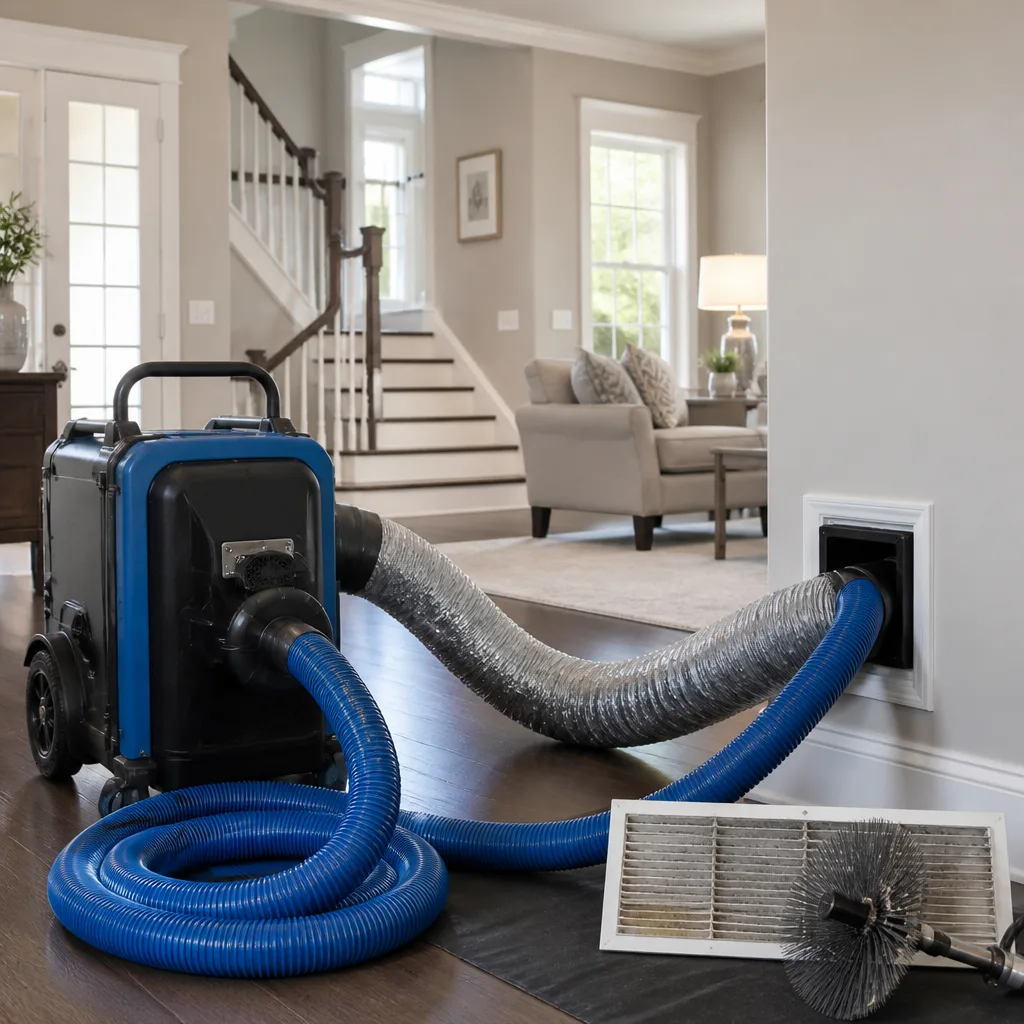 Whole-home duct cleaning
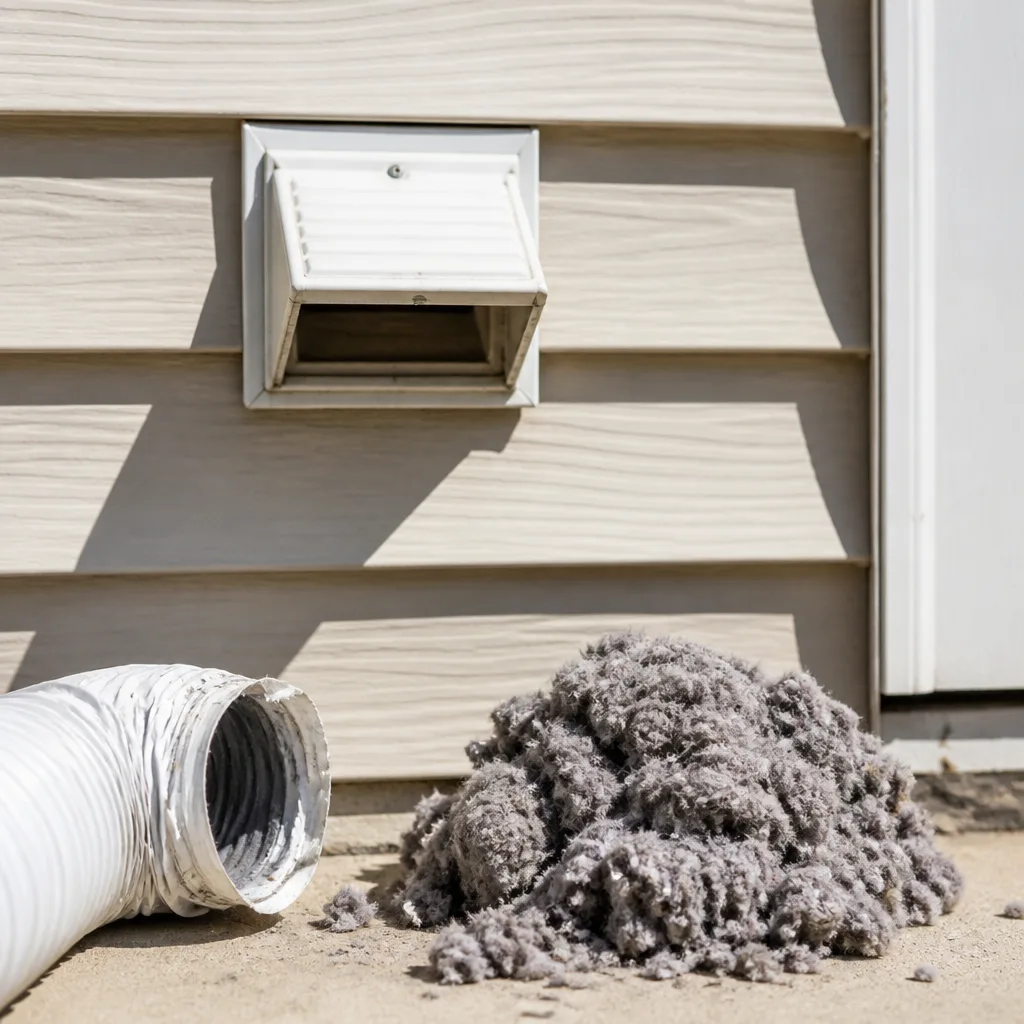 Dryer vent cleaning
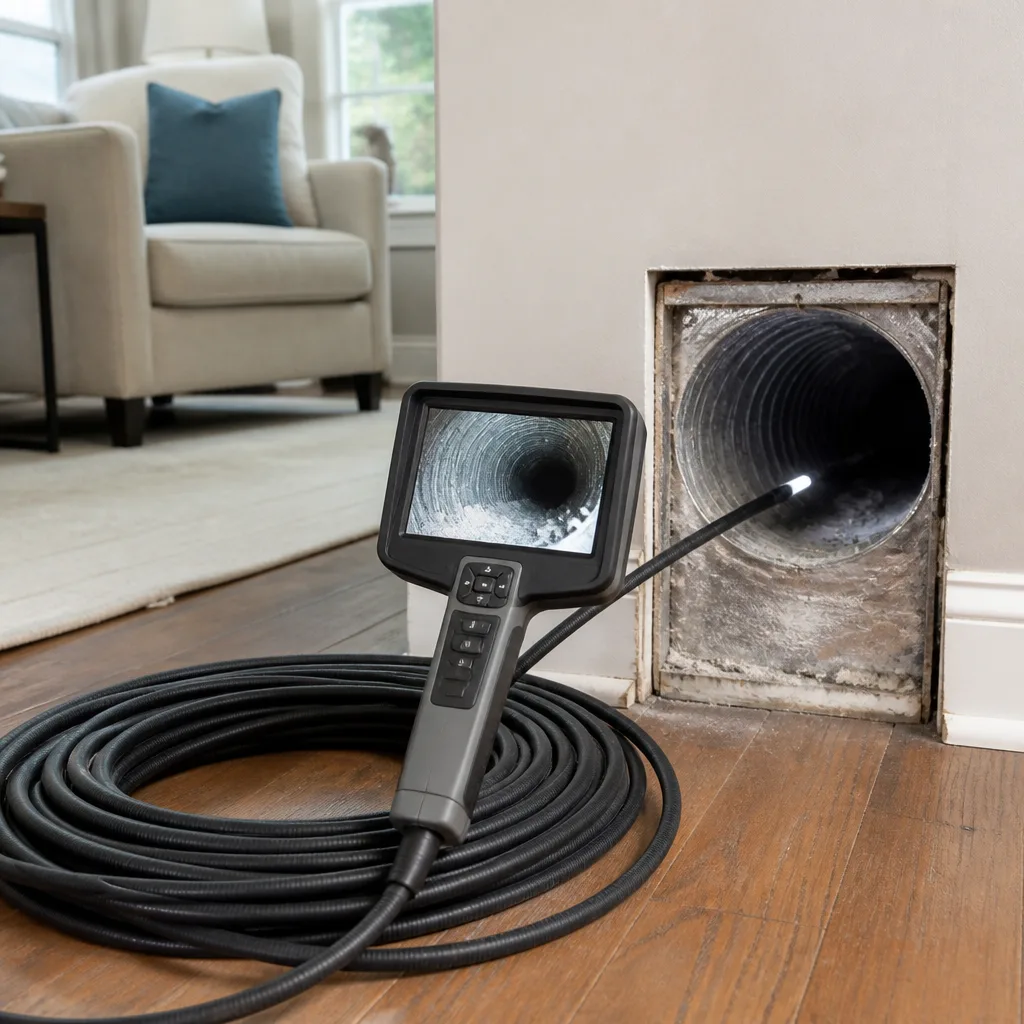 Camera inspection
 Sanitizing & deodorizing
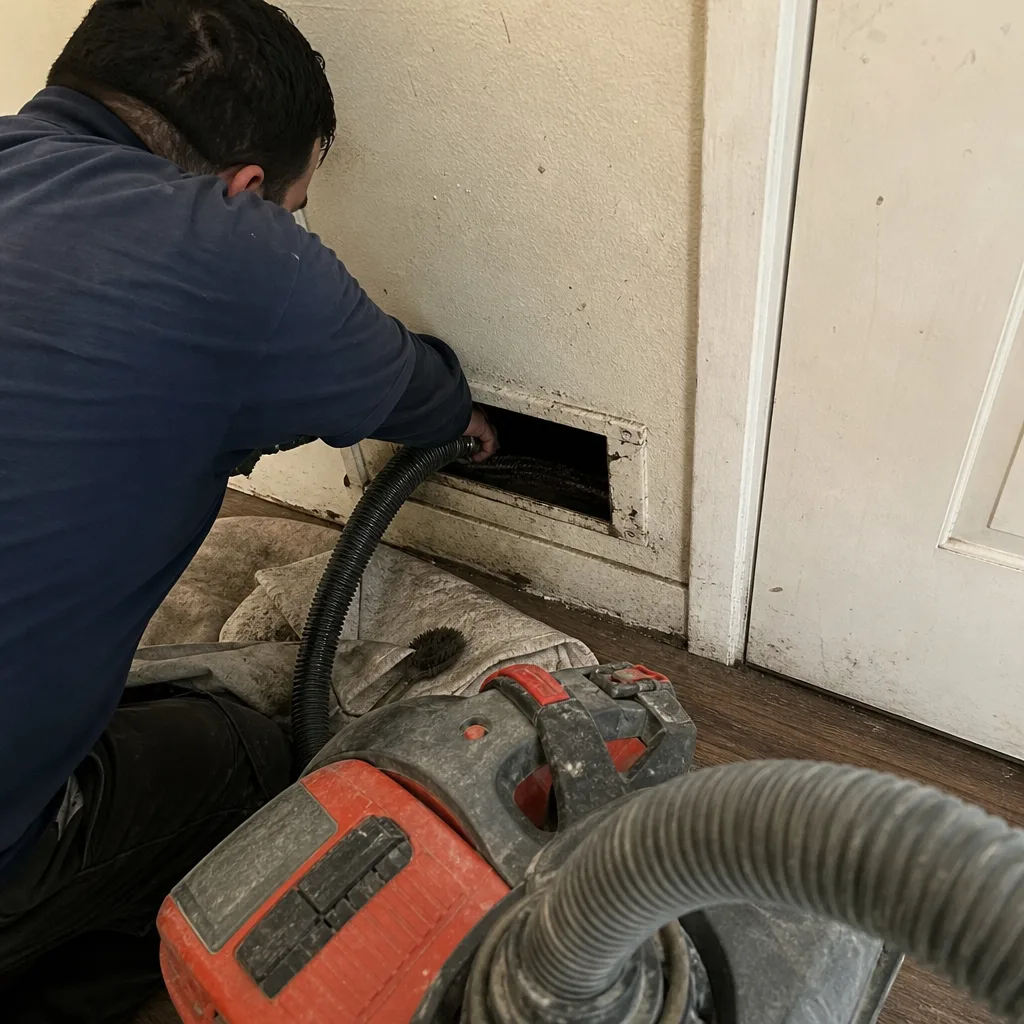
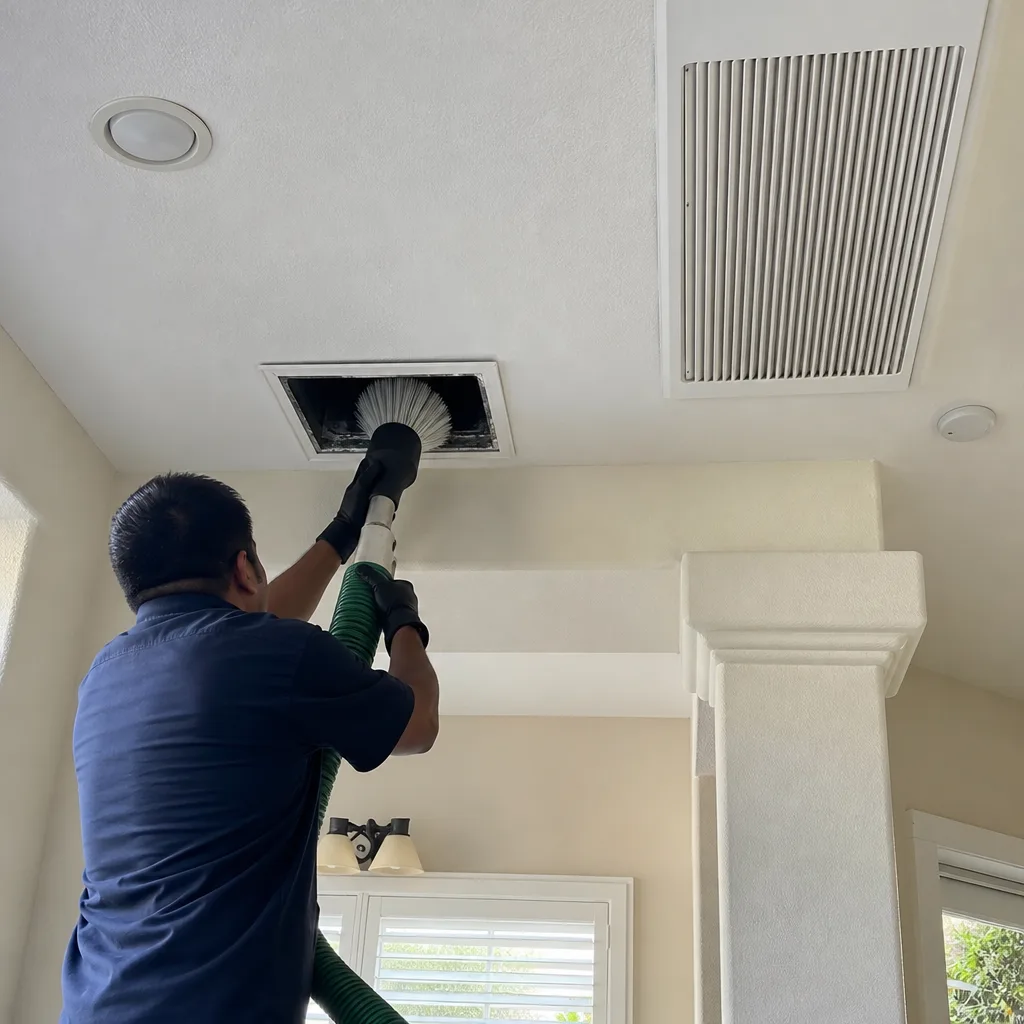
Whole-system duct and dryer vent check with before-and-after photos - you see exactly what came out of your vents
That "$99 whole-house special" is a bait ad - the real number appears once they are in your hallway, or the "clean" is a shop-vac at the register. We photograph the inside of your ducts before and after instead.
Choosing the Right Air Duct Cleaning Brand: A Buyer’s Guide for Murrieta
There is no Angie’s List rating or Google review that tells you whether a duct cleaning company showed up with a Nikro pneumatic brush system or a modified shop vac. But that equipment difference determines whether your ducts are actually clean when they leave. This guide exists because most Murrieta homeowners never think to ask the one question that matters: what brand of equipment is in the van? For a deeper dive, see The Complete Air Duct Cleaning Guide for Murrieta Homeowners. By the time you finish reading, you’ll know exactly how to evaluate any duct cleaning provider in Murrieta before you book, before they arrive, and before you pay.
Styles & brands we work with
- Whole-home duct cleaning
- Dryer vent cleaning
- Camera inspection
- Sanitizing & deodorizing
Quick Answer
The “brand” that matters in duct cleaning isn’t the company’s logo. It’s the equipment brand they run. The most reliable way to evaluate a duct cleaning provider in Murrieta is to ask what specific equipment brands they use. Professional-grade systems from Rotobrush, Nikro, and Abatement Technologies have published specifications, NADCA alignment, and verifiable capabilities. Companies that can name their equipment without hesitation are typically specialists with real training. Companies that deflect with phrases like “industrial-grade equipment” are usually running consumer shop vacuums with long hoses.
Table of Contents
- The Equipment Brands That Define Professional Duct Cleaning
- Why Equipment Brand Matters More Than Company Brand
- How to Ask for Equipment Specs Before You Book
- The NADCA ACR Standard: What It Actually Requires
- Truck-Mounted vs. Portable: Which Is Right for Murrieta Homes?
- How to Verify a Company’s Equipment Claims
- Common Mistakes to Avoid
- When to Call a Professional
- Frequently Asked Questions
- The Bottom Line
The Equipment Brands That Define Professional Duct Cleaning
Most homeowners in Murrieta have never heard of Rotobrush, Nikro, or Abatement Technologies. That’s expected. These are not consumer brands. They’re commercial and restoration-grade manufacturers that build equipment for professional duct cleaners, mold remediation contractors, and HVAC restoration teams. Understanding what each system does, and why they’re fundamentally different from what you’d rent at a hardware store, is the foundation of this guide.
Rotobrush is likely the most recognized name in professional duct cleaning equipment. Their systems combine a high-torque rotating brush with powerful vacuum extraction. The brush agitates debris that has adhered to duct walls while the vacuum captures it simultaneously. This matters because dust in ducts doesn’t just sit loosely. It compacts, it adheres to residue, and it gets pressed into corners by years of airflow. A shop vac has no agitation mechanism at all. It simply sucks whatever is loose enough to move. A Rotobrush system mechanically dislodges what’s stuck. Companies that run Rotobrush equipment, including our Air Duct Cleaning in Murrieta service, invest in this equipment because it’s purpose-built for the job.
Nikro Industries builds pneumatic and electric cleaning systems used in commercial, industrial, and residential settings. Their equipment is known for durability and for configurations that allow technicians to reach deep into branch lines and returns, not just the main trunk. Nikro systems often pair with HEPA-filtered negative air machines, which is important. A vacuum that pulls air through your ducts without HEPA filtration simply recirculates fine particulate back into your living space. HEPA filtration captures particles down to 0.3 microns, which includes most allergens, mold spores, and fine dust that trigger respiratory reactions.
Abatement Technologies makes equipment designed for serious contamination scenarios. Their HEPA air scrubbers and negative air machines are standard in mold remediation, water damage restoration, and hospital construction. When a duct cleaning company carries Abatement Technologies equipment, it signals capacity for elevated contamination, which matters for Murrieta homes that have experienced water intrusion, rodent activity in ductwork, or heavy allergen buildup from our dry, dusty summers. We carry Abatement gear specifically because some jobs in Murrieta require containment, not just cleaning.
Hypervac is another recognized name in the professional duct cleaning space, building portable and truck-mounted extraction systems used by NADCA-certified contractors across the country. Knowing these names helps you separate equipment that’s engineered for duct systems from equipment that was never designed for this work at all.
What These Brands Have in Common
- Published specifications. Rotobrush, Nikro, and Abatement Technologies all publish airflow rates, filtration standards, and intended-use documentation. You can verify their existence and capabilities independently.
- NADCA alignment. These systems are engineered to support the extraction and agitation methods that NADCA’s ACR standard requires for source removal.
- Training requirements. Manufacturers of professional-grade equipment typically provide dealer training. Companies running this gear have usually completed some form of manufacturer instruction.
- Cost barrier to entry. A professional duct cleaning system costs thousands of dollars, not the $79 a big-box shop vac costs. That investment signals a commitment to the trade.
In Murrieta, where summer temperatures regularly exceed 100 degrees and HVAC systems run nearly year-round, duct contamination compacts quickly. The agitation-and-capture approach these brands represent is not optional. It’s the difference between cleaning the surface of debris and actually removing it from the system.
Why Equipment Brand Matters More Than Company Brand
Anyone in Murrieta can register a business name, print a magnetic sign for a truck, and call themselves a duct cleaning company by lunchtime. The barrier to entry in this industry is astonishingly low. No license specifically for duct cleaning exists in California. No state exam tests whether a provider understands airflow dynamics, negative pressure containment, or the mechanical function of a brush system. The only gatekeeper is the equipment itself, because the equipment costs real money and requires real training to operate correctly.
This is why the equipment brand is the most reliable proxy for quality that a homeowner can evaluate before the job starts. Reviews tell you whether someone was polite. Equipment tells you whether they were equipped. A company that shows up with a Rotobrush or Nikro system has made a financial commitment to doing this work properly. A company that shows up with a shop vac and a drill-powered brush has made a commitment to doing this work cheaply. The difference shows up in your ductwork and in your indoor air.
We’ve seen Murrieta homes where previous cleaning attempts left behind what we call “edge accumulations”, the compacted dust layers in the corners of rectangular duct runs where air velocity drops to near zero. A vacuum-only pass leaves those edge accumulations completely intact. The home looks the same afterward. The equipment matters because source removal requires mechanical agitation. Airflow alone cannot dislodge compacted particulate, and no amount of company-brand polish changes that physics.
There’s a second reason equipment brand matters: filtration. Murrieta’s air quality during fire season and our extended dry spells carries fine particulate that settles into ducts. Proper extraction requires HEPA filtration on the vacuum side. Professional systems include HEPA. Consumer vacuums rarely do, and when they do, the airflow rate is far too low to capture debris from a 20-foot duct run. Professional equipment moves enough air to maintain capture velocity across the full length of the system.
How to Ask for Equipment Specs Before You Book
The single most useful thing you can do before booking a duct cleaning in Murrieta is ask a direct question about equipment. The exact phrasing matters because vague questions invite vague answers. Here’s the question we recommend:
“What specific equipment brands and models do you use for duct cleaning, and what type of filtration do they have?”
That’s it. The answer tells you almost everything you need to know. Here’s how to interpret the responses you’ll hear:
Step-by-step evaluation of their answer:
- They name a specific brand and model. “We run a Rotobrush aiR+ with HEPA filtration.” This is a good sign. Specific model names indicate familiarity and confidence. Write it down so you can verify later.
- They name a brand but no model. “We use Nikro equipment.” Acceptable but incomplete. Ask the follow-up: “Which Nikro system do you run, and is the filtration HEPA?” Legitimate companies will answer without hesitation.
- They use vague superlatives. “We use state-of-the-art industrial equipment.” This is deflection. There’s no such thing as generic industrial equipment. Every professional system has a manufacturer name. If they won’t tell you what they run, there’s a reason.
- They talk about their process instead. “We use a 12-step cleaning process.” They didn’t answer the question. The process is only as good as the equipment executing it. Ask again: “What brand of extraction equipment do you use?”
- They get defensive or change the subject. “Our reviews speak for themselves.” Reviews don’t verify equipment. A defensive response to a basic equipment question is a red flag, not a personality quirk.
The follow-up question to any equipment answer should be about filtration. Ask: “Does your vacuum system have HEPA filtration on the exhaust side?” If the answer is no, or if they don’t know, that’s a problem. Unfiltered or lightly filtered exhaust from a duct cleaning vacuum simply recirculates the debris you’re paying to remove. It’s like vacuuming your living room with a vacuum that blows the dust out the back.
The NADCA ACR Standard: What It Actually Requires
NADCA, the National Air Duct Cleaners Association, publishes the industry’s primary performance standard: the Assessment, Cleaning, and Restoration (ACR) Standard. This document defines what a proper duct cleaning actually is, in measurable terms, rather than what a marketing brochure says it is. Homeowners in Murrieta who understand the ACR standard can evaluate providers against an objective benchmark instead of a subjective sales pitch.
The ACR standard defines source removal as the goal of duct cleaning. Source removal means removing debris from the duct system itself, not just pushing it around or dislodging it so it can resettle later. To achieve source removal, the standard specifies that cleaning must involve mechanical agitation combined with extraction that maintains adequate airflow and velocity. A vacuum alone, regardless of how powerful, does not meet the ACR definition of source removal for adhered debris.
Here’s what the ACR standard requires in practical terms:
- Mechanical agitation. Ducts must be agitated with brushes, air whips, or other devices that physically dislodge debris from duct surfaces. Vacuum pressure alone is insufficient.
- Continuous extraction during agitation. The agitation and the vacuuming happen simultaneously, not sequentially. Debris is captured at the point of dislodgement, not allowed to float into the room.
- Negative pressure or containment. During cleaning, the duct system should be placed under negative pressure or otherwise contained so that liberated debris flows toward the vacuum, not into the home.
- Full system access. Cleaning requires access to the entire duct system, including supply trunks, branches, and returns. Every access point should be opened and cleaned, not just the main trunk nearest the furnace.
- Post-cleaning verification. The standard requires visual inspection or remote imaging after cleaning to confirm that debris has been removed. You should be able to see the result.
The ACR standard also addresses cleaning frequency. It recommends cleaning when ducts are visibly contaminated, when there is evidence of rodent or insect activity, or when airflow is restricted. It does not recommend cleaning on an arbitrary schedule. A Murrieta homeowner who understands this won’t be pushed into unnecessary service by a salesperson quoting a “recommended” annual schedule that has no basis in the standard.
How do you ask about ACR compliance? Here’s the direct phrasing: “Is your cleaning process aligned with the NADCA ACR standard?” A provider who knows what ACR is and can explain their alignment clearly is a professional. A provider who doesn’t recognize the acronym is revealing something important about their depth of knowledge.
Our Duct Cleaning Murrieta home page outlines our process in detail, including equipment and technique information you can verify.
Truck-Mounted vs. Portable: Which Is Right for Murrieta Homes?
For decades, the duct cleaning industry marketed truck-mounted systems as inherently superior to portable equipment. The pitch was simple: bigger is better. The truck has more suction, so the cleaning is more thorough. Like many simple pitches, this one is partially true and partially misleading. The right equipment for a Murrieta home depends on the layout, the access points, and the specific contamination present.
Truck-mounted systems do generate significant suction. They’re powered by the vehicle’s engine or a dedicated PTO drive, and they can move enormous volumes of air. For long duct runs, large commercial buildings, or systems with heavy debris loading, truck-mounted extraction often makes sense. The hose runs from the truck to the duct system, and debris is extracted into a containment tank on the vehicle.
But truck-mounted systems have limitations, particularly for Murrieta’s residential layouts. Many Murrieta homes in neighborhoods like Copper Canyon, Bear Creek, and Greer Ranch are built on sloping lots with garages that are 30, 50, or even 80 feet from the main duct trunk. A truck-mounted system requires a large-diameter hose running from the vehicle to the home, and every foot of hose reduces effective suction. For second-story ductwork in Murrieta’s larger homes, the distance concern compounds. A portable unit positioned inside the home, at the furnace or closest access point, often delivers more effective extraction in these configurations than a truck-mounted system fighting hose friction loss.
The more important variable than mounting configuration is filtration quality and airflow rate at the point of extraction. A HEPA-filtered portable system from Nikro or Abatement Technologies, positioned properly, outperforms a truck-mounted system with poor filtration or compromised hose integrity. HEPA filtration is the non-negotiable variable. When a portable unit carries HEPA filtration and adequate CFM for residential systems, it’s not a compromise. It’s often the correct tool.
The honest evaluation asks two questions: What is the extraction system’s airflow rate and filtration at the duct connection point? And does the configuration work for this specific home? A Murrieta homeowner in a two-story French Valley property may need a different approach than a single-story ranch near the 215 corridor. The equipment should match the job, not the marketing narrative.
How to Verify a Company’s Equipment Claims
Words are cheap. Murrieta has no shortage of duct cleaning ads that claim “professional equipment” without a manufacturer name anywhere on the website. The good news is that equipment claims are independently verifiable. Here’s a step-by-step method to check what a company says it runs:
1. Ask for the model number in writing
Request the specific make and model of their primary extraction system and their agitation equipment. Any legitimate company can provide this in an email or text. If they resist, you’ve learned something useful.
2. Check the manufacturer’s website
Rotobrush, Nikro, Abatement Technologies, and Hypervac all maintain public websites with product catalogs and spec sheets. If the claimed model exists and matches the company’s description, that’s confirmation. If the model doesn’t appear anywhere, the claim was fabricated.
3. Look for the equipment in photos
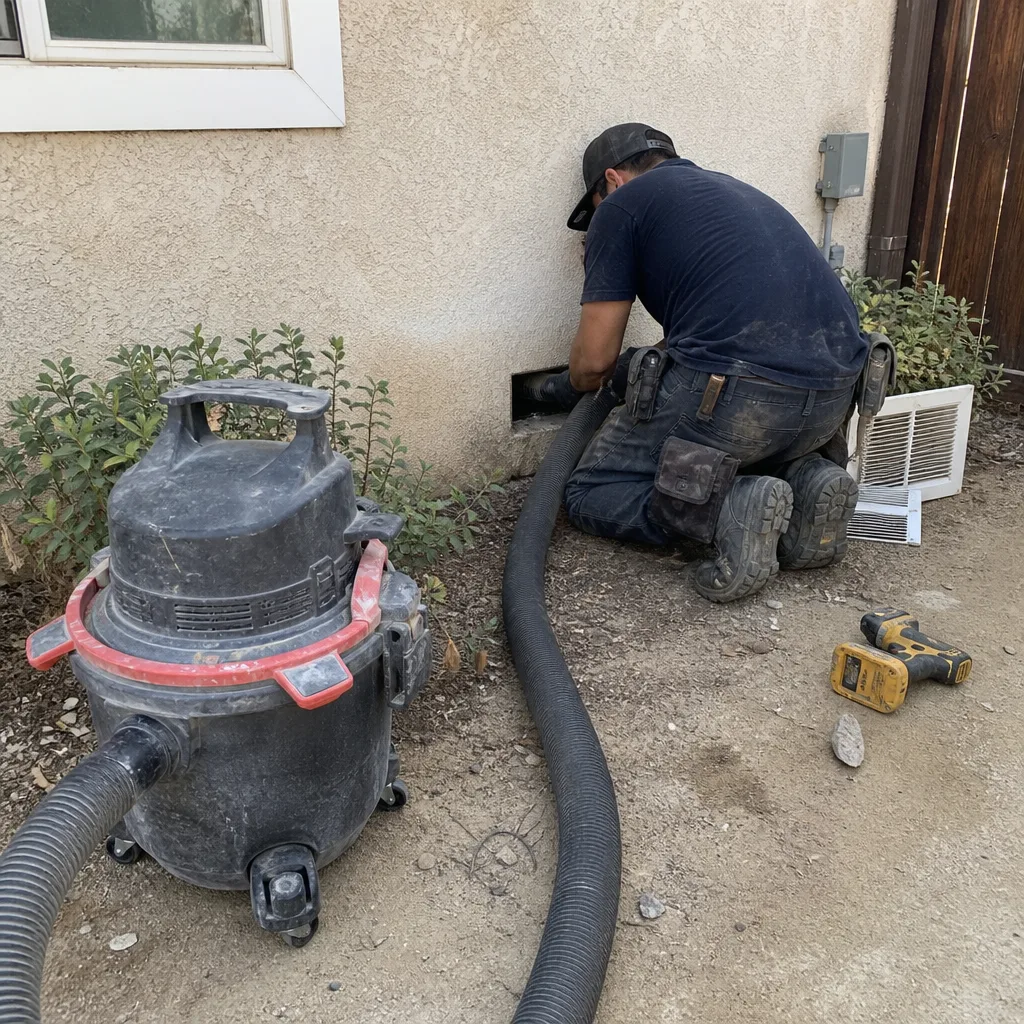
Company websites and social media often show technicians working. Professional extraction systems are visually distinctive. They’re large, they have branded housings, and they connect to substantial hoses. If every photo shows only a small vacuum or no equipment at all, ask why.
4. Ask to see the equipment before the job begins
This is the simplest verification of all. When the technician arrives, ask: “Can you show me the extraction system and the filtration setup before you start?” A professional won’t hesitate. The equipment is their credential. Someone running a shop vac will deflect, stall, or get annoyed. The reaction tells you what you need to know.
5. Check NADCA supplier alignment
NADCA maintains supplier directories and educational materials referencing manufacturer names. If a company claims NADCA certification or ACR compliance, you can cross-reference their equipment recommendations against NADCA’s published resources. Equipment alignment is prerequisite to process alignment.
6. Verify filtration claims independently
If a company claims HEPA filtration, the filter should be visible and labeled. True HEPA filters carry a certification label. Ask to see the filter before the job starts. If it’s not labeled, it’s not HEPA, regardless of what the salesperson said.
We run this verification mindset ourselves. Our equipment list is specific because our work depends on it. We operate Rotobrush and Nikro extraction systems, and we carry Abatement Technologies containment and air-scrubbing equipment for contamination scenarios. We’re familiar with Honeywell and Aprilaire air-quality systems because clean duct pathways are the foundation those premium filtration systems depend on. The equipment is the credential.
Common Mistakes to Avoid
- Only comparing prices without asking about equipment. A $99 whole-house cleaning in Murrieta is a shop vac service, not a duct cleaning. The equipment cost makes professional service more expensive for a reason. Comparing prices between a shop-vac operator and a Rotobrush-equipped specialist isn’t comparing the same service.
- Trusting vague “industrial-grade” language. “Industrial-grade” is not a brand, not a specification, and not a verifiable claim. If a company can’t name the equipment, they’re hiding something, usually that the equipment is a rental or a consumer vacuum with a long hose.
- Skipping the filtration question. Agitation without HEPA filtration on the exhaust side simply redistributes allergens from your ducts into your living space. Asking about filtration is as important as asking about brushes.
- Believing every company is NADCA-certified without checking. Some Murrieta duct cleaning ads imply NADCA affiliation loosely. Ask for specifics: “What is your NADCA certification, and may I confirm it?” If the answer is evasive, you have your answer.
- Booking based on a coupon alone. Low-price duct cleaning is almost always a loss leader designed to get a technician in the door, at which point the real invoice appears. The bait-and-switch reputation in this industry is earned. Honest pricing is whole-system, not per-vent.
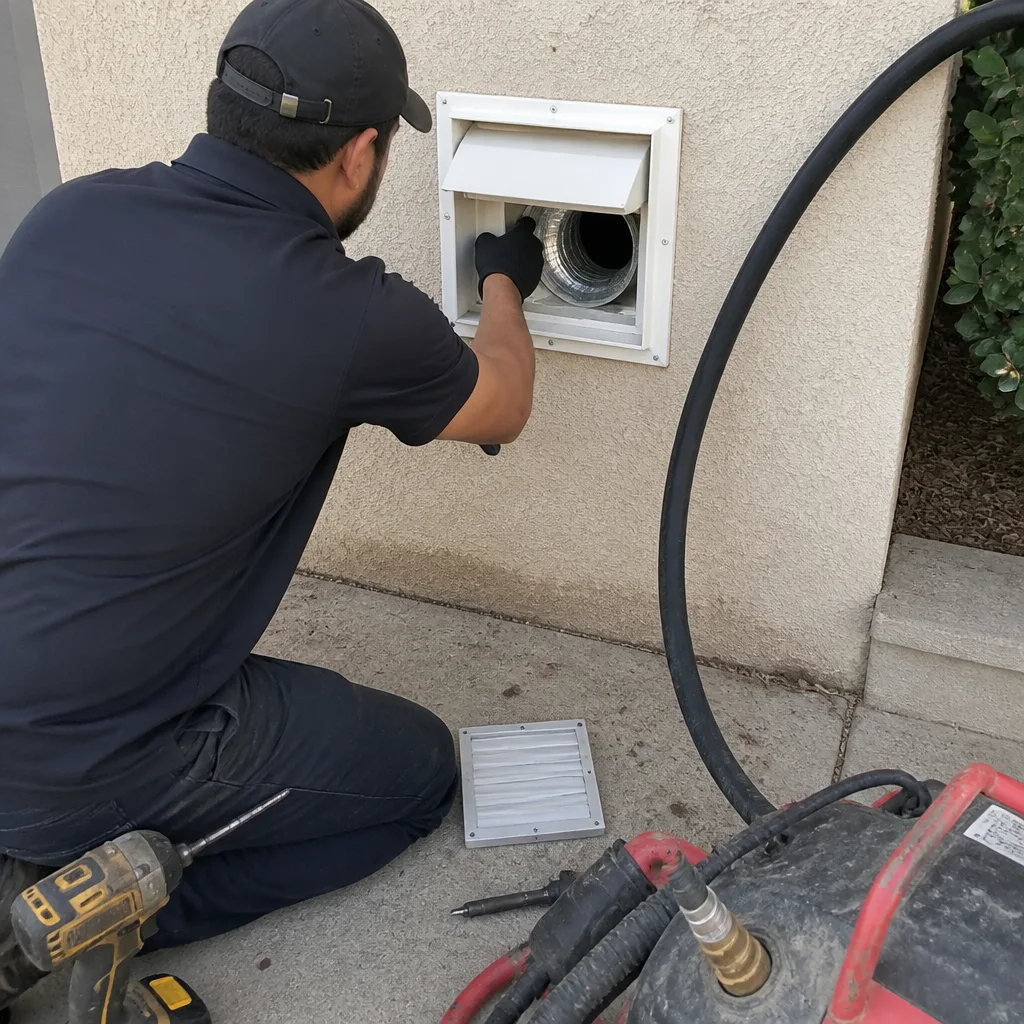
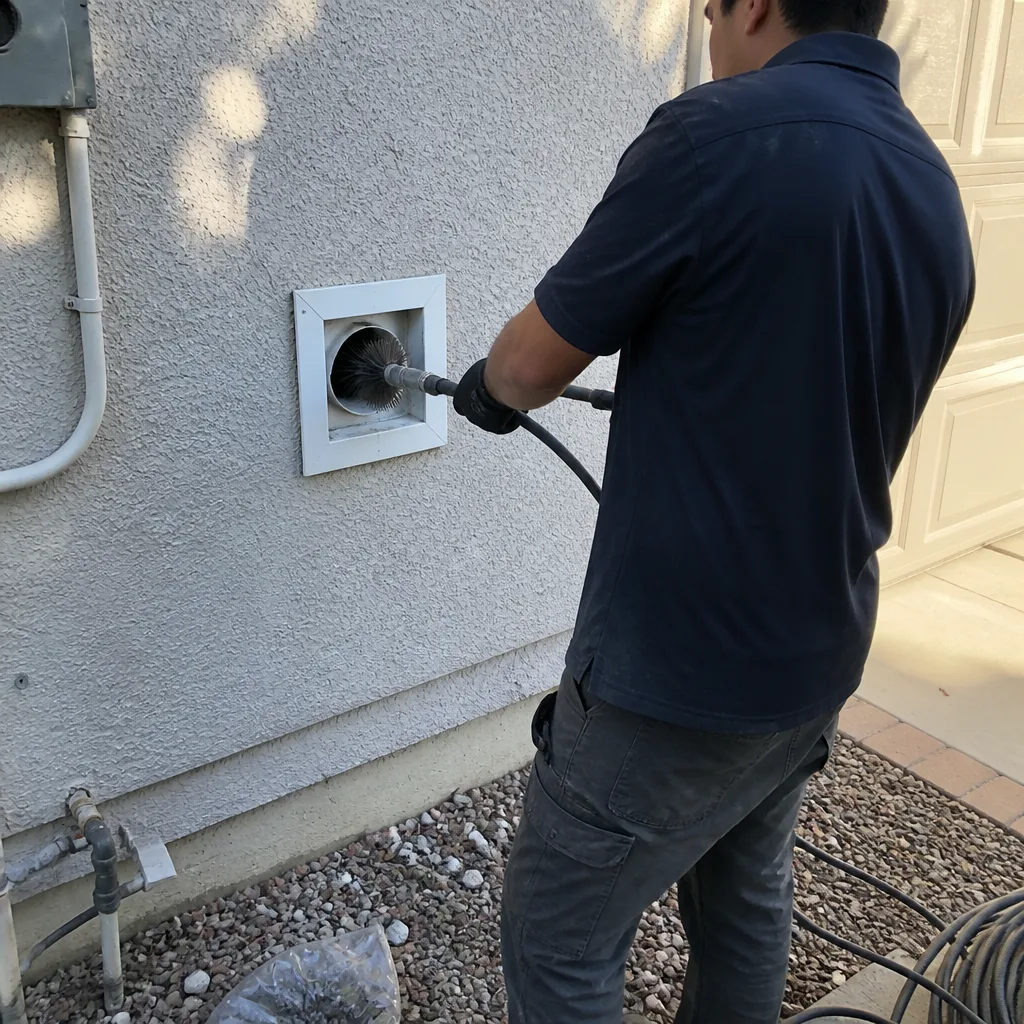
- Ignoring dryer vents during the same visit. Dryer vent cleaning is a fire-safety service, and NFPA data consistently documents the fire risk of lint accumulation. If a duct company doesn’t offer Dryer Vent Cleaning in Murrieta, they’re not thinking about whole-system safety.
- Assuming duct cleaning and repair should be separate companies. When cleaning reveals damaged sections, disconnected branches, or collapsed flex runs, you want one team that can diagnose, clean, and fix. Our Air Duct Repair in Murrieta service handles the whole pathway, not just the debris inside it.
When to Call a Professional
Some situations demand professional attention regardless of your comfort level with DIY approaches. If you’ve had renovation work done and drywall dust has entered the return system, that fine particulate won’t clear on its own. If anyone in your Murrieta home has persistent allergy symptoms that worsen inside, duct contamination is a probable contributor. If you’ve had rodent activity in the attic or crawlspace, the duct system is frequently the highway they travel. If your dryer takes two cycles to dry a load that used to take one, the vent is restricted and the fire risk is real. If your HVAC system runs constantly during Murrieta summers but rooms remain unevenly heated or cooled, airflow obstruction in the ductwork is a common cause. Our Air Duct Cleaning services include free estimates in Murrieta. Call (855) 341-7672 to schedule yours.
Frequently Asked Questions
The best duct cleaning company in Murrieta is one that runs professional-grade equipment from recognized manufacturers, uses HEPA filtration, and can explain their process against the NADCA ACR standard. Ask about specific equipment brands (Rotobrush, Nikro, Abatement Technologies) before comparing prices. A company that names its equipment confidently is a specialist; a company that deflects is running consumer vacuums. Call (855) 341-7672 to ask us directly.
Professional whole-home duct cleaning in Murrieta typically ranges from $450 to $900 depending on home size, number of returns, contamination level, and equipment required. Honest providers quote a flat whole-system price rather than per-vent pricing. Anything under $200 advertised for a whole home is either a bait price or a shop-vac service. Call (855) 341-7672 for an exact quote; estimates are free and specific to your home.
Professional duct cleaners should use extraction systems from established manufacturers like Rotobrush, Nikro, or Hypervac, often paired with HEPA filtration and containment equipment from companies like Abatement Technologies. These brands publish specifications, offer training, and engineer their equipment for source removal. The presence of named, professional-grade equipment is the most reliable signal of a legitimate operation.
Not automatically. Truck-mounted systems generate high suction, but hose distance reduces effective airflow, which matters in large Murrieta homes or properties with long setbacks. A HEPA-filtered portable system positioned inside the home often delivers better extraction for residential systems. Filtration quality and airflow at the duct connection matter more than where the vacuum sits.
Ask for the specific make and model of their extraction system in writing, then check the manufacturer’s public website to confirm the model exists. Ask to see the equipment and the HEPA filter before the job begins. A professional will show you without hesitation. A deflector has something to hide. Any company that won’t name its equipment is telling you everything you need to know.
The NADCA ACR standard recommends cleaning when ducts are visibly contaminated, show signs of rodent or insect activity, or restrict airflow, not on an arbitrary annual schedule. In Murrieta, where dust accumulation is accelerated by dry conditions and year-round HVAC use, a visual inspection every two to three years is reasonable. Clean when the system needs it, not when a coupon says so. For an honest assessment, call (855) 341-7672.
The Bottom Line
In duct cleaning, the brand that matters is the brand on the equipment, not the brand on the truck. Professional-grade systems from Rotobrush, Nikro, and Abatement Technologies exist because source removal requires mechanical agitation, adequate airflow, and HEPA filtration. Consumer vacuums fail on all three counts. When you’re comparing duct cleaning providers in Murrieta, ask the equipment question first, verify the answer, and check for NADCA ACR alignment. For additional help, explore The Complete Air Duct Cleaning Guide for Murrieta Homeowners. Pricing follows equipment, not the other way around. Choose a specialist with professional tools, ask to see the gear before the job starts, and you’ll get clean ducts regardless of which company logo is on the invoice.
Written by the team at Duct Cleaning Murrieta, serving Murrieta since 2015.
See the difference
 Before
 After
 Before
 After
 Before
 After