
Last updated November 2, 2026
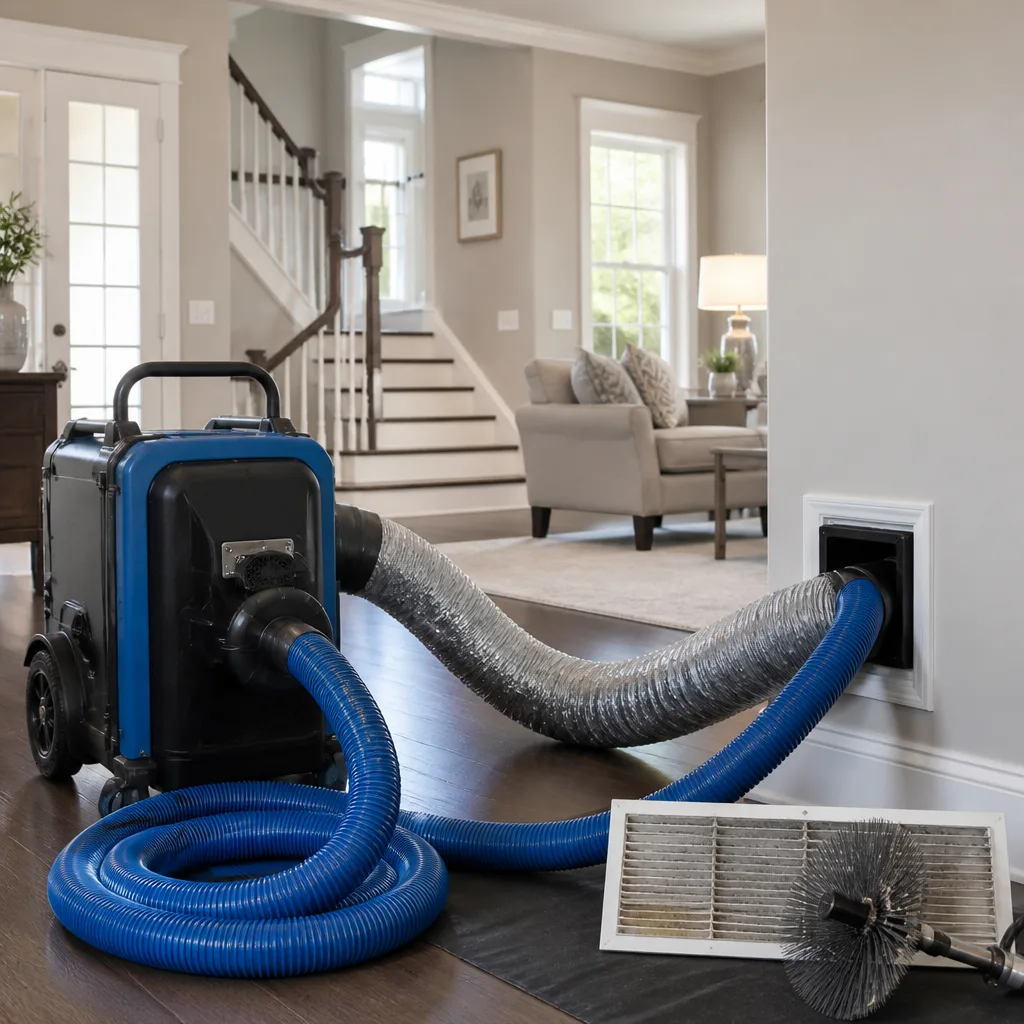 Whole-home duct cleaning
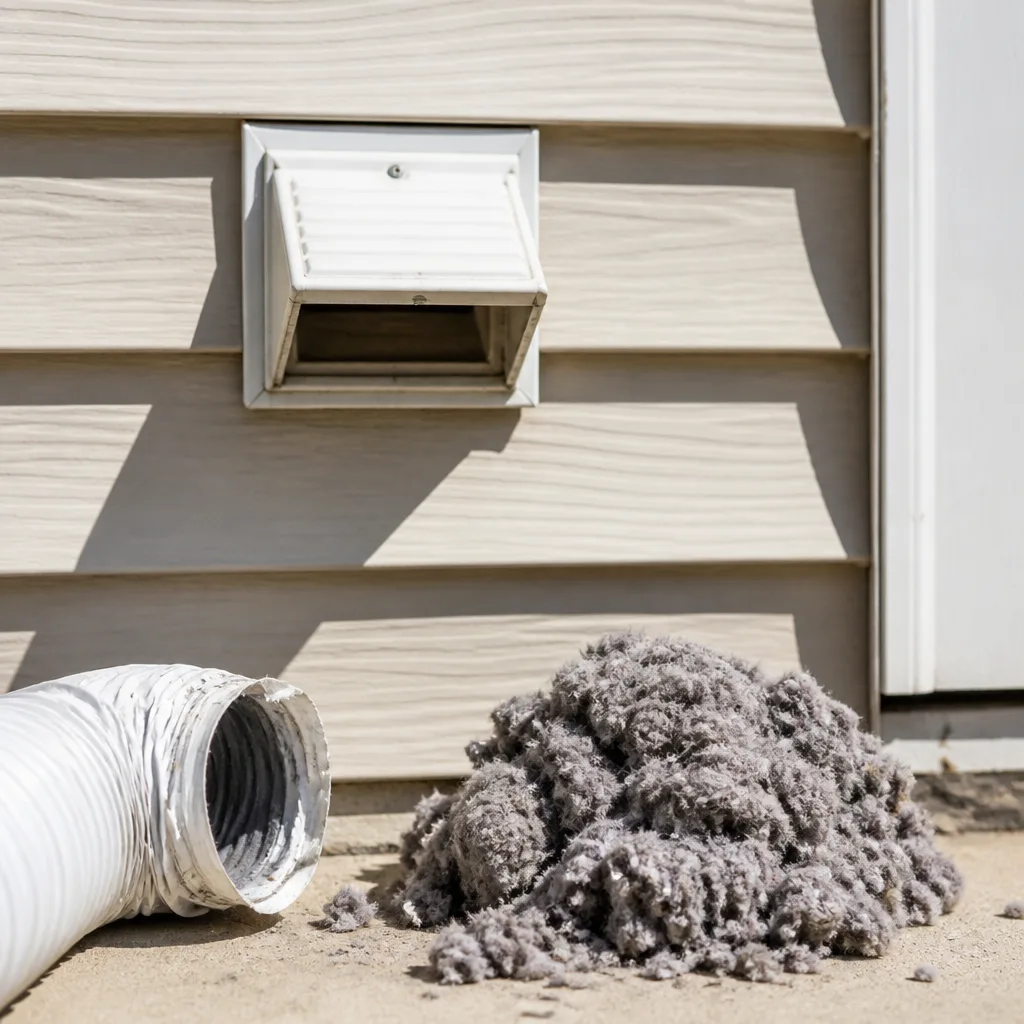 Dryer vent cleaning
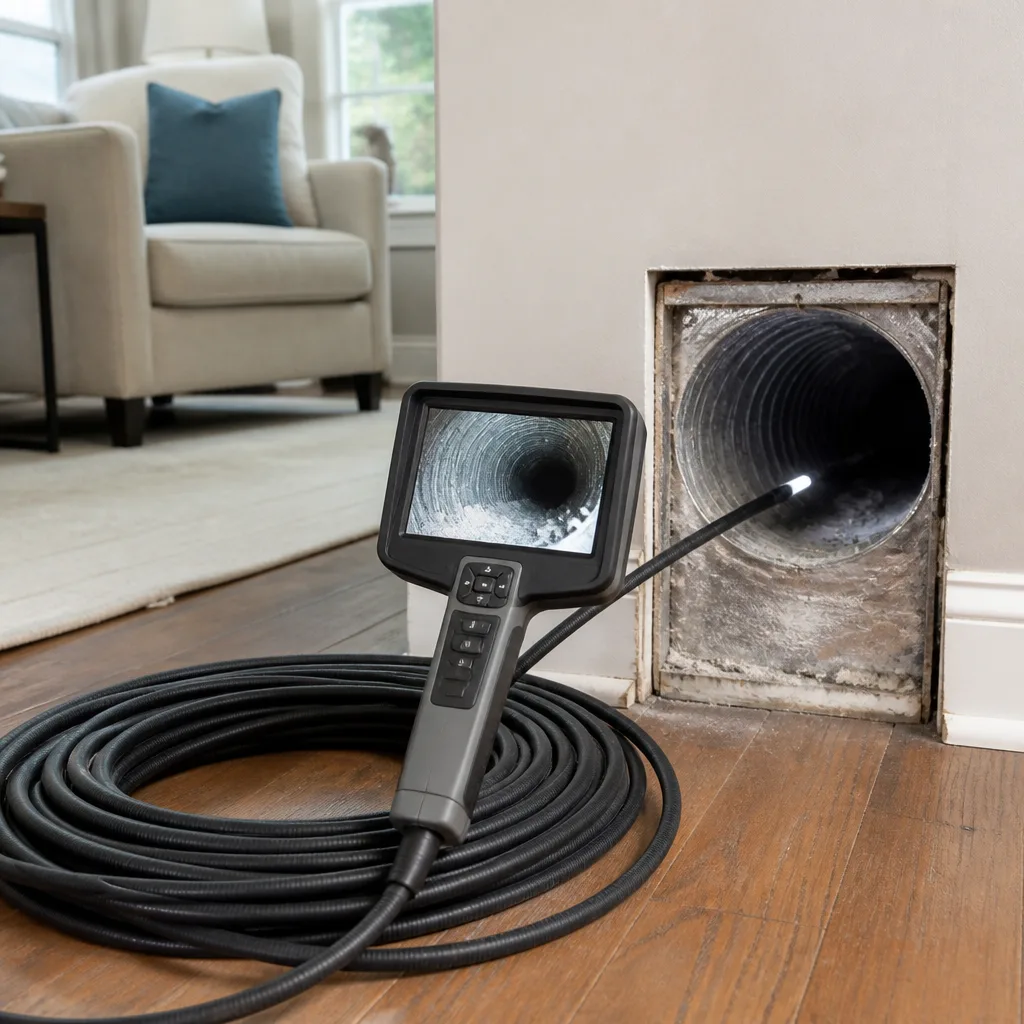 Camera inspection
 Sanitizing & deodorizing
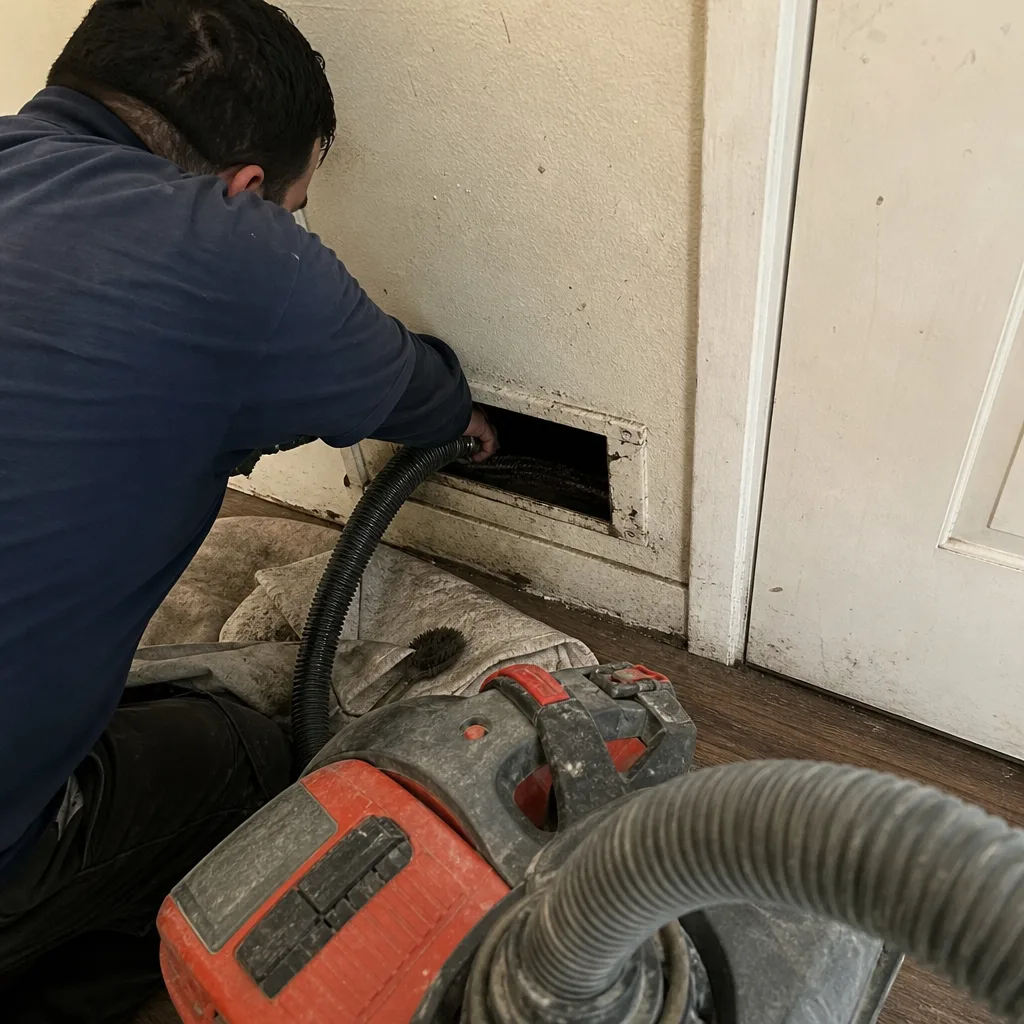
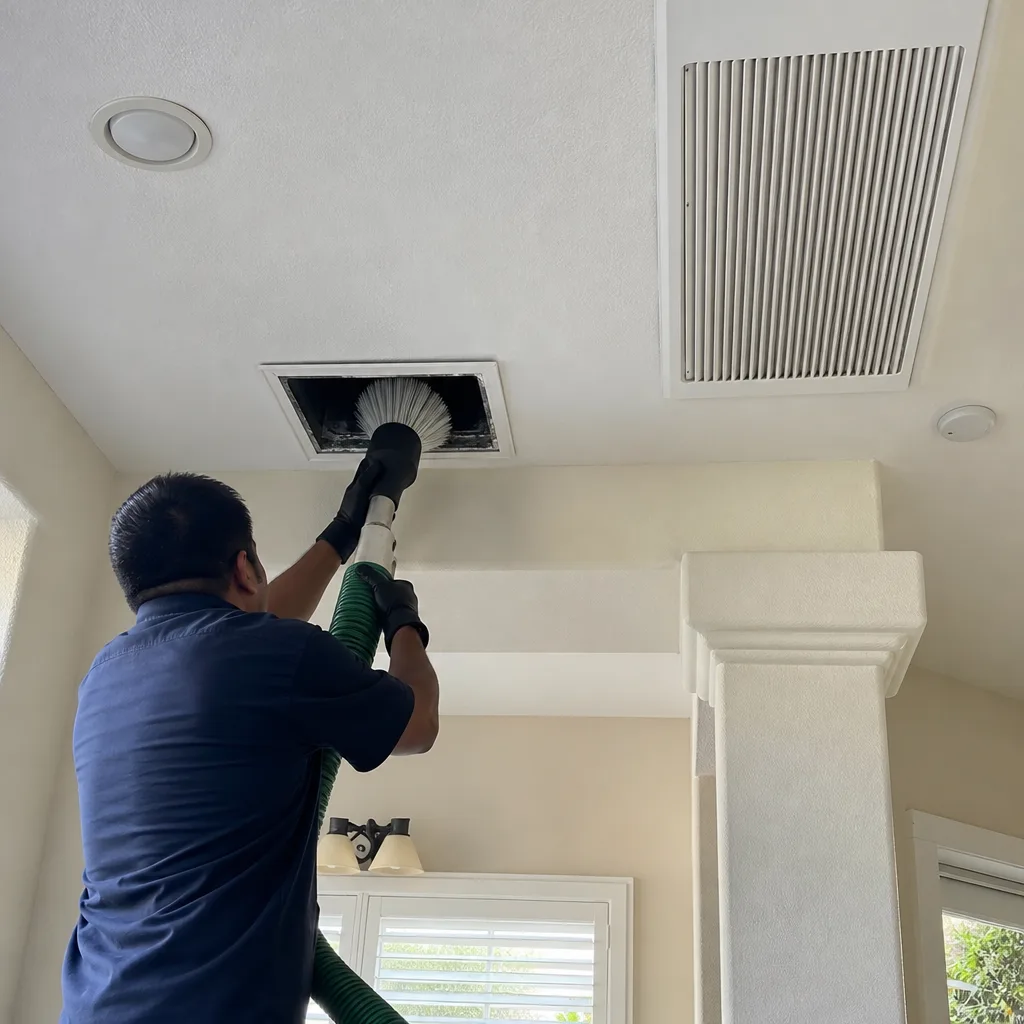
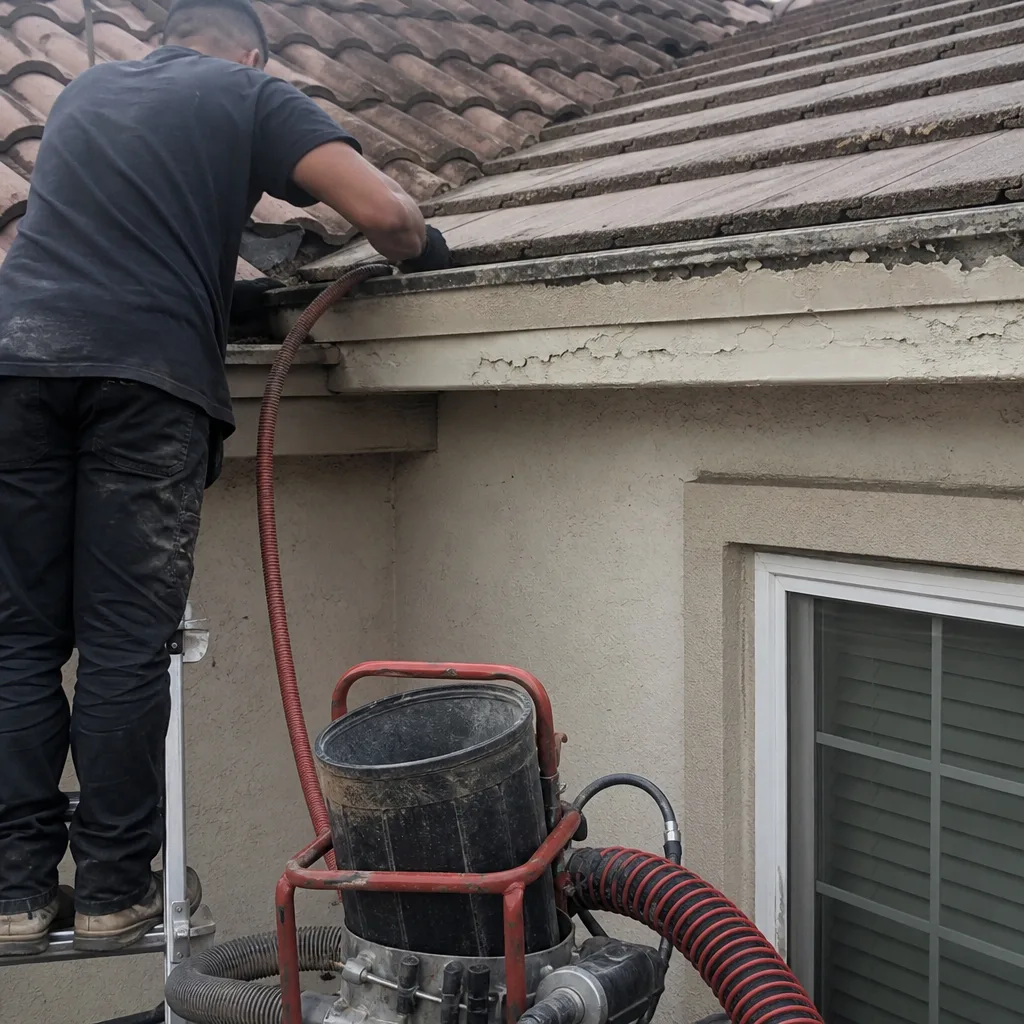
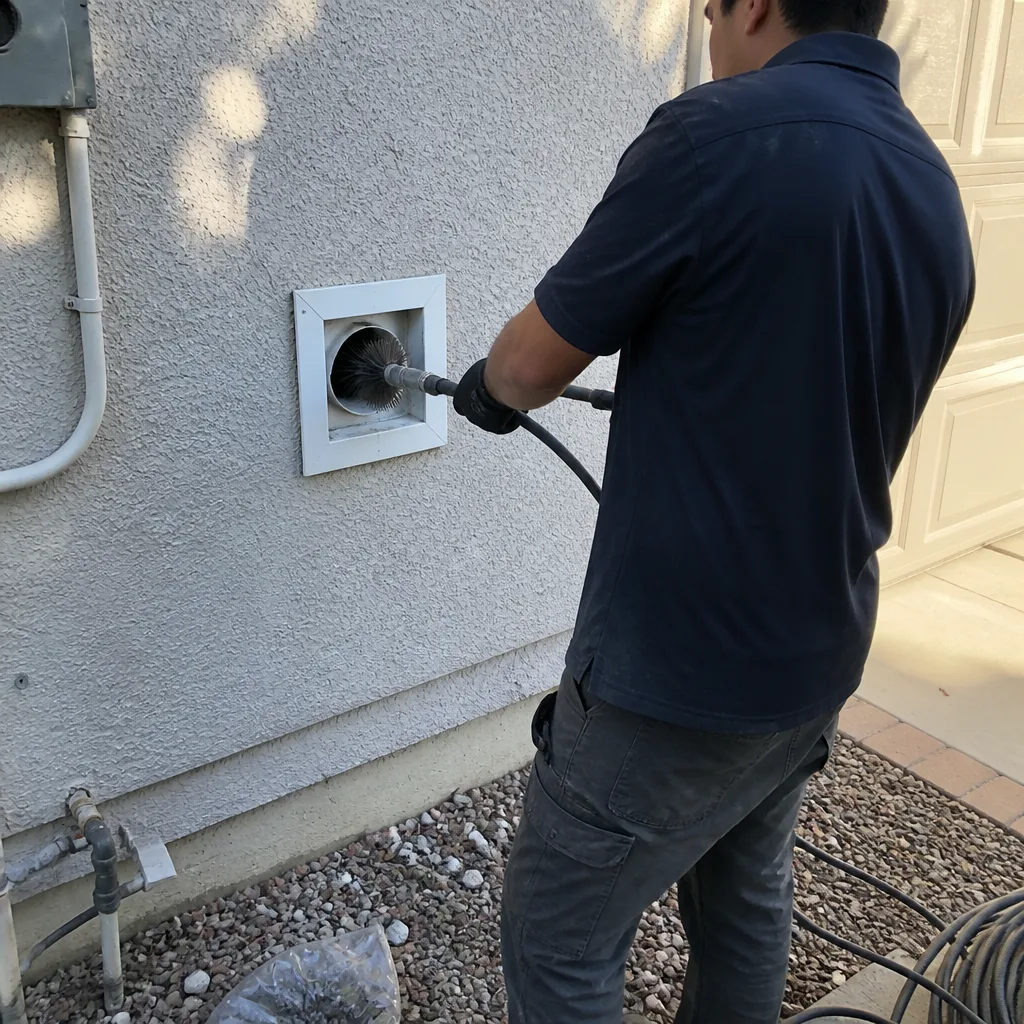
Whole-system duct and dryer vent check with before-and-after photos - you see exactly what came out of your vents
That "$99 whole-house special" is a bait ad - the real number appears once they are in your hallway, or the "clean" is a shop-vac at the register. We photograph the inside of your ducts before and after instead.
DIY vs Professional Air Duct Cleaning: The Murrieta Homeowner’s Decision Guide
Here’s a number that changes how Murrieta homeowners think about duct cleaning: the most-watched DIY duct cleaning videos on YouTube demonstrate technicians vacuuming register covers and the first few inches of visible ductwork. That addresses roughly 8% of the interior surface area where debris actually accumulates. The remaining 92% – trunk lines, plenums, and branch duct interiors – is physically inaccessible with any consumer-grade tool, no matter how determined you are. This guide breaks down exactly what you can and cannot do yourself, what the equipment gap really means in practical terms, and how to decide when Air Duct Cleaning is money well spent versus money wasted.
Styles & brands we work with
- Whole-home duct cleaning
- Dryer vent cleaning
- Camera inspection
- Sanitizing & deodorizing
Quick Answer
DIY duct cleaning can meaningfully reduce visible debris at registers and improve basic airflow, but it cannot access the interior trunk lines and branch ducts where the majority of dust, allergens, and debris accumulate. Professional cleaning uses negative-pressure equipment producing 2,000-4,000 CFM versus the 100-150 CFM of a typical shop vac, a difference that determines whether debris is actually extracted or simply stirred up. For most Murrieta homes, a hybrid approach works best: do the accessible maintenance yourself, but call a professional every 3-5 years, sooner with pets, recent renovation, or allergy concerns. For help choosing, see our guide on How to Hire an Air Duct Cleaning Contractor in Murrieta: A Step-by-Step Guide.
Table of Contents
- The Surface Area Problem: Why 8% Access Matters
- The Equipment Gap: Shop Vac vs. Professional Systems
- What Murrieta Homeowners Can Legitimately Do Themselves
- When DIY Is Genuinely Sufficient (And When It Isn’t)
- The Real Math: DIY Costs vs. Professional Cleaning in Murrieta
- How to Evaluate a Professional Quote for Your Home
- Special Case: Post-Renovation Dust and Construction Debris
- Common Mistakes to Avoid
- When to Call a Professional
- Frequently Asked Questions
- The Bottom Line
The Surface Area Problem: Why 8% Access Matters
Your home’s duct system is not a single pipe. It’s a branching network: a main trunk line running from the air handler, lateral branch ducts feeding each room, and return plenums pulling air back. The part you can see – the register covers and the first 6-12 inches of duct immediately behind them – represents a tiny fraction of total interior surface. A typical 2,000-square-foot Murrieta home has roughly 300-400 square feet of interior duct surface area. The register openings you can reach from inside the living space total maybe 25-30 square feet combined.
Here’s the breakdown of where debris actually settles:
- Trunk lines and main plenums: 40-50% of accumulated debris lives here. These are the largest, slowest-moving airflow zones where heavy particles drop out of circulation.
- Branch duct interiors: 30-40% of debris accumulates along branch runs, especially at elbows and transitions where airflow changes direction.
- Register boots and first 12 inches of branch duct: 10-15% of debris, and the only portion a homeowner can realistically reach.
- Return air cavities and filter housing: 5-10%, partially accessible at the filter slot but often extending into wall cavities and ceiling chases.
In our experience cleaning ducts across Murrieta, the debris homeowners see at registers is usually the tip of a much larger deposit. The visible dust is what’s recently blown loose or what pests have disturbed. The dense, caked material – pet dander, construction dust, insulation fibers, years of accumulated skin cells and pollen – sits deeper in the system where airflow is slower and gravity wins. Vacuuming the register does nothing to that deposit. It’s like wiping the nozzle of a garden hose and claiming you cleaned the entire irrigation system.
The Equipment Gap: Shop Vac vs. Professional Systems
The core mechanical difference between DIY and professional Air Duct Cleaning in Murrieta comes down to airflow, measured in cubic feet per minute (CFM). A 5-gallon shop vac – the standard consumer model recommended in nearly every DIY tutorial – produces roughly 100-150 CFM under load, and that’s measured at the hose inlet with no resistance. Once you push that hose 10 feet down a duct run and around a corner, effective airflow drops dramatically.
Professional duct cleaning systems operate on negative pressure. The truck-mounted or portable units we run produce 2,000-4,000 CFM. That’s a 20-40x difference in raw extraction force. Here’s what that gap means in practical terms:
- Lift velocity: Debris embedded in duct surfaces needs air moving fast enough at the wall to dislodge it. 150 CFM through a 6-inch duct moves air at roughly 75 feet per minute at the wall surface. 2,500 CFM through the same duct creates wall velocities exceeding 1,000 feet per minute.
- Agitation: Professional cleaning pairs negative pressure with mechanical agitation – rotating brushes or air whips driven down each branch. The agitation loosens caked debris while the negative pressure sweeps it out. A shop vac alone has no way to agitate beyond the first few feet.
- Containment: A shop vac at a register opening draws air from inside the room, not from the duct interior. It’s pulling from the path of least resistance, which is the room itself. A sealed negative-pressure system creates a closed loop: the duct becomes a vacuum chamber, and debris can only exit through the collection system.
This is why we use Rotobrush and Nikro equipment – purpose-built negative-pressure systems engineered specifically for duct extraction. You can’t approximate this with consumer tools any more than you can approximate a car wash with a garden hose and a sponge. The physics don’t change because you’re motivated.
What Murrieta Homeowners Can Legitimately Do Themselves
We’re not here to tell you DIY has no place. There are real, useful maintenance tasks any homeowner can do that genuinely improve indoor air quality and system performance. Here’s what we recommend, in order of impact:
- Upgrade your filter – and change it on schedule. In Murrieta’s dry, dusty climate, a standard 1-inch fiberglass filter needs replacement every 60-90 days, more often during Santa Ana wind season when particulate counts spike. Consider a MERV 8-11 pleated filter if your system can handle the added resistance. This is the single highest-impact thing you can do yourself.
- Clean register covers thoroughly. Remove covers, wash with hot water and mild degreaser, dry completely, and reinstall. Do this every 3-6 months. It stops visible debris and improves airflow at the points where it matters most.
- Vacuum the first 12 inches of branch duct at each opening. Using a shop vac with the widest attachment you have, reach in and capture loose debris within arm’s reach. This addresses the visible portion and prevents accumulation from creeping further inward.
- Clear the exterior unit area. Murrieta’s wind carries leaves, seed pods, and construction dust from new developments. Keep a 2-foot clearance around your condenser unit and clear debris from the intake grilles.
- Inspect accessible flex duct at attic or crawlspace entry points. Look for visible kinks, crushed sections, disconnected joints, or torn outer insulation within reach of the access panel. Surface-level inspection is safe and productive. Anything beyond visual confirmation needs professional assessment – crawling through an attic to trace duct runs is a different task entirely with its own risks.
These five tasks take under an hour combined every few months and genuinely extend the interval between professional cleanings. What they don’t do is substitute for one.
When DIY Is Genuinely Sufficient (And When It Isn’t)
There are scenarios where a homeowner’s own maintenance effort is honestly enough, and pretending otherwise does everyone a disservice. If you’re in a newer home (<5 years old), run a clean HVAC system with good filters changed on schedule, have no pets, no smokers, no significant allergy issues in the household, and haven't done renovation work - your ducts may simply not be dirty enough to justify professional cleaning. Reference-level maintenance might carry you to year 5 or 6 before a professional cleaning adds real value.
Here’s the counter-scenario, and it’s one we see constantly in Murrieta. You bought a 15-year-old home in Murrieta or French Valley. Previous owners had two dogs, ran the system without high-efficiency filtration for a decade, and did a kitchen remodel in 2019. The ducts have never been professionally cleaned. You can vacuum every register from now until next summer and you’ll never touch the dense, caked layer of dander and construction dust sitting along the bottom of every trunk line. That debris doesn’t come out with 150 CFM. It needs negative pressure, mechanical agitation, and a collection system sized for the job.
The distinction is not about effort. It’s about access and extraction force. A determined homeowner with a shop vac, a borescope camera, and a weekend can maybe – maybe – capture 15% of what a professional cleaning removes. The other 85% stays in the system, continues circulating through your living space, and continues accumulating.
The Real Math: DIY Costs vs. Professional Cleaning in Murrieta
Let’s put actual numbers on this decision. Here’s what a serious DIY attempt across a Murrieta home typically costs:
- Shop vac with long hose and crevice tools: $80-150 if you don’t already own one
- Borescope camera (to see what you’re actually cleaning): $40-90
- Vent brush kit and extension rods: $25-60
- Upgraded filter stock (4-pack of MERV 11 pleated): $35-55
- Total DIY investment: $180-355, plus 4-6 hours of labor
Professional whole-system cleaning in the Murrieta market typically runs $350-600 for a single system home, depending on square footage, number of returns, and accessibility. Here’s the key comparison: the DIY spend gets you equipment that cannot physically reach 85%+ of the system. The professional spend gets you complete debris extraction from every run, plus the experience to identify issues like disconnected branches, crushed flex duct, or pest intrusion that your borescope might reveal but you wouldn’t know how to remediate.
And here’s the number that matters most: if your DIY attempt convinces you the system is clean when it isn’t, you’ve paid $300 to create a false sense of completion. That’s the most expensive outcome possible. The honest math is that DIY maintenance extends the interval between professional cleanings. It doesn’t replace them.
For a full breakdown of what professional cleaning includes and what it costs in the local market, see our Duct Cleaning Murrieta home page. We quote one flat price per system before any work begins – no per-vent pricing or surprise add-ons on the driveway.
How to Evaluate a Professional Quote for Your Home
If you’ve decided professional cleaning is the right call, the next question is whether a given quote reflects real value for your specific home. Here’s the framework we recommend:
- Consider system age. A 20-year-old system in a Murrieta home that’s never been cleaned will need more work than a 7-year-old system cleaned once before. Expect the quote to reflect that difference, and be suspicious of any company that quotes the same flat price without asking about age or history.
- Check the last professional cleaning date. If it’s been 5+ years, expect a heavier debris load and more time needed. Under 3 years with normal conditions – the system may not be due yet unless specific triggers apply.
- Account for pets and smoking. Two dogs or a resident smoker can double the rate of debris accumulation. Be honest with the estimator. It affects the quote, and more importantly, it affects your air quality.
- Think about proximity to construction. Murrieta has seen steady residential construction for two decades. If you live near active development or did renovation work in the last 2 years, construction dust is almost certainly in your ducts regardless of filter discipline.
- Ask what equipment they run. We run Rotobrush and Nikro negative-pressure systems with Abatement Technologies equipment available for elevated contamination scenarios. If a company shows up with a consumer-grade shop vac and brushes, keep looking – you’re paying professional rates for DIY-grade extraction force.
- Confirm they inspect as they clean. Any legitimate Air Duct Repair in Murrieta provider should be looking for disconnected joints, crushed flex runs, and gaps in the system during cleaning, not just sucking out debris. The inspection is worth as much as the extraction.
One more consideration specific to our area: wildfire season. Murrieta sits downwind of some of California’s most active fire zones, and smoke particulate penetrates homes far beyond visible ash. If you lived through a smoky season with the system running – even with a fresh filter – a professional cleaning removes the fine particulate that settles throughout the duct interior. It’s not just about visible dust; it’s about the sub-micron particles that lodge in the system and re-release over subsequent months.
Special Case: Post-Renovation Dust and Construction Debris
Renovation debris is the scenario where partial cleaning creates the most misleading sense of completion. Here’s what happens during a kitchen remodel, floor refinishing project, or room addition: drywall dust, sawdust, and demolition particulate enter the return air stream when the system runs during construction. That fine dust – much of it smaller than 10 microns – doesn’t stop at the filter. It moves through the air handler, into the supply trunk, and settles along the entire duct network when the system cycles off.
A homeowner renovating in a Murrieta home can close registers, seal off the work area with plastic sheeting, and change filters daily – and dust still penetrates. By the time the project finishes, the duct system has a uniform coating of fine construction dust on every interior surface. Here’s the critical point: that dust layer is why partial cleaning is worse than no cleaning in this scenario. If you only clean the first 12 inches at each register, the remaining dust continues circulating and continues settling. You’ve created the impression of a clean system while the actual problem – a full interior coating of sub-visible particulate – persists completely untouched.
Post-renovation professional cleaning is one of the clearest cases for calling in equipment built for the job. Negative pressure with agitation removes the construction dust layer from the entire system. After that cleaning, your upgraded HVAC filter can actually do its job because the system starts clean. Before that cleaning, the filter is fighting an endless supply of re-circulating dust. In our experience, homes that schedule professional duct cleaning within 60 days of completing renovation work see dramatically better air quality outcomes than homes that wait or try to self-clean. The dust is still loose and extractable in that window. Give it a year, and it compacts into a denser deposit with normal humidity cycles.
Common Mistakes to Avoid
- Thinking register cleaning equals duct cleaning. The most common DIY misconception. What you see at the register is a fraction of total system surface area. Cleaning it changes very little about what’s circulating through the rest of the network.
- Using a consumer shop vac as the primary extraction tool. 100-150 CFM cannot create the negative pressure needed to pull debris from branch runs and trunk lines. You’re doing register maintenance, not duct cleaning, regardless of how long you work at it.
- Skipping the pre-inspection. Before you invest in DIY or professional cleaning, spend $50 on a borescope camera and actually look inside your ducts. You may find they’re relatively clean and don’t need attention – or you may find something that needs professional remediation. Neither should be a guess.
- Running high-MERV filters without checking system compatibility. MERV 13+ filters on a system not designed for that resistance can reduce airflow enough to strain the blower motor and reduce overall system efficiency. In Murrieta’s hot summers, reduced airflow means a system that works harder and cools less.
- Assuming new construction means clean ducts. New homes in Murrieta’s expanding communities often have construction debris in the duct system from the building phase – drywall dust, wood shavings, even foam peels. Age of the home is not the same as cleanliness of the ducts.
- Cleaning ducts without addressing the source. If you have flex duct leaks, disconnected joints, or pest intrusion, cleaning alone fixes nothing. The debris source remains and will re-contaminate the system rapidly. Inspection during cleaning matters.
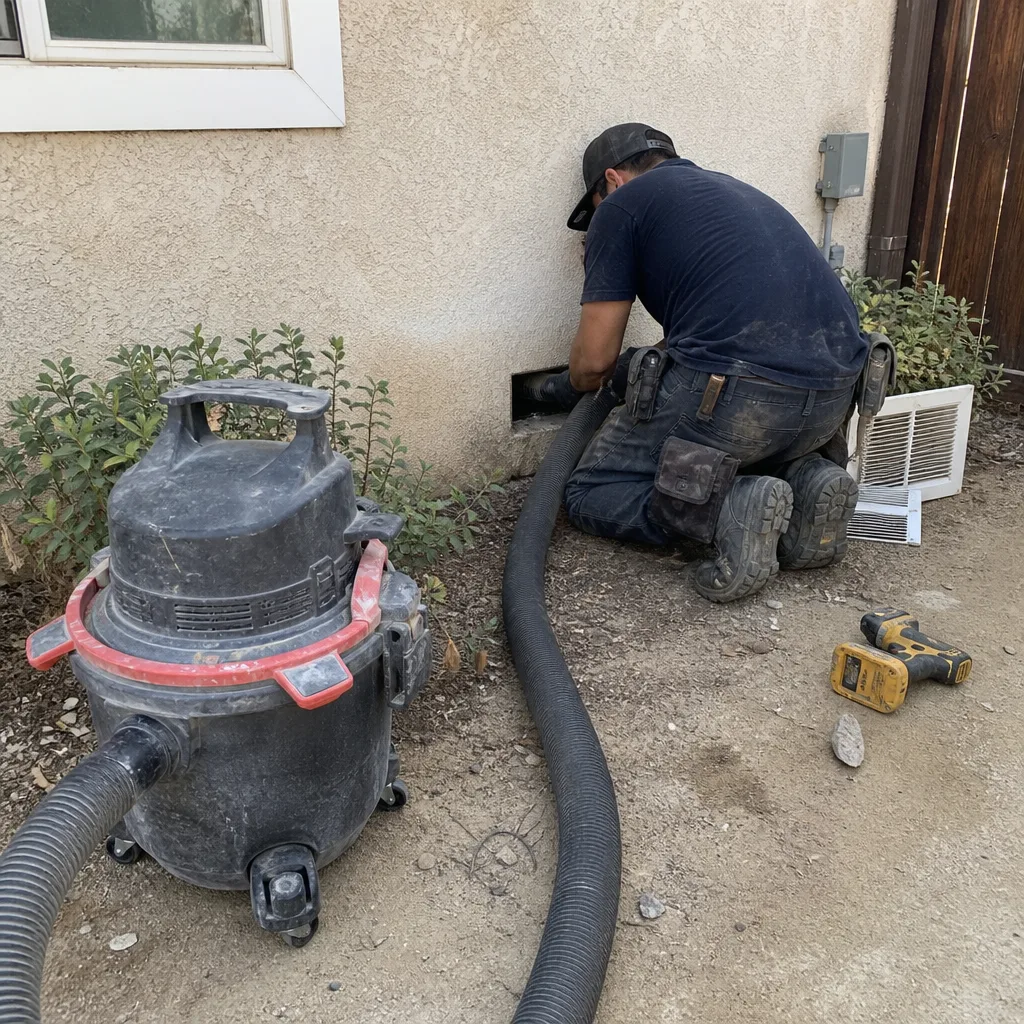
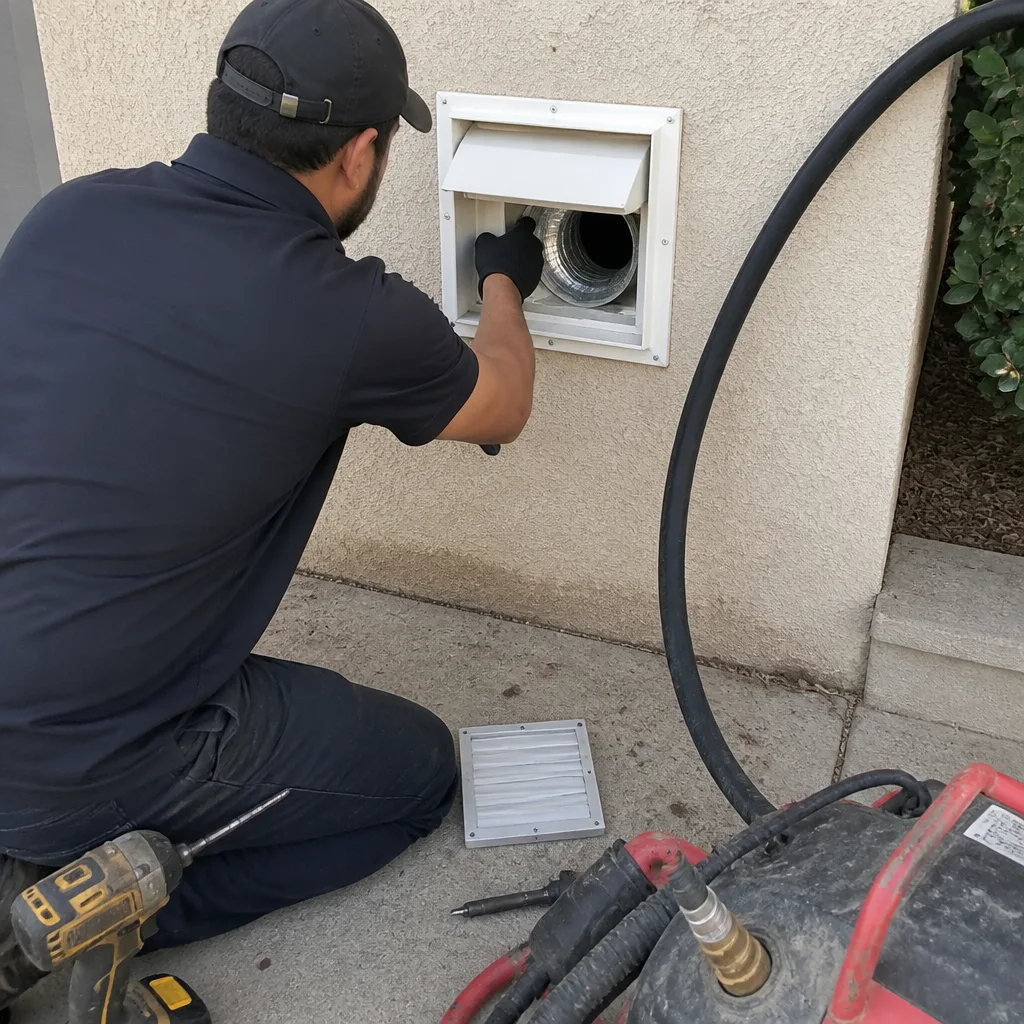
- Overlooking the dryer vent in the DIY vs. professional decision. This is a separate system with separate risks. A clogged dryer vent is a leading cause of residential fires, and it can’t be properly cleaned with consumer tools. Our Dryer Vent Cleaning in Murrieta service addresses that specific hazard.
When to Call a Professional
Call a professional when any of these conditions apply: visible dust accumulation at registers despite regular cleaning, household allergy or asthma symptoms that worsen when the system runs, musty odor from vents, evidence of pest activity in the ductwork (droppings, nesting material), post-renovation dust throughout the home, a system that hasn’t been professionally cleaned in 5+ years, or a dryer vent that hasn’t been cleaned in over a year. In our experience, these are the signals that DIY maintenance has reached its ceiling and the system needs the extraction force and access only professional equipment provides.
Duct Cleaning Murrieta offers free estimates in Murrieta – call (855) 341-7672 to schedule an inspection. We’ll show you what’s actually in your ducts before any work is quoted, so the decision is based on evidence, not guesswork.
Frequently Asked Questions
Professional whole-system duct cleaning in Murrieta typically costs $350-600 for a single-system home, varying by square footage, number of returns, and accessibility. The price should be quoted as one flat price per system before work begins – a red flag is any company quoting per-vent pricing. Call (855) 341-7672 for a free estimate specific to your home’s system size and condition.
You can clean register covers, replace filters, and vacuum the first 12 inches of branch duct at each opening – roughly 8-15% of the total interior surface area. You cannot reach trunk lines, plenums, or most branch interiors with consumer tools. For those areas, effective cleaning requires negative pressure of 2,000-4,000 CFM, which consumer vacuums don’t come close to producing.
Every 3-5 years for most Murrieta homes, sooner with pets, smokers, allergy-sensitive occupants, or recent renovation work. The local climate matters: our dry, dusty conditions and wildfire-season particulate accelerate accumulation compared to more humid coastal areas. For a maintenance calendar, see our Seasonal Air Duct Cleaning Care for Murrieta: Year-Round Homeowner’s Guide. If you’ve never had the system cleaned and the home is 10+ years old, schedule an inspection to establish a baseline.
The gap usually reflects equipment quality and scope definition. Companies quoting $150-200 typically send a technician with a consumer-grade vacuum and spend 45 minutes at the registers. The job looks similar from the outside but removes a small fraction of what negative-pressure equipment extracts. The bargain quote isn’t cheaper – it’s a different service marketed under the same name.
Ask for before-and-after photos or video from inside the ducts. Any legitimate company running borescope inspection equipment can show you the trunk line and branch interiors before cleaning and after. If a company can’t or won’t provide interior visual documentation, you have no evidence the work happened beyond what you could have done yourself.
Maybe not – and that’s an honest answer. If your home is under 5 years old, you run good filters changed on schedule, have no pets or smokers, and haven’t done renovation work, your ducts may legitimately not need professional cleaning yet. The only way to know is to look inside, which is why we recommend a borescope inspection before spending money on either DIY equipment or a full professional cleaning.
The Bottom Line
The honest answer to the DIY versus professional duct cleaning question is that both have a place. DIY maintenance – register cleaning, filter discipline, basic visual inspection – extends the interval between professional cleanings and improves everyday air quality at zero marginal cost. What DIY cannot do is clean the trunk lines, plenums, and branch duct interiors where 85%+ of debris accumulates. That requires negative-pressure equipment producing 2,000-4,000 CFM with mechanical agitation, equipment that costs more to buy than a decade of professional cleanings. For most Murrieta homeowners, the smart approach is maintenance you do yourself, combined with professional cleaning every 3-5 years and sooner after renovation, wildfire season, or when inspection reveals significant accumulation. The goal is evidence-based cleaning, not cleaning based on a guess. Explore more guides & resources on maintaining healthy indoor air.
Written by the team at Duct Cleaning Murrieta, serving Murrieta since 2015.
See the difference
 Before
 After
 Before
 After
 Before
 After