
Last updated November 2, 2026
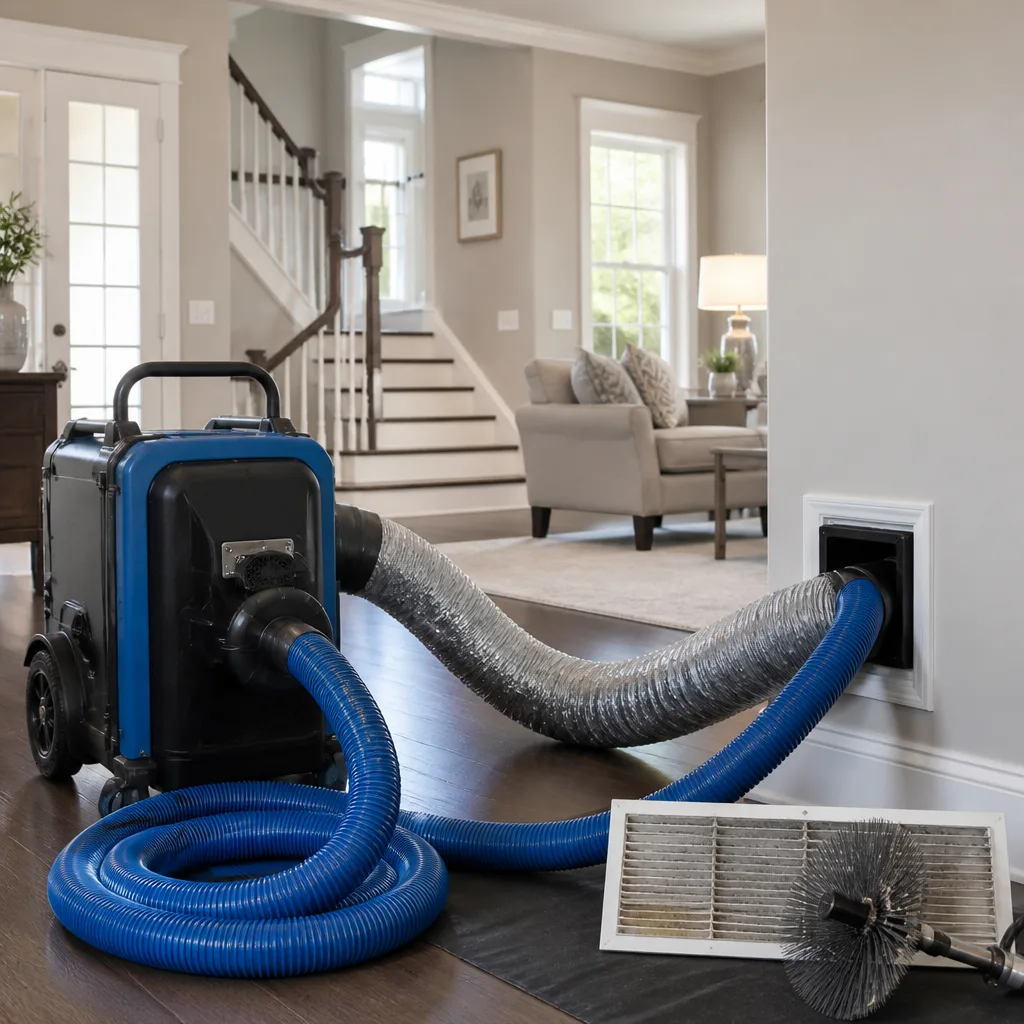 Whole-home duct cleaning
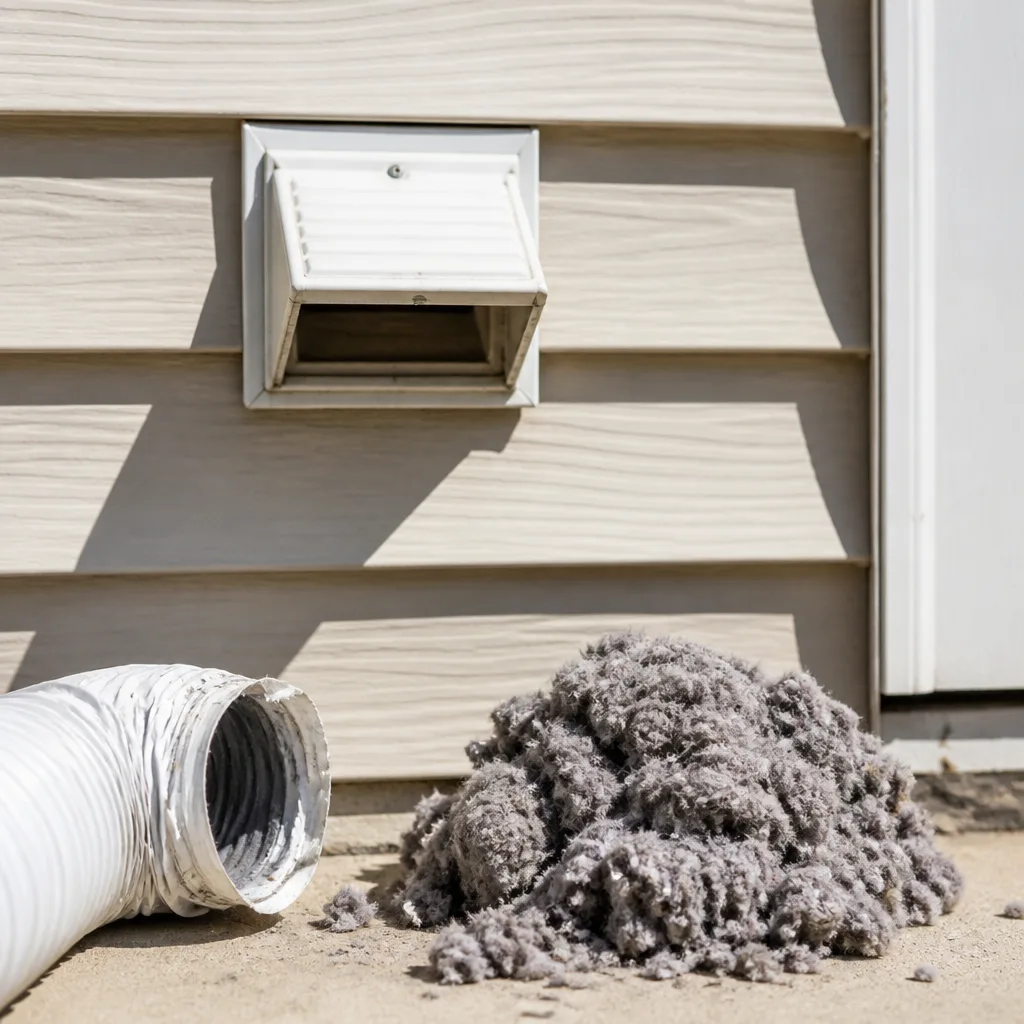 Dryer vent cleaning
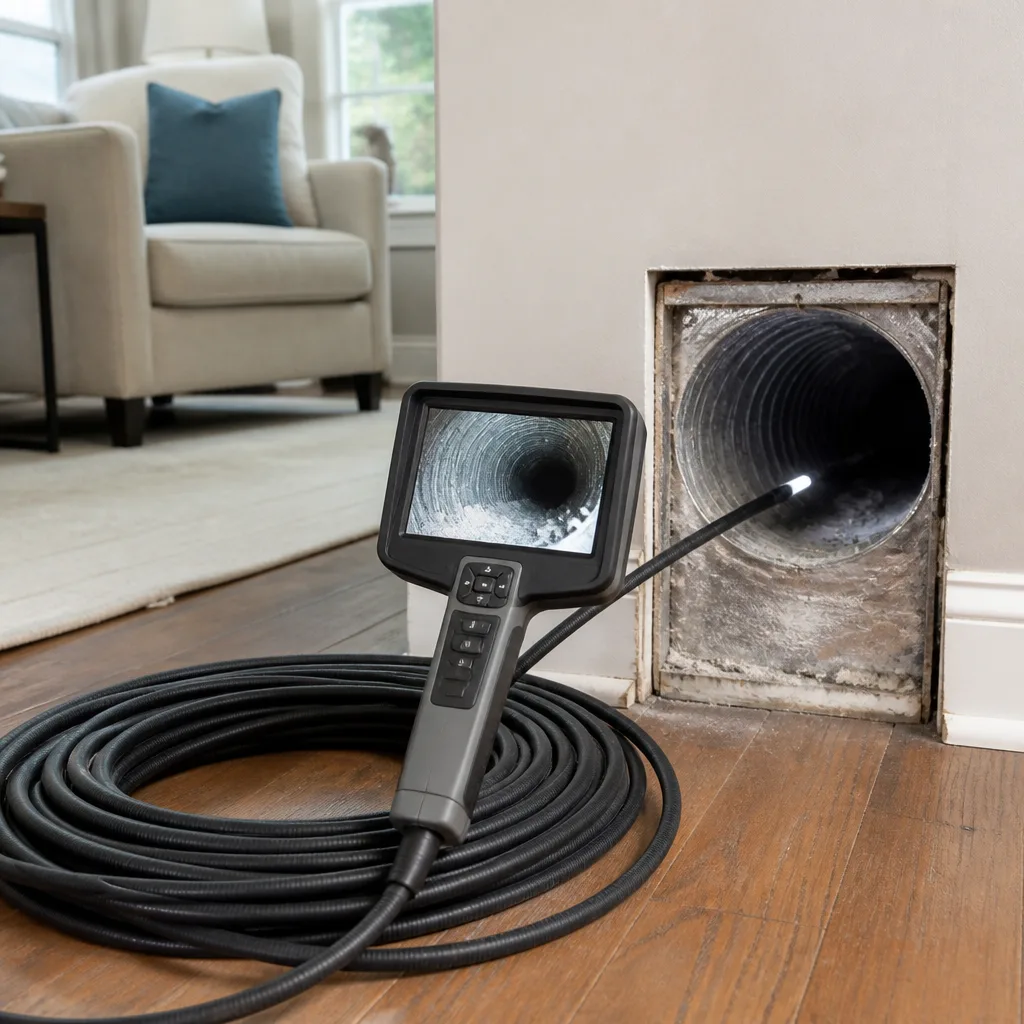 Camera inspection
 Sanitizing & deodorizing
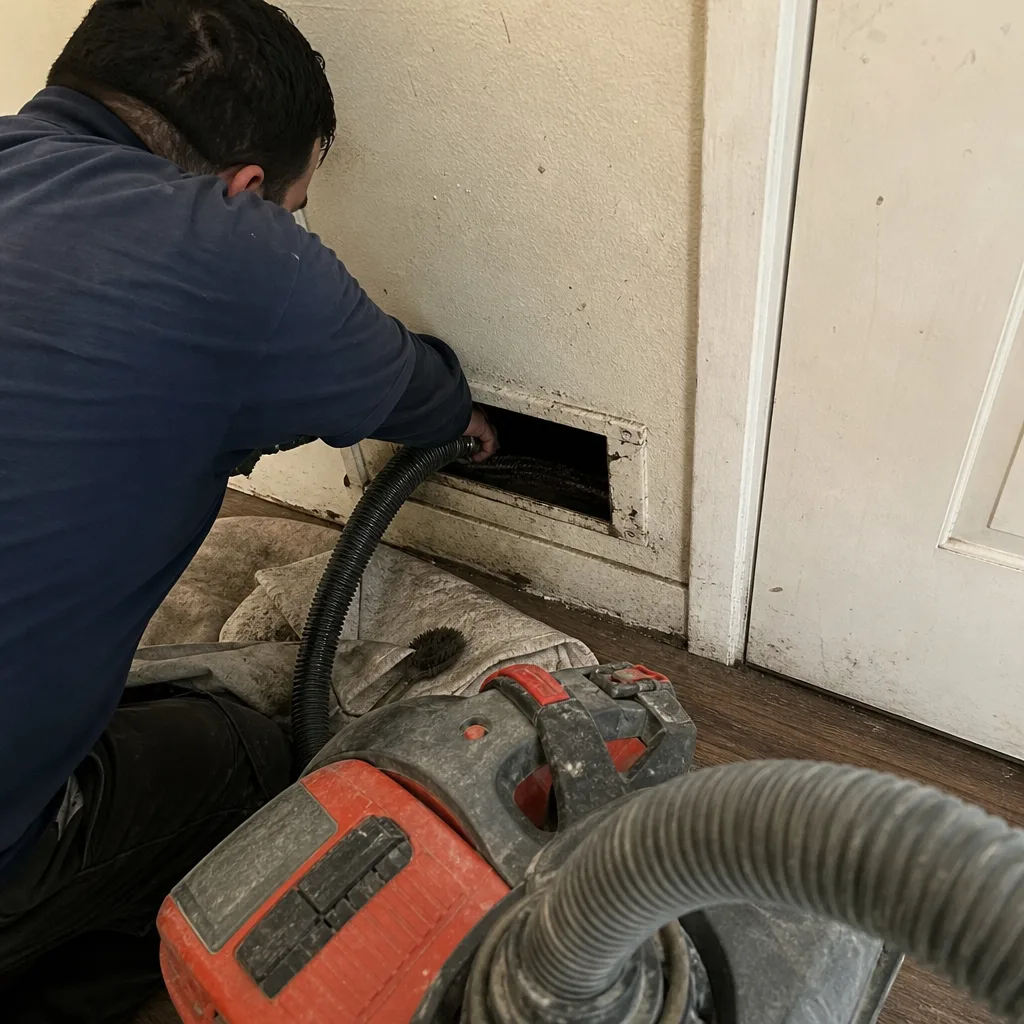
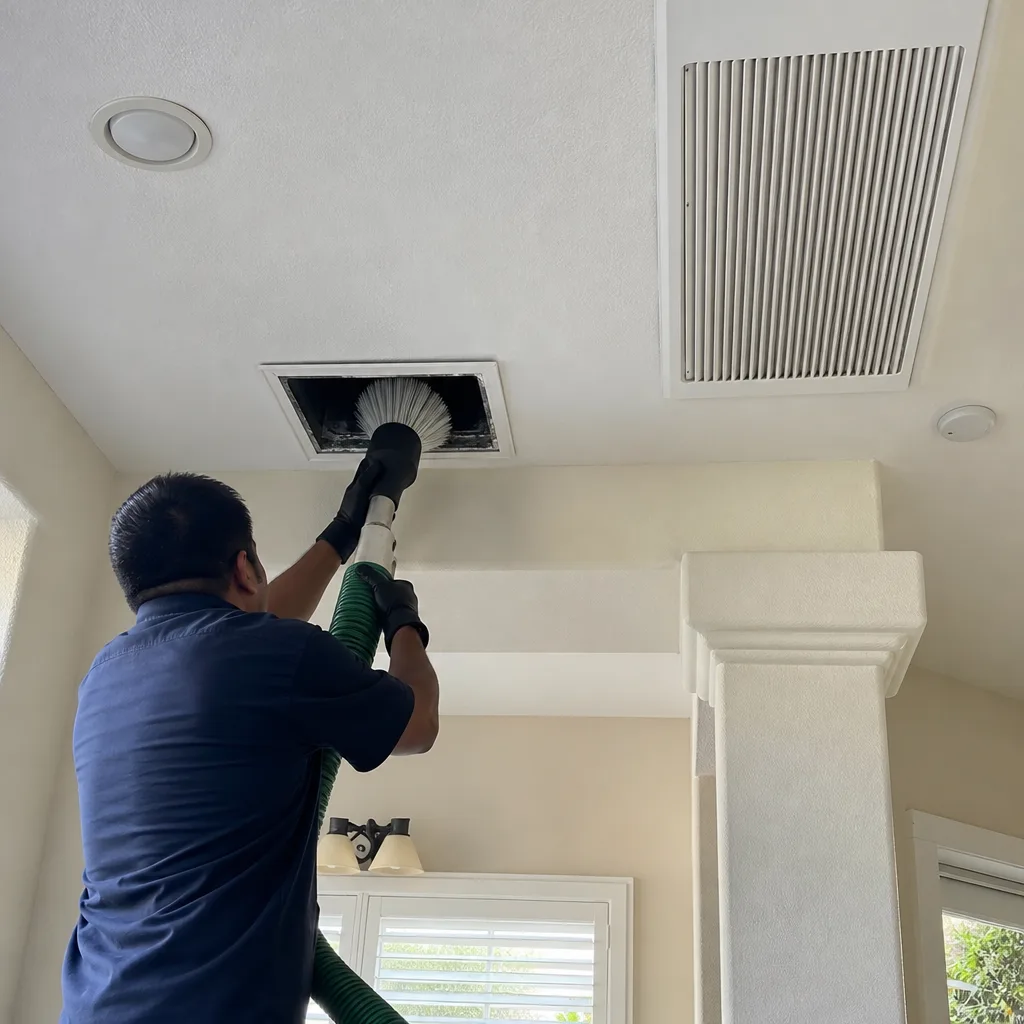
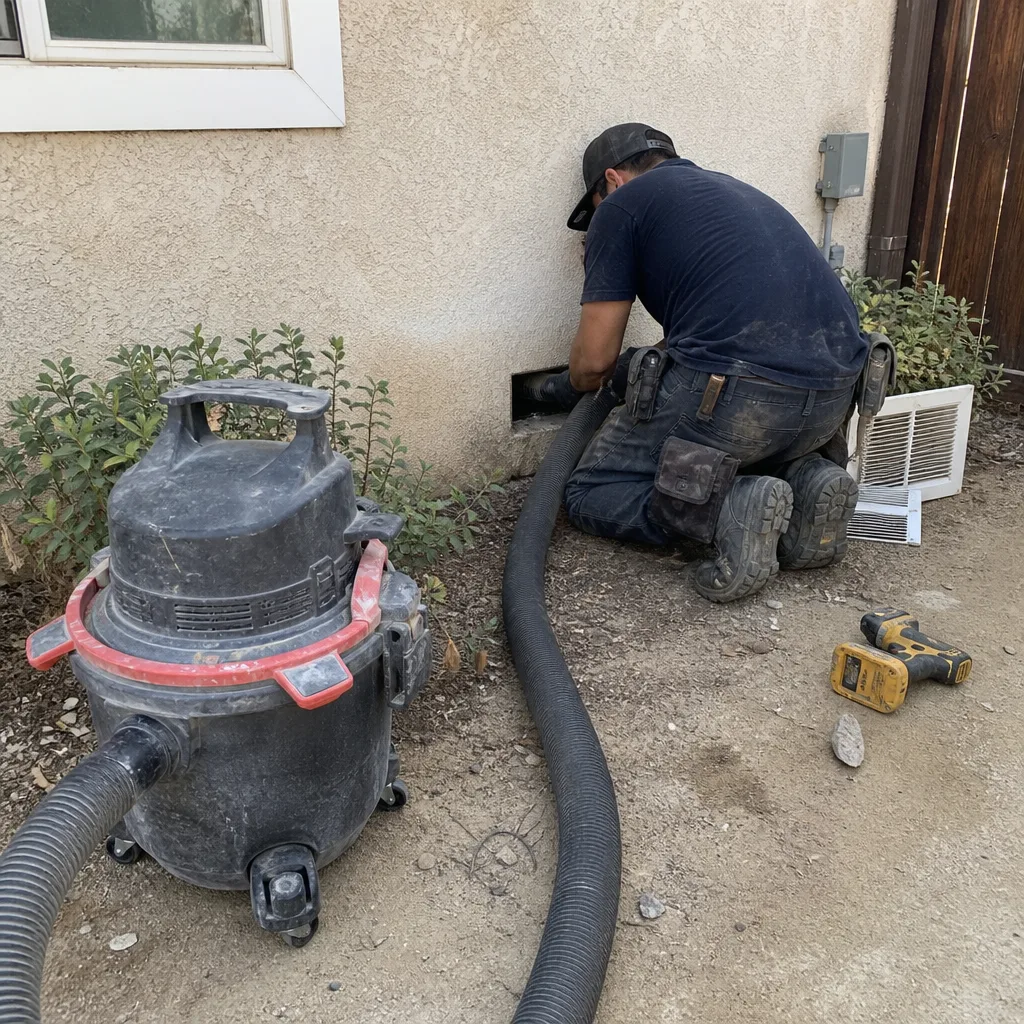
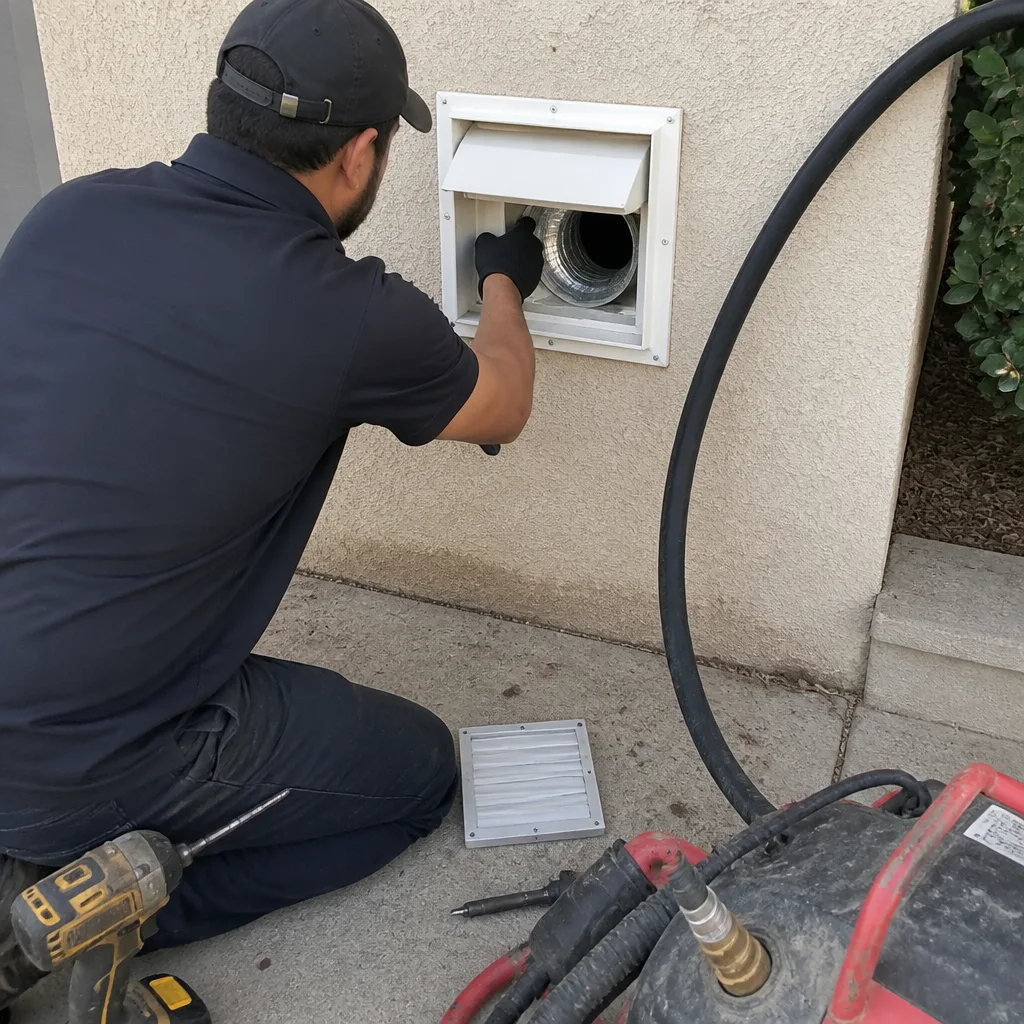
Whole-system duct and dryer vent check with before-and-after photos - you see exactly what came out of your vents
That "$99 whole-house special" is a bait ad - the real number appears once they are in your hallway, or the "clean" is a shop-vac at the register. We photograph the inside of your ducts before and after instead.
Seasonal Air Duct Cleaning Care for Murrieta: Year-Round Homeowner’s Guide
In Murrieta, the heating-to-cooling switch typically flips in March, not October. A homeowner who schedules duct cleaning in the fall believing they’re “prepping for winter” has already missed the highest-value window of the year. The cooling season here runs nine months, and once that blower kicks on at full volume, every particle sitting in your ducts from the heating season, plus everything the Santa Anas pushed in, gets recirculated through your living space daily. This guide lays out a Murrieta-specific duct care calendar built around the city’s actual climate rhythms, not a generic four-season template that fits a New England suburb better than the Temecula Valley.
Styles & brands we work with
- Whole-home duct cleaning
- Dryer vent cleaning
- Camera inspection
- Sanitizing & deodorizing
Quick Answer
For most Murrieta homes, the single best time to clean air ducts is between late February and mid-March, a window that clears heating-season debris before the long cooling cycle loads the system. A second, lighter inspection window follows the wildfire and Santa Ana season in late November or December. Outside these two periods, quarterly filter changes and register checks keep the system functional between professional cleanings.
Table of Contents
- Murrieta’s Two-Season Reality and What It Does to Ducts
- The February-to-March Cleaning Window: Why It Matters
- What Wildfire Smoke Deposits Inside Duct Systems
- Santa Ana Winds and Register Backdraft: The Overlooked Debris Path
- Tasks a Homeowner Can Do Between Professional Cleanings
- Using EPA AirNow AQI Data to Time Filter Changes and Ventilation
- What a Professional Duct Cleaning Actually Removes
- Common Mistakes to Avoid
- When to Call a Professional
- Frequently Asked Questions
- The Bottom Line
Murrieta’s Two-Season Reality and What It Does to Ducts
Murrieta does not get four seasons. We get a short heating season, usually December through February, and a long cooling season that can stretch from March into November. Between them sit two narrow shoulder windows, and those windows are where duct care decisions should be made. The city’s semi-arid Mediterranean climate means low humidity, which is good for preventing mold growth inside ducts but bad for dust generation. Dry air keeps particles suspended longer, and the constant thermal cycling of a home’s HVAC system pulls those particles into the return path continuously.
Our technicians see this pattern repeatedly in homes across the city: by August, a system that was cleaned in March carries a visible film of fine dust on blower vanes and coils. That film came from inside the house, from outdoor air pulled in during cooling, and from whatever the duct system accumulated during the months the AC ran hardest. The point isn’t that ducts get dirty fast here, though they do. The point is that the timing of cleaning determines how much of that load gets pushed back into the living space before the next professional service.
Homes in neighborhoods like Copper Canyon and Bear Creek, closer to open hillsides and undeveloped scrub, tend to see higher debris loads from wind-blown dust and pollen than homes in the city’s flatter central areas. That’s not a reason to clean more often so much as a factor in how much material reaches the registers between services.
The February-to-March Cleaning Window: Why It Matters
The late February to mid-March window in Murrieta is the single highest-value period for duct cleaning. Here’s the sequence that makes it so. The heating system has run for two to three months, drawing dust, skin cells, and pet dander into the return path. That’s normal. What isn’t normal is what happens next: the AC season begins, the blower speed increases to move cooled air, and every deposit inside the duct system gets picked up and distributed through the supply registers at higher velocity than during heating.
We’ve seen the difference in homes that clean in March versus homes that clean in October. The March home enters the cooling season with clean duct interiors. The October home spends nine months pushing debris back into the living space, then cleans right before the heating season, when the heater runs fewer hours and the blower operates at lower static pressure. The October cleaning isn’t a mistake, but it’s the wrong end of the heat load. If a homeowner only schedules once per year, the window that protects nine months of indoor air is March.
There’s a secondary benefit. A March cleaning gives the technician a clear view of the system before it enters its heaviest workload of the year. Leaks, disconnected runs, and register damage from the heating season are visible and addressable then. By August, when the system is running daily in peak heat, a small duct leak becomes a real energy penalty: cooled air lost into the attic or wall cavity, pulling hot outdoor air into the return path. Catching that in March through a combined air duct cleaning in Murrieta and inspection pays for itself in comfort and efficiency during the peak cooling months.
What Wildfire Smoke Deposits Inside Duct Systems
Murrieta sits downwind of some of California’s most active wildfire zones, and the typical fire season from August through November pushes smoke into the Temecula Valley with regularity. Smoke isn’t just an outdoor problem. Fine particulate matter from wildfire smoke, specifically particles in the PM2.5 and smaller range, enters homes through the same HVAC system that filters indoor air. Much of it gets caught by the filter, which is the point. But the fraction that bypasses a loose filter slot or settles in the return duct before the filter media is now inside the system.
The deposits left by wildfire smoke differ from routine household dust. Smoke particles carry combustion byproducts, including volatile organic compounds that off-gas for weeks or months after the fire. A duct system that pulled smoke through the return path during a multi-day smoke event now holds those particles in the duct lining, at register boots, and on the blower. When the next cooling season starts, the VOCs re-enter the air stream.
This is why a post-fire-season inspection is a distinct task from routine annual cleaning. A homeowner who cleaned in March and then survived several weeks of August smoke should inspect registers and consider a lighter service in November or December. The goal isn’t necessarily a full redeep clean, but a targeted removal of smoke residue before the heating season recirculates it through a closed-up house. The technical distinction matters: smoke residue clings to duct surfaces differently than loose dust, and it responds to agitation and extraction differently. Professional equipment matters here. Systems built for debris extraction, including Rotobrush and Nikro platforms, disturb and remove surface-adhered smoke particulates more effectively than vacuum-only approaches.
Santa Ana Winds and Register Backdraft: The Overlooked Debris Path
Santa Ana wind events, which hit Murrieta primarily from October through January, create a duct contamination pathway that almost no general HVAC guide mentions: register backdraft. Here’s how it works. Santa Ana winds blow from the northeast at sustained speeds that routinely exceed 30 mph, with gusts reaching 60 mph or more in the foothills. Those winds strike exterior walls and rooflines and pressurize them unevenly. When wind hits a wall vent or roof jack, it can drive outdoor air backwards through the duct run, into the system, and out through the return registers inside the home.
This backdraft carries whatever’s in the air: dust, leaf debris, fine sand, ash from any active fires, and the general particulate load of a dry autumn. In neighborhoods like Greer Ranch or western Murrieta near the foothills, where Santa Ana exposure is more direct, we see higher amounts of granular debris deposited in return boots after significant wind events. Material that enters through a supply register gets pulled through the entire system on the next cycle.
The practical response is a register check after any Santa Ana event strong enough to rattle the house. Homeowners should remove return grilles and look for visible debris accumulation on the back side of the register and the first few inches of the boot. If granular debris is present, the next step is a quick visual check of the supply registers in the same room. Debris that made it to the return means debris entered somewhere upstream. For homes where the event deposited visible material, a professional inspection is the right call. A technician can assess whether the backdraft pushed contamination deep into the runs or whether the deposit is localized enough to be a simple clean-and-rebalance task, which is part of our air duct repair in Murrieta service scope.
Tasks a Homeowner Can Do Between Professional Cleanings
Professional duct cleaning is an annual or semi-annual event for most Murrieta homes, but the months between appointments involve tasks a homeowner can handle directly. These tasks don’t replace professional cleaning. They extend its effectiveness and catch problems before they require a service call.
Here’s a quarterly maintenance sequence we recommend for Murrieta homeowners:
- Inspect the filter slot and seal. Pull the filter and check the frame around the slot for gaps. A filter that fits loosely allows a significant fraction of return air to bypass filtration entirely, which means unfiltered air, including the dust this region generates year-round, enters the blower and evaporator coil directly. High-quality media filters from Honeywell or Aprilaire fit more precisely and offer better particle capture than fiberglass throwaways. The upgraded media also has a longer service interval in our dry climate, though we still recommend checking monthly during fire season and during the worst of the Santa Ana dust.
- Check visible supply registers for dust streaking. Remove each supply register and check the back side. Streaking or fine dust accumulation on the louver edges means the duct upstream is shedding material. It’s an early warning sign that the next professional service should include interior agitation and extraction, not just a surface vacuum.
- Inspect return grilles for tracked dirt patterns. Return grilles accumulate dust on the front face as air is pulled through. That’s expected. But if the dirt forms a V-shape or distinct pattern around the edges, that points to uneven airflow or a partially closed damper somewhere in the return run. Note it and mention it when you schedule the next cleaning.
- Walk the exterior of the home after wind events. Check the roofline for lifted or shifted roof jacks, the wall vents for visible debris buildup, and the area around the outdoor unit for wind-blown litter. The condenser coil isn’t part of the duct system, but a coil clogged with Santa Ana debris reduces efficiency and changes system pressures, which affects how the ducts perform.
These are simple checks. None requires tools beyond a screwdriver and eyesight. But they create a record of what the system looked like in between professional visits, and that record is genuinely useful to a technician diagnosing airflow problems during the next service. Our team at Duct Cleaning Murrieta has walked into homes where the homeowner had noticed a problem but couldn’t articulate when it started. Three months of quarterly observations would have answered that question before we even opened a register.
Using EPA AirNow AQI Data to Time Filter Changes and Ventilation
The EPA’s AirNow system provides real-time and forecasted air quality index data for the Murrieta/Temecula Valley region. For a homeowner managing duct and filter maintenance, this data is a practical decision-making tool, not an abstraction. The AQI scale runs from 0 to 500, and the breakpoints matter for HVAC decisions.
Here is how we translate AQI readings into household action:
| AQI Reading | Homeowner Action |
|---|---|
| 0 to 50 (Good) | This is the window to open windows and let fresh air circulate, particularly in the shoulder seasons when the AC or heat cycles are short. Airing out the home during Good AQI periods flushes accumulated indoor CO2 and volatile organic compounds without adding a particulate burden to the ducts. |
| 51 to 100 (Moderate) | Normal operation. Continue with regular filter inspections. No special action required. |
| 101 to 150 (Unhealthy for Sensitive Groups) | Keep windows closed and run the HVAC system fan continuously to filter indoor air. Confirm the filter is clean enough to handle the continuous runtime; a dirty filter in this scenario just bottlenecks the system. |
| 151 to 200 (Unhealthy) | Same as above, plus reduce outdoor air intake by closing fresh-air dampers if the home has them. Avoid any cooking or activity that adds indoor particulate load. This is also the range where we see smoke settling into return ducts. |
| 200+ (Very Unhealthy/Hazardous) | Full closed-home operation. Run the fan continuously. Do not introduce outdoor air. After the event clears, check the filter and consider whether this event deposits enough residue to justify a professional inspection, especially if the system ran continuously through the worst of it. |
The key isn’t just the reading on any given day; it’s the cumulative hours the system runs while outdoor air is compromised. A single day at AQI 160 doesn’t warrant a filter swap. Seven consecutive days at 120 does. During wildfire season, when Murrieta can sit at elevated AQI for weeks, the filter is doing heavy lifting. For homes with premium filtration platforms, including Aprilaire media cabinets, the higher MERV media can capture more of the fine fraction, which extends safe operation but also loads the filter faster. Check monthly during fire season regardless of the nominal service interval.
What a Professional Duct Cleaning Actually Removes
Understanding what is inside a duct system helps a homeowner appreciate why a one-size cleaning doesn’t apply to every residence. The debris profile in a Murrieta home varies by neighborhood, household factors, and the season’s events. Here’s what our technicians find and remove during a thorough service.
- Fine clay dust from the region’s dry soil. Murrieta’s hillsides and undeveloped areas produce a fine dust that stays suspended and enters homes through every door opening and window. It’s the dominant particulate in most systems we clean.
- Pet hair and dander, often matted at return grilles. Homes with multiple animals show higher accumulation at the return path because that’s where all the hair converges. Dander is a common asthma trigger, and removing the reservoir from inside the ducts reduces the indoor load.
- Construction debris from the home’s initial build plus accumulated drywall dust. We regularly find drywall chunks, paint flakes, and even empty cans inside ducts of homes that have never been cleaned since construction. The builders run the HVAC during finish work, and the debris stays.
- Santa Ana-driven sand and granular debris, concentrated around exterior wall penetrations. The backdraft phenomenon described above tells us where to expect this material.
- Smoke residue from wildfire season, especially in the return duct’s first few feet and on the blower wheel. This is a distinct residue with a distinct odor, and it doesn’t respond well to simple vacuuming.
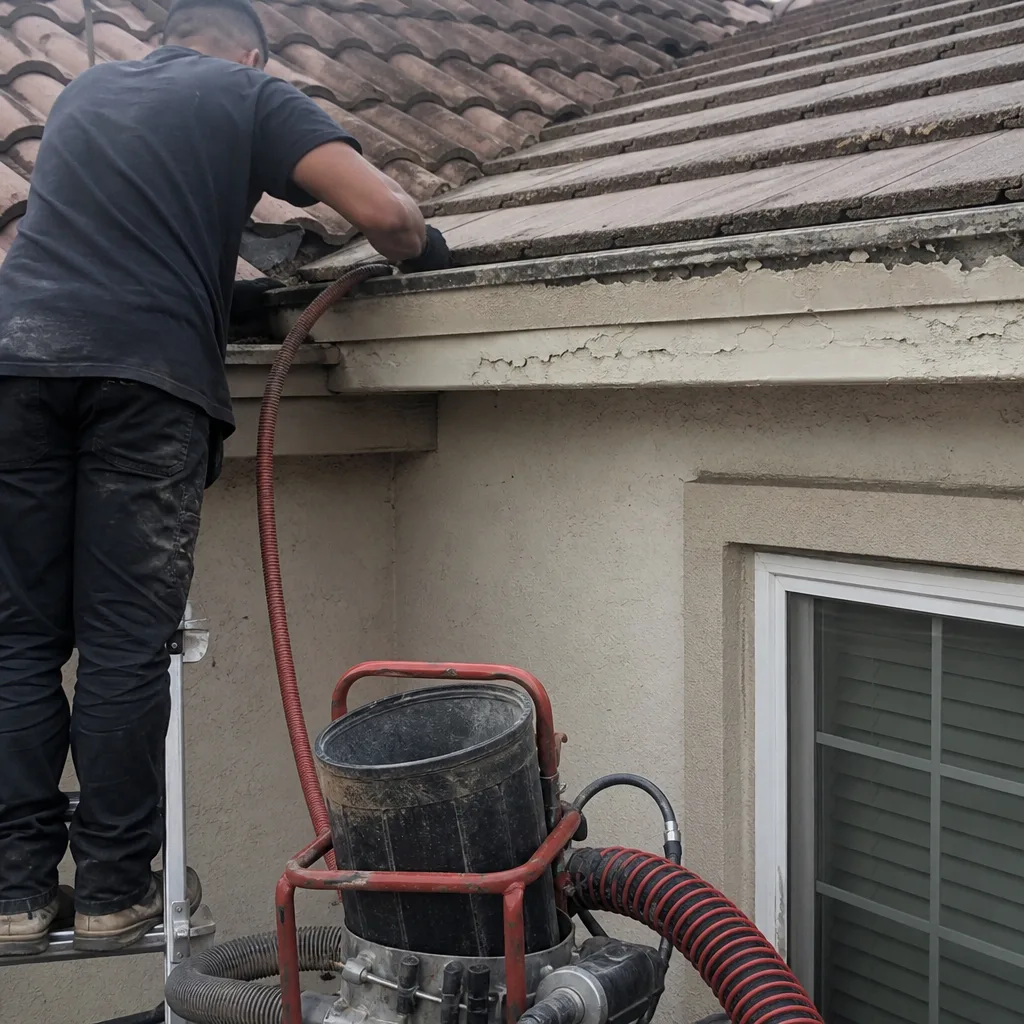
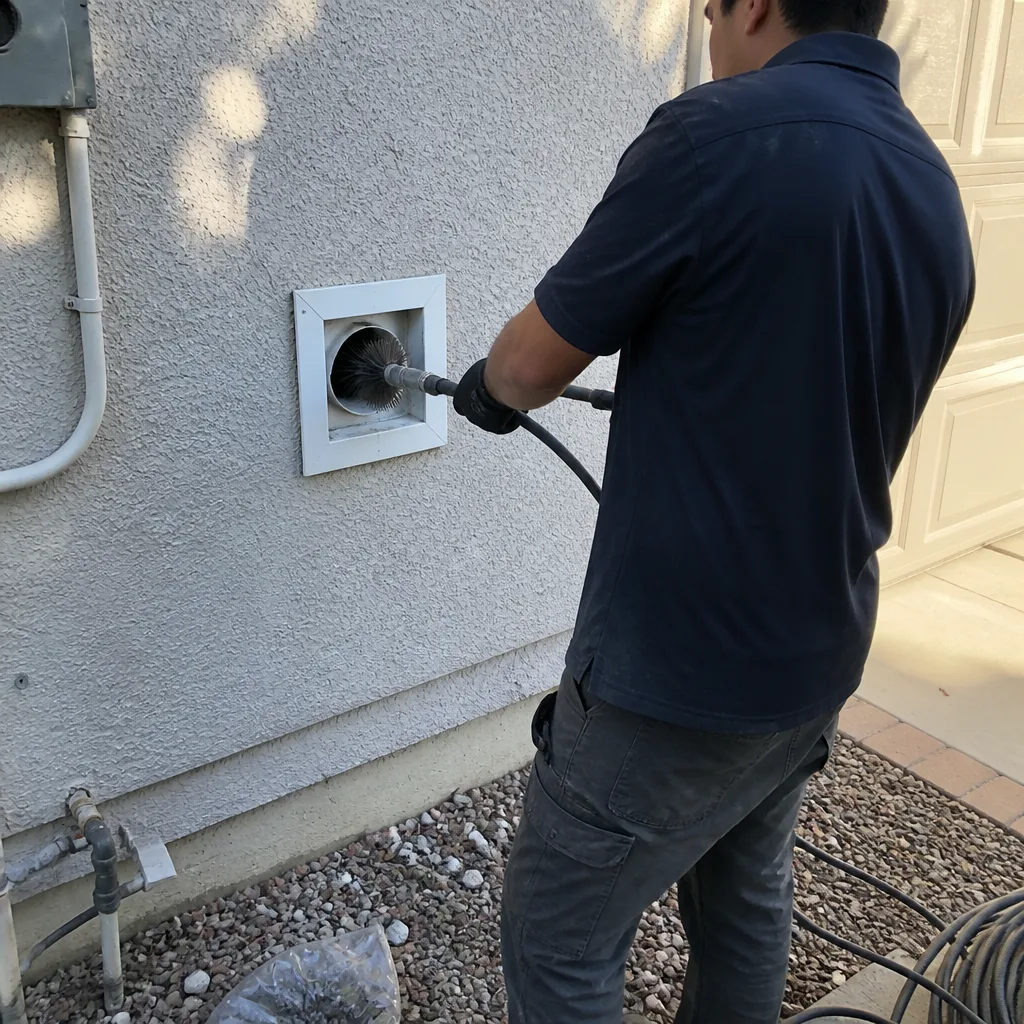
The equipment that removes these materials matters. Our service uses professional-grade Rotobrush and Nikro systems, the same platforms commercial and restoration contractors run, not consumer shop vacuums. These systems generate the agitation and extraction force needed to dislodge adhered debris and pull it into HEPA-filtered collection. For scenarios involving elevated contamination, including heavy smoke residue or visible allergen loads, our team also carries Abatement Technologies equipment, which is built for exactly these air-scrubbing and containment needs. The gear matters because the debris profile in this region is not a light dusting of household fluff. It’s dense, it’s fine, and it requires mechanical removal.
In our experience, the most productive cleanings happen when the homeowner can describe what the house has been through in the preceding year: a remodel, a nearby wildfire, an unusual Santa Ana season, a new pet. That context guides where we focus. A home that closed up for three weeks of AQI 180 smoke gets a different attention pattern than one that simply hasn’t been cleaned in a decade. Both need service, but the same route through the system wouldn’t serve both equally.
Common Mistakes to Avoid
- Timing cleaning around a calendar instead of the cooling season. The March window matters more than any other date on the annual schedule. A Murrieta home cleaned in October has already spent nine months recirculating whatever accumulated during the previous heating season and everything the AC pulled in during peak runtime.
- Assuming a clean filter means clean ducts. The filter protects the equipment, not the air delivery path. Ducts accumulate debris regardless of filter condition. The filter media catches what it catches; everything else moves downstream or stays in the run.
- Using the cheapest available service and expecting a thorough result. A service that sends a technician with a consumer shop vacuum into the vents doesn’t have the tools to agitate and extract adhered debris. In Murrieta’s dust profile, superficial cleaning leaves the majority of the particulate load in place.
- Ignoring the return side of the system. Homeowners tend to focus on supply registers because that’s where visible dust appears. But the return side is the intake path, and if the return boots are packed with debris, that debris is what enters the blower, coats the coil, and distributes through the home. A proper clean has to address both sides.
- Waiting until there’s a visible problem to act. By the time dust streaking appears on registers or airflow from a vent noticeably drops, the system has been compromised for months. The register check sequence described above catches these conditions earlier.
- Scheduling a cheap dryer vent cleaning as an add-on from a handyman service rather than a dedicated provider. Dryer vents carry lint, a documented fire risk recognized by the NFPA. The dryer vent cleaning in Murrieta that matters is a full-tract service with professional tools, not a brush run from one end. The fire risk doesn’t care whose name is on the invoice.
When to Call a Professional
Some conditions signal that a professional visit is needed sooner rather than at the next scheduled interval. Visible dust puffing from supply registers when the blower starts means interior duct debris has reached a level that the airflow is actively dislodging it. A musty or smoke-like odor that appears only when the system runs points to deposits inside the ducts rather than in the room. Rooms that stay noticeably warmer or cooler than the rest of the house may indicate disconnected runs or duct leaks that require air duct repair. After a significant wildfire smoke event or a Santa Ana wind episode that left visible debris at registers, a professional inspection identifies whether contamination reached deeper into the system. Duct Cleaning Murrieta offers free estimates in Murrieta. Call (855) 341-7672 to schedule an inspection and get a precise quote on what your system actually needs.
Frequently Asked Questions
Air duct cleaning in Murrieta typically ranges from $350 to $700 for a complete system on a standard single-family home, with the final price driven by the number of vents, system accessibility, and the degree of contamination. Larger homes or systems with heavy debris accumulation can exceed this range. Reliable providers quote a flat system price after seeing the home, not a teaser per-vent figure that grows once the technician walks through the door. Call (855) 341-7672 for an exact quote after a free on-site inspection.
Most Murrieta homes benefit from professional duct cleaning every two to three years, with homes in high-dust neighborhoods or those with pets and allergy-sensitive occupants often benefiting from annual service. The February-to-March window is the most valuable timing, aligned with the start of the cooling season. Homes that experience significant wildfire smoke exposure should add a post-fire-season inspection in November or December.
Cheap duct cleaning services typically operate with consumer-grade equipment, often a shop vacuum and a brush attached to a drill, and they clean only what the technician can reach from the register openings. This approach leaves the majority of the adhered debris, including the fine dust that defines Murrieta’s indoor air problem, inside the system. Professional services using Rotobrush and Nikro systems cost more because the equipment and training required to agitate and extract the full debris load cost more to deploy. The difference isn’t a markup; it’s the tool doing the work.
The most direct answer: before-and-after photos taken from inside the duct runs. A thorough service includes photographic documentation showing the main trunk line and representative branch runs before and after cleaning. Ask for this documentation before you book. If a provider can’t offer or refuses to photograph the interior of the ducts, that’s a signal about what the service actually includes. Professional firms with fiber-optic inspection equipment will show you the condition of the system as part of the estimate and the result after the work is complete.
Yes, and in this region the effect is measurable for many households. Murrieta’s dry climate keeps dust and pollen suspended for long periods, and whatever enters the duct system gets recirculated through the living space repeatedly. Removing the accumulated reservoir of dust, pet dander, and pollen from inside the duct runs reduces the total indoor particulate load that occupants breathe, which matters most for households managing asthma or allergy symptoms. The duct system isn’t the source of the allergens, but it functions as a distribution system for them once they’ve entered.
They are separate services on separate systems, but they should be handled with the same care. The dryer vent carries lint-laden exhaust from the dryer to the exterior, and lint accumulation is the leading cause of dryer-related house fires according to NFPA documentation. Air duct cleaning addresses the HVAC delivery system. A dedicated dryer vent cleaning in Murrieta should be scheduled independently and performed by technicians who understand both the exhaust path and the termination point. We handle both as core services, not as one being an add-on to the other.
The Bottom Line
Murrieta’s climate rewards a duct care calendar built around the cooling season, not the traditional equinoxes. The February-to-March window is the anchor point, catching post-heating debris before nine months of air conditioning pushes it through the living space. Wildfire smoke adds a second, distinct inspection cycle, and Santa Ana winds introduce a debris path most homeowners never see. Between professional cleanings, quarterly register and filter checks extend the value of each service visit. The goal is straightforward: clean duct interiors entering the season when the system runs hardest. That’s the entire strategy, and it’s one most homes in this city can put to work immediately.
Written by the team at Duct Cleaning Murrieta, serving Murrieta since 2015.
See the difference
 Before
 After
 Before
 After
 Before
 After