
Last updated November 2, 2026
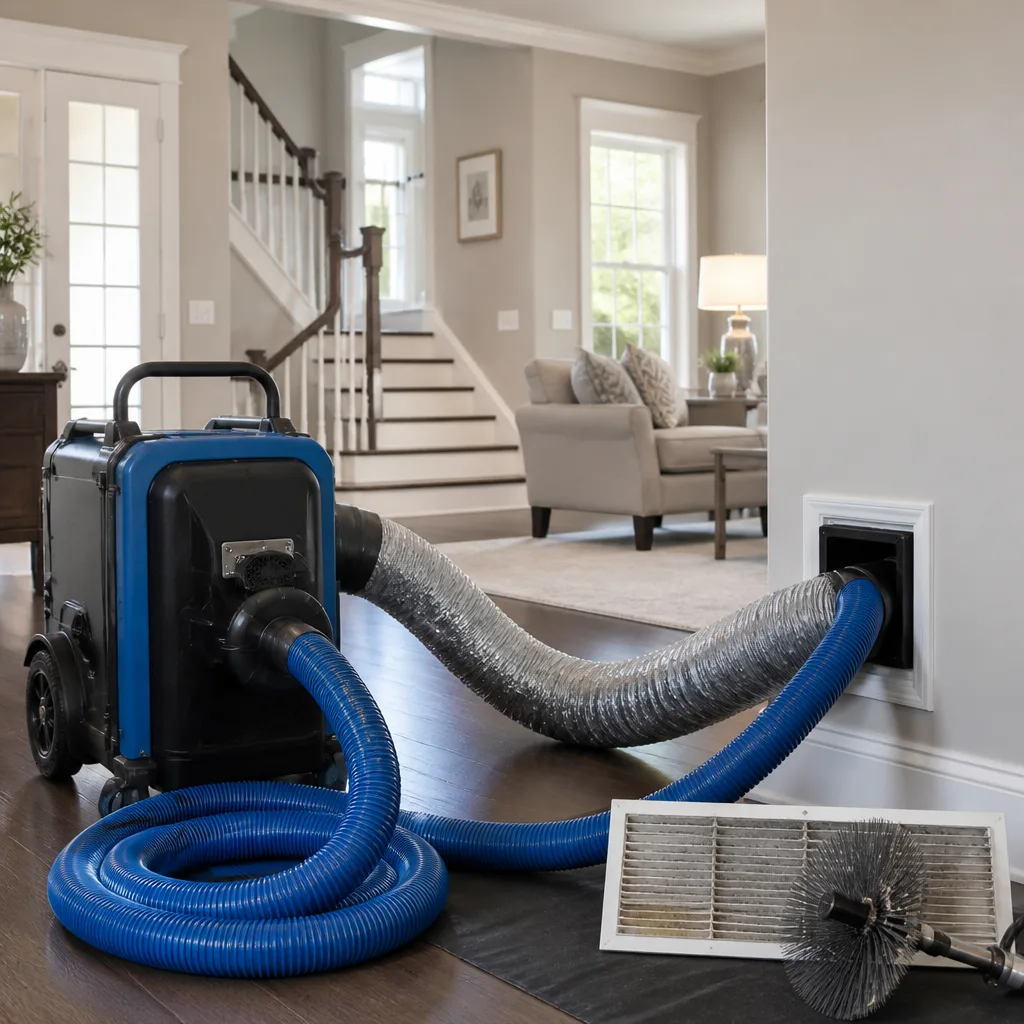 Whole-home duct cleaning
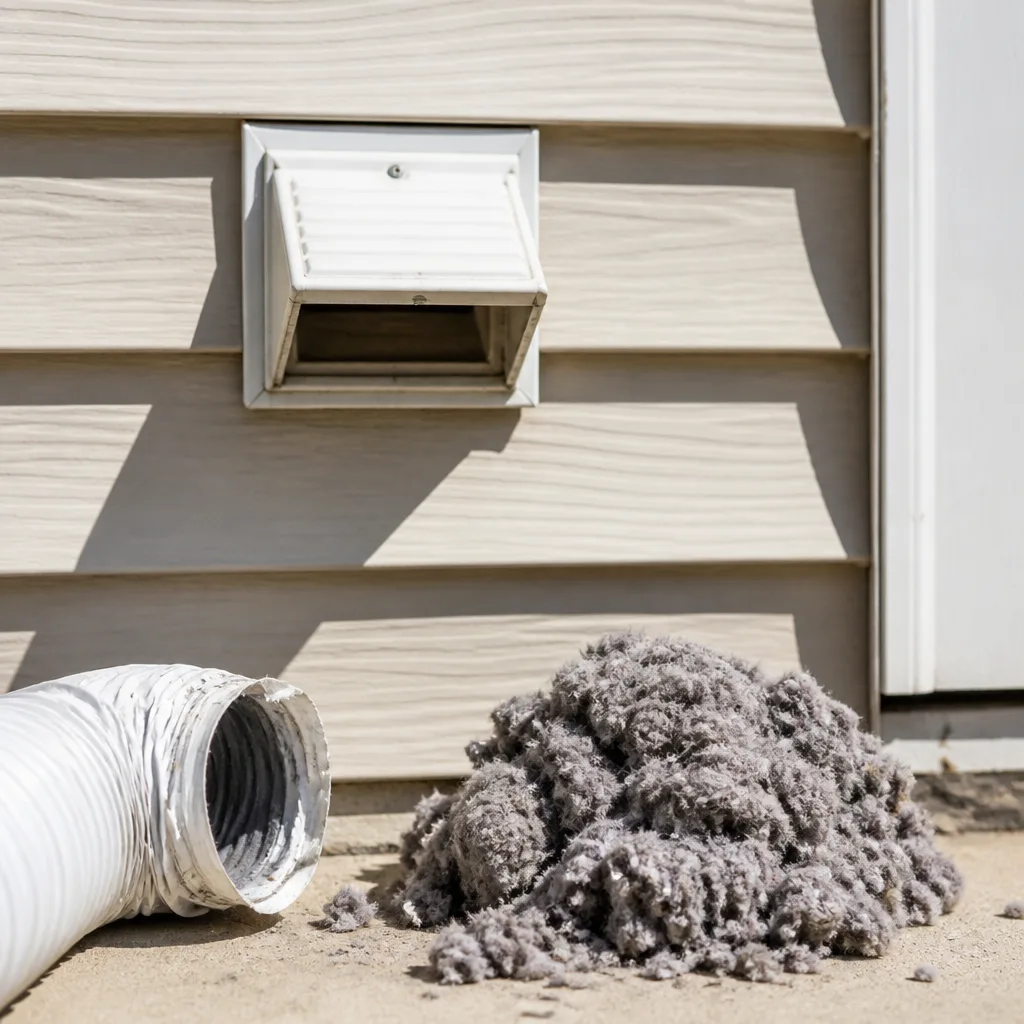 Dryer vent cleaning
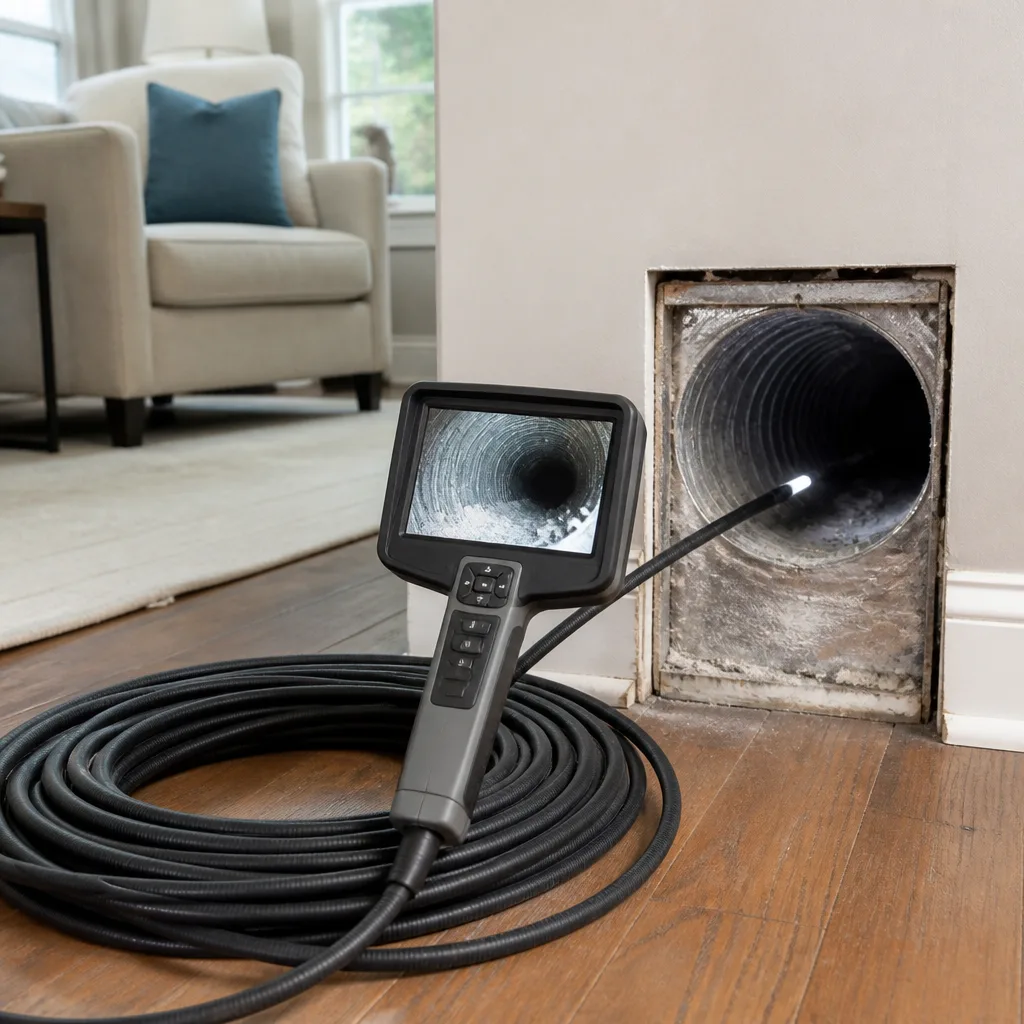 Camera inspection
 Sanitizing & deodorizing
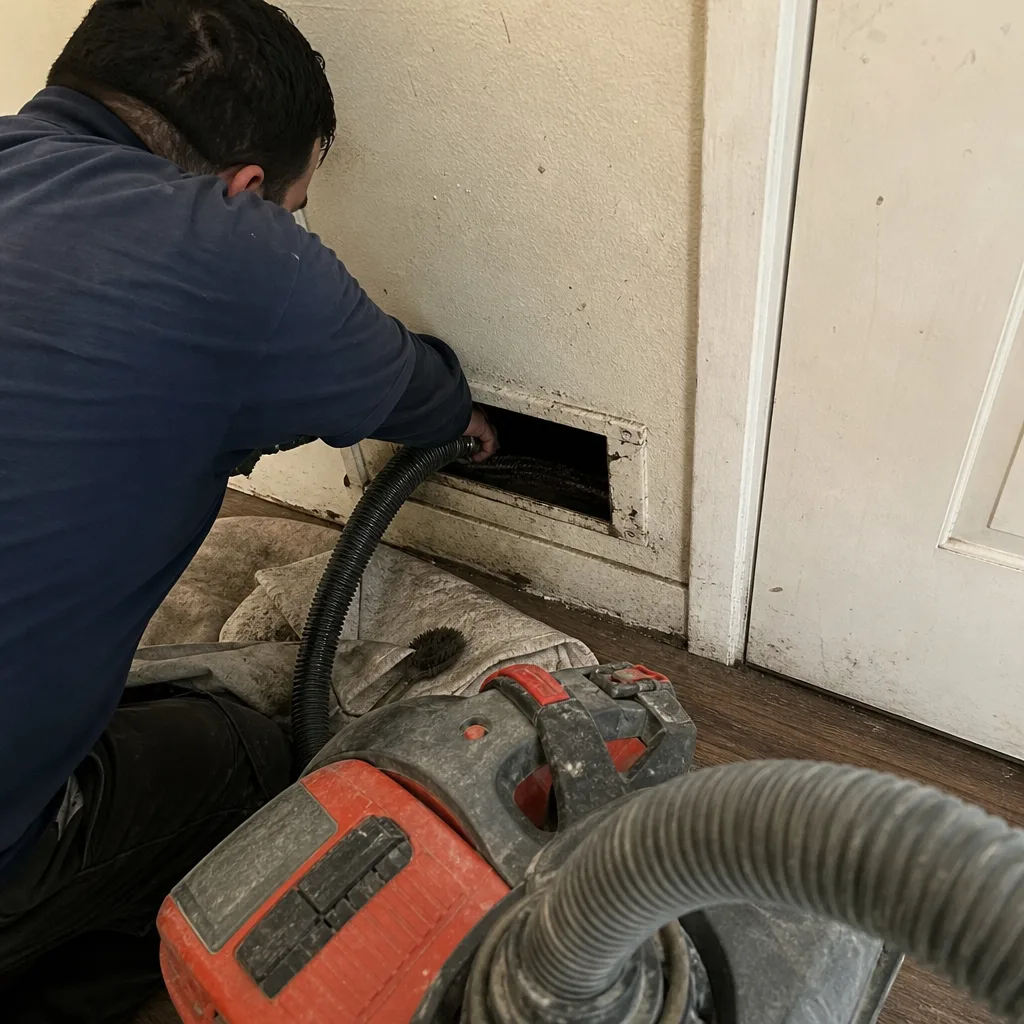
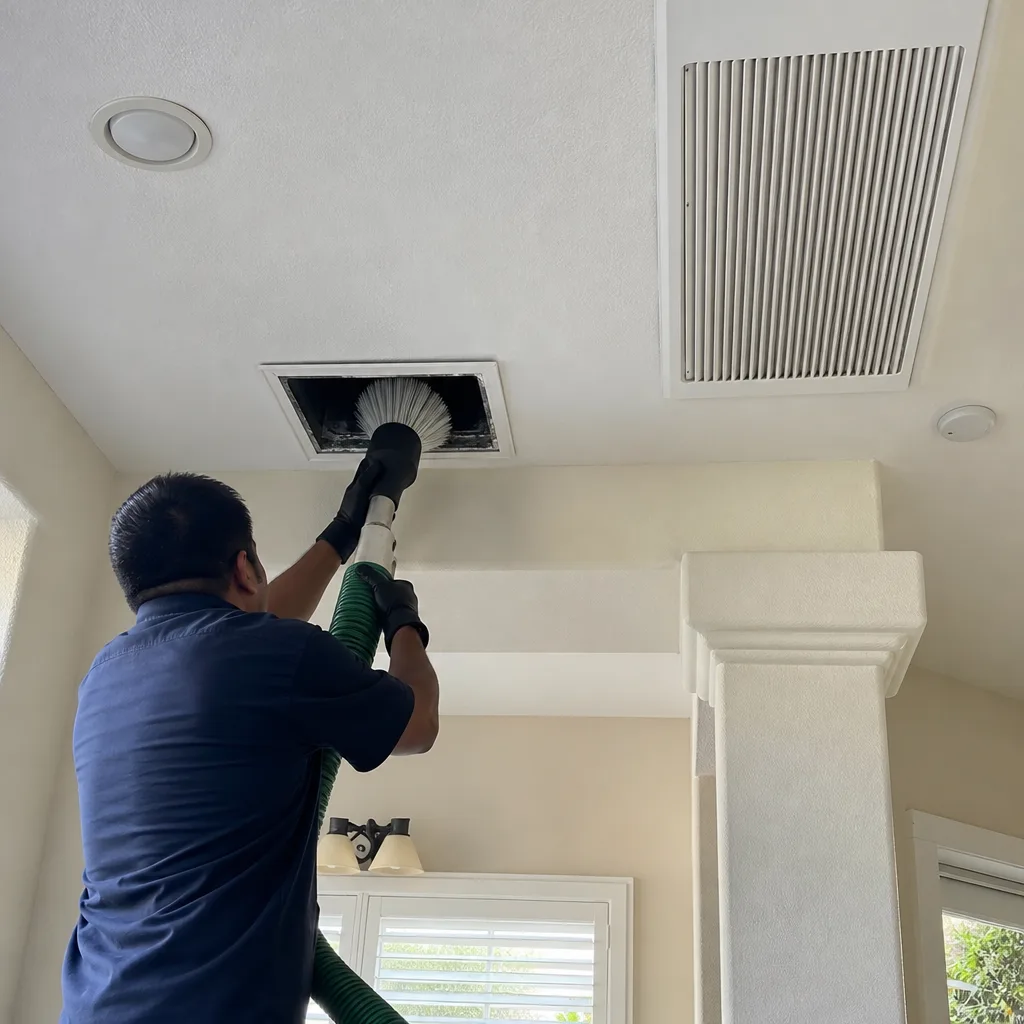
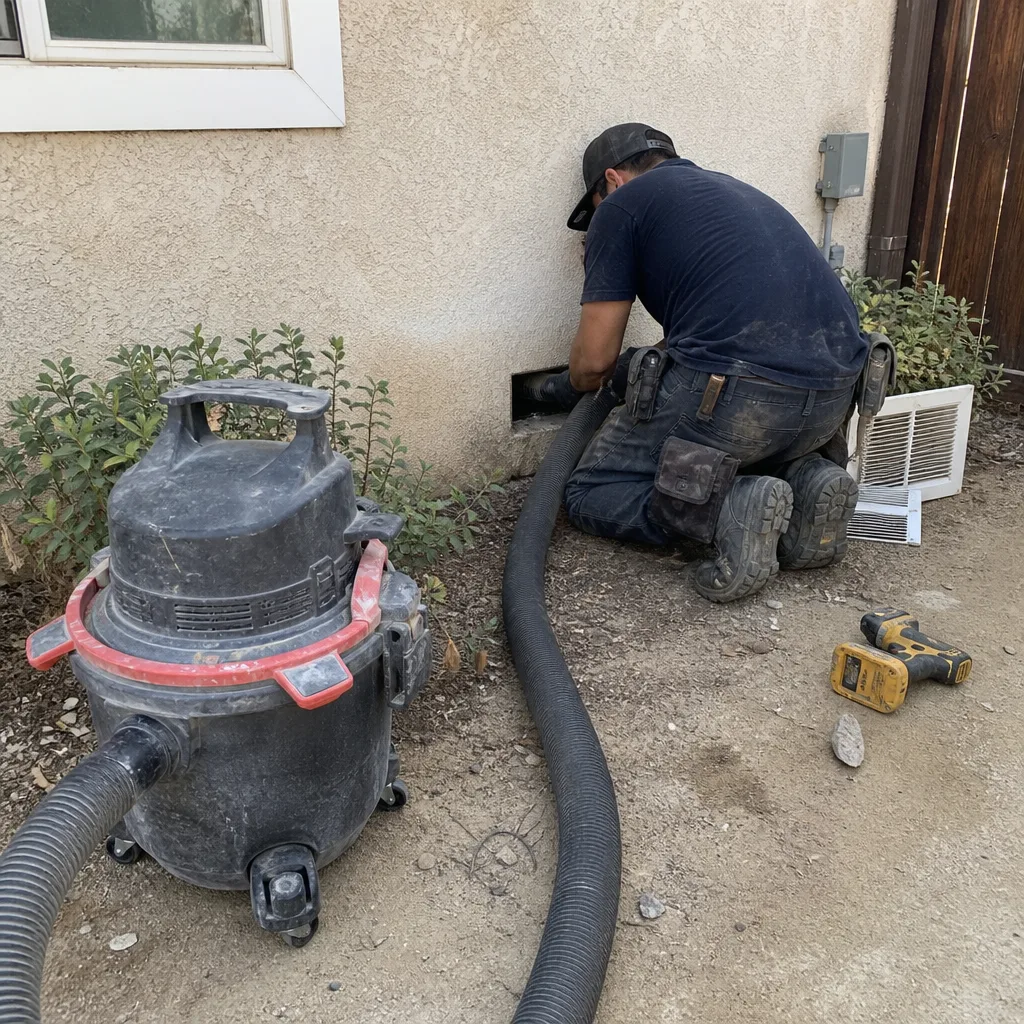
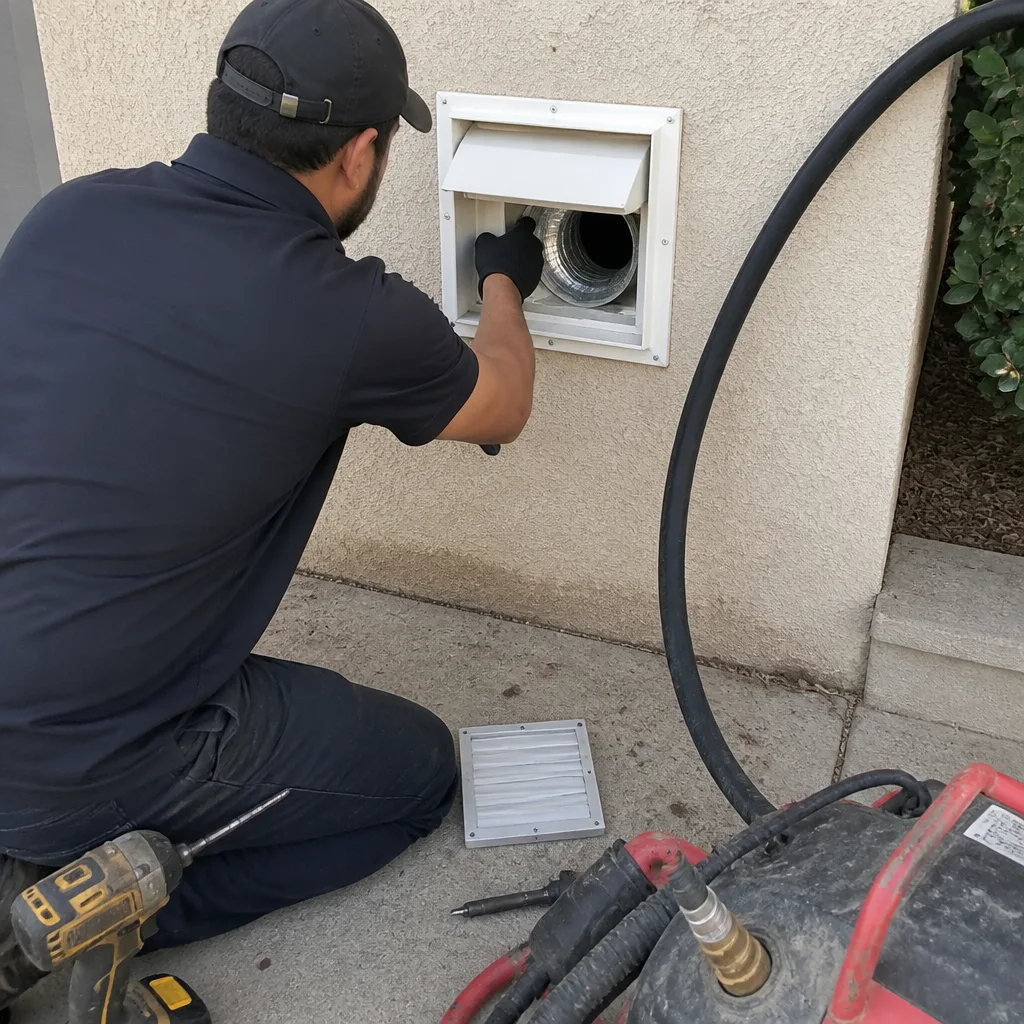
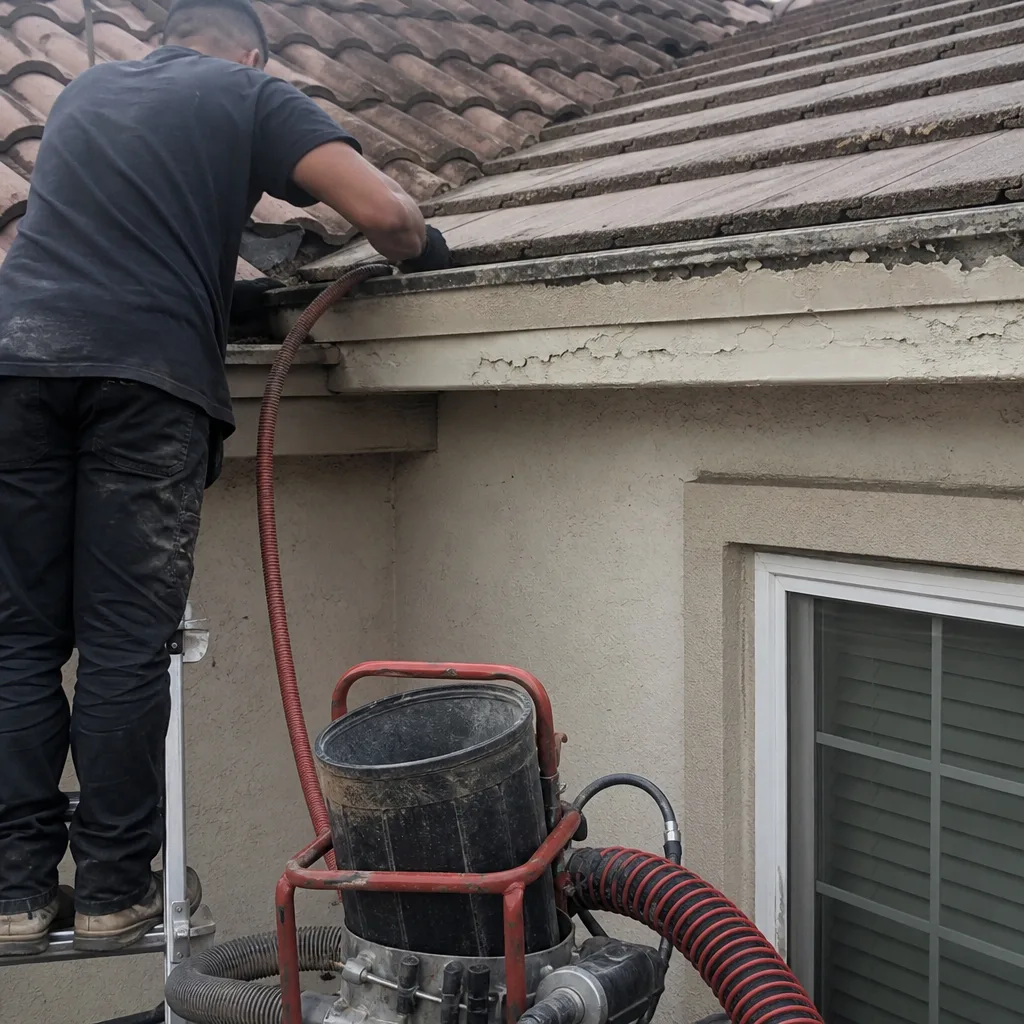
Whole-system duct and dryer vent check with before-and-after photos - you see exactly what came out of your vents
That "$99 whole-house special" is a bait ad - the real number appears once they are in your hallway, or the "clean" is a shop-vac at the register. We photograph the inside of your ducts before and after instead.
Air Duct Cleaning Emergency Preparedness Guide for Murrieta Homes
Southern California emergency planning is second nature for most of us. We map wildfire evacuation routes, strap water heaters for earthquakes, and know exactly where the gas shut-off valve sits. But walk through any Murrieta neighborhood after a real event and ask a homeowner what happened to their duct system, and you’ll get a blank look. That’s the gap this guide closes. After a nearby fire, earthquake, or even a wind-driven construction dust event, the air pathways inside your walls can hold ash, soot, dislodged insulation, and fine particulate that your filter never catches. We’ve inspected systems after events where the homeowner had already run the HVAC for three days, recirculating contamination through every bedroom. This guide walks through the exact protocols, inspection checkpoints, and decisions Murrieta homeowners need before, during, and after an emergency that threatens indoor air quality. For ongoing protection, see our Air Duct Cleaning services.ndoor air.
Styles & brands we work with
- Whole-home duct cleaning
- Dryer vent cleaning
- Camera inspection
- Sanitizing & deodorizing
Quick Answer
Air duct emergency preparedness for Murrieta homes means shutting down the HVAC system during outdoor smoke or dust events, upgrading to at least a MERV-13 filter before you restart, and performing a visual inspection of plenum, boot, and flex-duct connections after any earthquake or nearby fire. Post-emergency duct contamination requires a different cleaning scope than routine maintenance, including containment during extraction, and is best handled by a specialist running professional-grade equipment like Rotobrush or Nikro systems rather than a generalist with a shop vac. Duct Cleaning Murrieta home services include exactly this kind of post-event evaluation and cleaning.
Table of Contents
- The Wildfire Smoke Protocol: Shut Down, Seal, and Restart Safely
- Post-Earthquake Duct Inspection: The Three Connection Points That Fail First
- Construction Dust and Nearby Development: When It’s Time to Clean
- Building an Emergency Duct Kit for Your Home
- What to Tell Your Duct Specialist After an Emergency
- The Dryer Vent Angle: An Overlooked Fire Pathway During Emergencies
- Common Mistakes to Avoid
- When to Call a Professional
- Frequently Asked Questions
- The Bottom Line
The Wildfire Smoke Protocol: Shut Down, Seal, and Restart Safely
Murrieta sits in a wind corridor that pushes smoke from fires in Riverside County, San Bernardino, and even San Diego County through the Temecula Valley with little warning. When smoke is visible or the AQI climbs past 150, your HVAC system becomes a delivery mechanism for whatever is suspended in that air. The protocol has three phases, and the order matters.
Phase one: shut the system down. Not to fan-only, not to a lower speed. Off. A running air handler pulls return air from inside the home, but most homes have small leaks in the return ducting, attic penetrations, or outside air intakes. Within minutes of smoke arriving at your roofline, those leaks draw particulate into the system. The blower then distributes it through every supply register. We’ve seen homes a half-mile from a fire line with carbon particulate inside the supply ducts, and the homeowners never opened a window.
Phase two: seal what you can. Close all windows and doors. Close fireplace dampers. If you have a whole-house fan, confirm it’s sealed at the ceiling louver, not just switched off, because attic smoke gets pulled through those louvers even when the fan isn’t running. Cover any window-mounted or portable AC units that vent outside. And here’s the counterintuitive part: don’t stuff towels under doors yet. Seal first, clean later.
Phase three: filter before restart. The filter you had in the system during the event is now loaded, possibly saturated. Do not restart the system on that filter. Install a fresh MERV-13 or higher filter in the correct size for your air handler. If your system uses a 1-inch filter slot, check the manufacturer’s airflow specs before jumping from a MERV-8 to a MERV-13, because the pressure drop can reduce airflow on some older blowers. For homes with Honeywell or Aprilaire media cabinets, this is where that equipment earns its cost: a 4- or 5-inch media filter handles the higher MERV rating with far less airflow penalty. After the filter is in, run the system on fan-only for 30 minutes before switching to heating or cooling, and listen for strain.
One more note that doesn’t fit neatly in the phases: change that filter again after the first 30 days of post-event operation. The first replacement catches the bulk contamination. The second catches what the duct system sheds after you start moving air through it again.
Post-Earthquake Duct Inspection: The Three Connection Points That Fail First
Murrieta sits roughly 40 miles from the San Jacinto Fault and about the same distance from the Elsinore Fault. A magnitude 5 or 6 event here isn’t hypothetical. The building codes in Riverside County account for seismic loads on structural framing, but residential duct systems are sheet metal and flex duct, and they move independently of the framing. If the structure shifts, the ducts don’t always go with it.
After any shaking strong enough to crack drywall or knock items off shelves, check these three connection points before you run the system. You’re not repairing anything; you’re checking for detachment, and a flashlight plus a phone camera reach into places your head won’t fit.
- Plenum-to-trunk connections. The supply plenum sits directly on top of the air handler or furnace, and the trunk lines branch off it. This is the highest-vibration point in the entire system. Look at the seams where sheet metal panels meet and where the trunk ducts attach. Seismic movement can pop drive cleats or slide a trunk out of a collar by half an inch, which doesn’t sound like much until conditioned air starts dumping into the attic instead of the living room.
- Flex duct to register boot connections. The boot is the metal box behind each wall or floor register, and flex duct attaches to it with a collar and usually a zip tie or band clamp. These connections sit at the far end of the system, where movement is amplified. In an older Murrieta home with flex runs installed in the 1990s, the zip ties are often brittle. A good shake pops them. Reach through the register opening and feel around the boot collar; if the flex duct slides easily, it’s detached.
- Air handler mounting and isolation pads. The air handler itself sits on a platform or hangs from rafters. Check that it’s still seated properly and that any rubber or cork isolation pads haven’t slid out. A shifted air handler torques every duct connection downstream of it, and that’s how a small shift becomes a split in a trunk line.
If you find detachment or hear new rattling from inside wall cavities when the system runs, stop running it until a professional assesses the damage. Loose ducts pull attic air, and attic air in Murrieta summers means 140-degree fiberglass-laced air entering your supply stream. The team that handles Air Duct Repair in Murrieta works on exactly these problems, and they can tell you in the first ten minutes whether it’s a simple reconnection or a larger system issue.
Construction Dust and Nearby Development: When It’s Time to Clean
Murrieta has been in a near-continuous building cycle for two decades. The construction corridors along Clinton Keith Road, the developments pushing east toward French Valley, the infill projects near the 215, and the commercial builds around the 15/215 interchange all generate a specific type of airborne debris: silica dust from drywall cutting, concrete grinding, and stucco work, plus fine particulate from diesel equipment.
Here’s what actually happens in your ducts if a project is active within a quarter-mile of your home: the heaviest particles settle within a hundred feet of the source, but the fine fraction, the stuff under 10 microns, stays suspended and travels. If your HVAC runs during the day while the crew is cutting, that dust enters through the same return air leaks we discussed in the wildfire section. It doesn’t arrive all at once. It takes two to four weeks of active construction for visible accumulation to start in the return boots, and the first place you’ll notice it is the filter. If your filter looks like drywall mud after three weeks, that’s the canary.
The key distinction here, and the one that saves Murrieta homeowners money, is knowing when cleaning is actually warranted. A thin, even coating of dust in a duct that hasn’t been cleaned in years is normal and doesn’t require intervention. Construction contamination looks different: it’s bright white or chalky gray, it’s heavier at the return registers than the supply, and it reappears within days of changing a filter. That last point is the real test. One clean filter cycle is coincidence; two is evidence.
If you’re seeing construction dust inside the return boot or on the back of return grilles, that’s not a routine cleaning situation. The debris is abrasive, and running the system before it’s removed grinds it into the blower motor bearings. We use the Air Duct Cleaning in Murrieta approach for this: a full negative-air extraction with containment, not a quick vacuum pass. The scope has to match the contamination, which is the thread that runs through this entire guide.
Building an Emergency Duct Kit for Your Home
Every Murrieta household should have a dedicated box or bin for duct-system emergencies, separate from the earthquake kit and the go-bag. The contents are specific, and most of it costs under $75. This is about isolating the system when outdoor air becomes dangerous to breathe, and then restoring it without a trip to a supply house during an event.
Here’s what goes in the kit:
- At least two replacement filters in your system’s exact size, MERV-13 or higher. Check the existing filter’s dimension printed on the cardboard frame before you buy. Guessing the size when the stores are open is easy; guessing during a smoke event is not. If you have a Honeywell or Aprilaire media cabinet, stock the matching 4- or 5-inch media filter instead.
- A roll of UL-181 foil tape, sometimes labeled plenum tape. This is not the same as duct tape. UL-181 is rated for ductwork temperatures, and it holds on sheet metal and flex. Use it to seal small seam separations or to cover a register opening you want to isolate.
- Magnetic register covers, sized to your floor and ceiling registers. If smoke or chemical odor is entering through a supply register serving an unused room, magnetic covers shut that pathway down in seconds. They also work during construction dust events.
- A disposable N95 or P100 respirator and cheap safety glasses. If you’re going to look inside a return boot or change a contaminated filter, don’t breathe the filter. This is a basic precaution, not overkill.
- A small notebook and pen. Log the dates you changed filters, when you visually inspected boots, and what you found. Post-event, that log tells a duct specialist exactly what happened and when, and it helps them scope the job correctly.
- Your duct specialist’s phone number, written down. If the power is out or cell service is spotty after an earthquake, you won’t be looking up numbers. Store it in the kit. If you’ve used Duct Cleaning Murrieta home services before, their number is (855) 341-7672.
Store the kit somewhere you can reach it in the dark. The garage shelf next to the water heater is fine, but label it. In an emergency, the box that looks like every other box doesn’t get opened.
What to Tell Your Duct Specialist After an Emergency
This is where post-emergency duct cleaning diverges from the routine service call, and it’s the difference between a job that resolves the problem and one that just moves dust around. A post-emergency cleaning starts with a different set of questions, and the homeowner should be prepared to answer them accurately.
When we walk into a Murrieta home after a fire event or earthquake, we’re not asking “when was your last cleaning.” We’re asking things like:
- What was the event? When did it happen, and how long was the system running during or after it? This tells us what we’re likely to find. Smoke particulate behaves differently from construction dust. A system that ran for 12 hours during a smoke event has contamination in different locations than one that was shut down immediately.
- What did you see in the filters, and how quickly did they load? The filter tells the story of what entered the system. White chalky loading means drywall or stucco dust. Black, oily residue means smoke or soot. Orange or reddish tint can indicate fire retardant dropped by aircraft.
- Did you hear any new sounds during or after the event: rattling, thumping, whistling from registers? Post-earthquake mechanical detachment presents as noise before it presents as airflow loss. A new rattle from a wall cavity is a boot connection that’s shifted, and that changes the cleaning sequence entirely.
- Have you changed the filter since the event? How many times? If you’ve already run through two filters and they’re both loading dark, we’re dealing with an active contamination source in the system, not a single-event deposit.
- Is anyone in the home experiencing new respiratory symptoms, headaches, or eye irritation? This isn’t medical advice. It’s prioritization. If a child with asthma is reacting since the event, that moves the job up the urgency scale and changes how we set up containment in occupied areas.
A professional using Rotobrush or Nikro extraction equipment and Abatement Technologies containment systems will handle the cleaning differently than a routine job. The containment matters because post-emergency particulate is often fine, respirable, and easily aerosolized by aggressive brushing. Without negative pressure, you’re not cleaning the ducts; you’re redistributing them through the living room. Ask the company you’re considering how they contain the work area. If they don’t have an answer, keep dialing.
The Dryer Vent Angle: An Overlooked Fire Pathway During Emergencies
No emergency preparedness guide for duct systems is complete without the dryer vent, because in a wildfire or earthquake scenario, the dryer vent becomes a problem header that most homeowners never consider. The National Fire Protection Association identifies dryer vent systems as a leading cause of residential structure fires. That’s a known fact in the fire safety world, but it gets completely lost in the emergency planning world, where we plan for the fire outside and forget the fire pathway inside.
Here’s the connection: during a wildfire smoke event, the dryer vent is an open pipe from the laundry room to the outside. The backdraft damper on most dryer terminations is a lightweight flap, not a sealed valve. Smoke entering through that vent during a fire event coats the interior of the vent pipe with carbon and creosote-like residue, which then mixes with the lint already lining the pipe walls. That mixture is more flammable than lint alone, and it reduces the vent’s diameter faster. Run the dryer enough times after the event, and the vent loads to a dangerous level faster than any routine schedule would predict.
After an earthquake, the same vent pipe is a rigid or semi-rigid metal tube that runs through wall cavities and attic space. Seismic movement shifts it. The connections at the dryer itself and at the wall penetration are standard failure points, but so are the foil tape joints in the pipe run. A shifted joint inside a wall cavity means hot, lint-laden air exhausting into the wall structure, and that’s the exact scenario the NFPA warning describes.
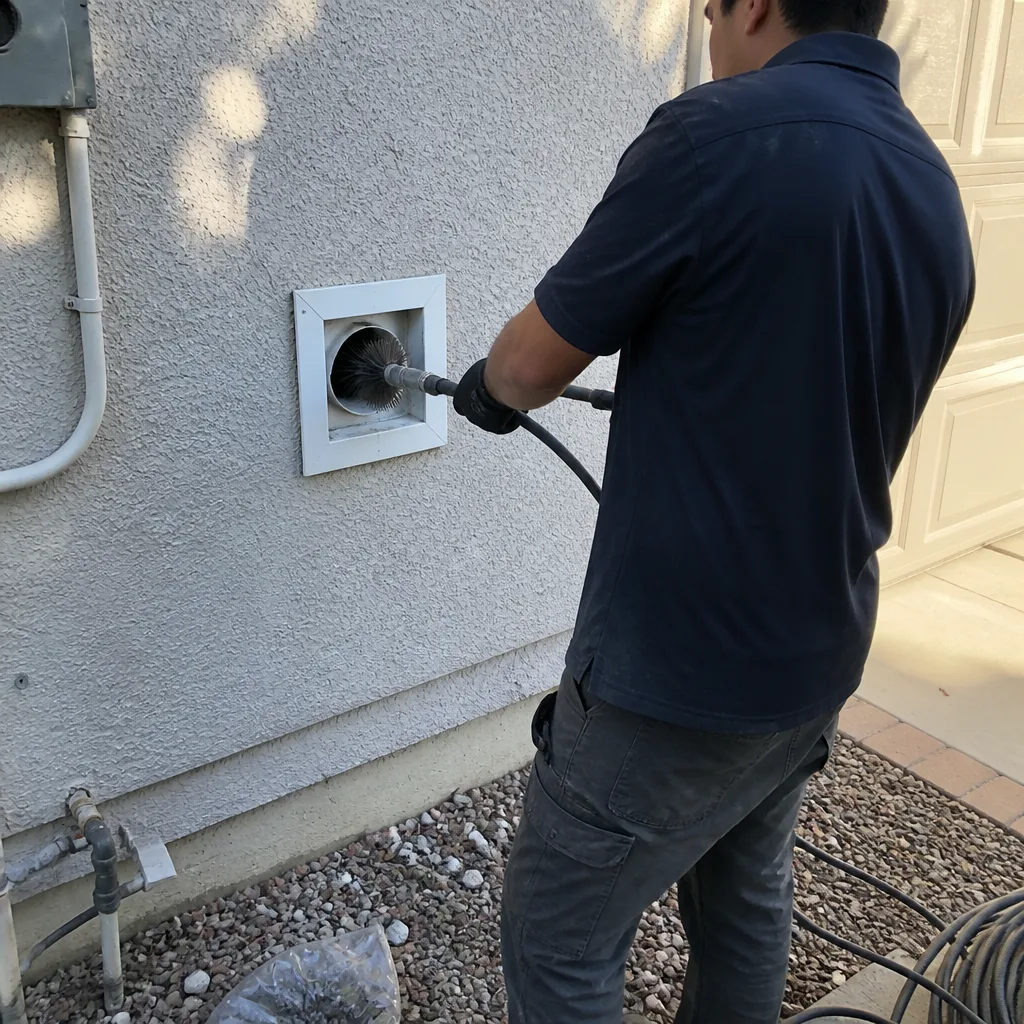
The action item is simple: any time you’re inspecting the HVAC duct system post-event, inspect the dryer vent too. Shine a flashlight into the wall termination and look for visible lint buildup or a displaced damper. If the vent hasn’t been cleaned in over a year, schedule a Dryer Vent Cleaning in Murrieta service as part of your post-event recovery, not as a separate chore. We treat dryer vent cleaning as a fire-safety service, not an optional add-on. The link between post-disaster conditions and vent ignition risk is real, and it’s the kind of detail that doesn’t show up on a generic checklist.
Common Mistakes to Avoid
- Restarting the HVAC system on the same filter that was in place during the event. That filter is already loaded with whatever entered the system. Running the blower on a saturated filter forces bypass, so the contaminated air flows around the filter media and into the supply side. Always swap to a fresh MERV-13 or higher before the first restart.
- Assuming a closed house means a sealed system. In most Murrieta homes, the return air path includes wall cavities or attic spaces with unsealed connections. Smoke and dust enter through those gaps even when every window is locked. The only reliable isolation during an outdoor air emergency is shutting the system off completely.
- Running the system to “clear the air” after a smoke event. This is the most common mistake we see, and it always makes the problem worse. Running the blower pulls the contamination deeper into the system and distributes it through every room. Shut it down, change the filter, and inspect before running.
- Treating post-event duct cleaning as a routine service. A standard cleaning removes accumulated dust and debris. Post-emergency cleaning removes fine, potentially hazardous particulate that requires containment and different equipment. The scope is not interchangeable, and hiring based on price alone means the scope gets cut to fit the bid.
- Ignoring the dryer vent during post-event recovery. The dryer vent is an open pathway to the outside, and during any fire or smoke event, it admits contamination into the interior of the vent pipe. Run the dryer without inspecting the vent, and you’re adding heat to a pipe that may already be coated with a flammable mixture.
- Skipping the visual inspection because “it looks fine from the outside.” Post-earthquake duct damage hides inside wall cavities, attic spaces, and behind registers. A visual inspection that doesn’t include checking the boot collars and plenum seams is not an inspection; it’s a glance.
- Waiting until the air quality improves to address the duct system. The ducts don’t self-clean. Once the outdoor smoke clears, the particulate trapped in the system keeps recirculating until it’s removed. Delaying means living with degraded indoor air for weeks after the event ends.
When to Call a Professional
Some post-emergency situations are DIY inspections and filter changes, and this guide covers those. But there’s a line, and crossing it without professional equipment makes the problem worse. Call a specialist if you find disconnected duct connections after an earthquake, if your filters are loading dark or oily after a fire event, if you smell smoke inside the home when the HVAC runs weeks after the outdoor air cleared, or if anyone in the home has new respiratory symptoms that appeared after the event. These are signs that the contamination has moved past the filter and into the duct system itself. Duct Cleaning Murrieta offers free estimates in Murrieta, and the scope discussion takes about fifteen minutes. That call is (855) 341-7672.
Frequently Asked Questions
The first indicator is the filter. Remove it and inspect the upstream side. If it shows black, gray, or oily residue, smoke entered the system. A second check: remove a supply register in a bedroom farthest from the air handler and wipe the inside of the boot with a clean white cloth. Any dark residue there means the contamination traveled through the entire supply run. A professional inspection with a camera can confirm the extent. In our experience in Murrieta, homes within half a mile of a fire line or downwind of active smoke for more than 48 hours almost always show some level of particulate in the return boots.
No. Santa Ana wind events in the Temecula Valley carry fine dust and particulate from open land, construction sites, and agricultural areas. Running the system during a high-dust wind event loads the filter rapidly and pulls fine dust into the return ducting through any small leaks. Shut the system down, keep it off until the wind event passes, then replace the filter before restarting. This is the same protocol as the wildfire smoke procedure, applied to a lower-severity event.
After a major event (earthquake, nearby structure fire, or extended smoke exposure), inspect the system once immediately, again after 30 days of normal operation, and then return to a routine inspection schedule. The 30-day check matters because that’s when filter loading patterns reveal whether the system is still shedding contamination. If the filter loads dark in under 30 days after a professional cleaning, that points to a source outside the ducts rather than inside, and the investigation continues upstream.
Duct cleaning addresses the particulate and residue inside the duct system, which is a significant source of recurring smoke odor in these situations. If the odor persists after the ductwork is cleaned and the HVAC system has been operating with clean filters for a week, the source is likely in the structure itself: walls, carpet, furniture, or attic insulation. Duct cleaning is the necessary starting point for the HVAC pathway, and it’s often combined with a whole-home approach that includes surface cleaning and air scrubbing. Abatement Technologies air-scrubbing equipment is sometimes deployed in these scenarios, especially when the contamination includes fine carbon particulate that standard extraction alone doesn’t fully address.
The scope is entirely different. A routine cleaning removes normal household dust, pet dander, and light debris using standard extraction equipment. Post-emergency cleaning addresses fine particulate that’s respirable, potentially hazardous, and more deeply embedded in the system. It requires containment during the work so the particulate isn’t redistributed into the living space, and it often involves different tools and more time. Rotobrush and Nikro equipment are designed for exactly this level of extraction, and that’s what separates a true post-event cleaning from a routine service.
When the outdoor air quality returns to normal and the immediate danger has passed, schedule the cleaning as soon as practical. Waiting doesn’t help; the particulate stays in the system and recirculates with every HVAC cycle. The only reason to delay is if the outdoor conditions remain hazardous and running the system during the cleaning would pull contaminated air back in. In that case, wait until the AQI drops below 100. For Murrieta homeowners, that means watching the same air quality readings you already check during fire season, and scheduling the service when conditions stabilize.
The Bottom Line
Murrieta homeowners plan for the big events. The earthquake kit is stocked, the evacuation route is known, and the insurance documents are in the safe. The duct system, the thing that moves air through every room of the house, doesn’t make the planning list. This guide’s purpose is to correct that. Shut the system down during smoke and high-wind dust events, change the filter before restarting, inspect the three connection points after any seismic event, and treat the dryer vent as part of the same system. Post-emergency duct contamination doesn’t resolve on its own, and it requires a scope that matches the actual event, with containment and professional-grade extraction. When the time comes, Air Duct Cleaning in Murrieta is available at (855) 341-7672. The phone number belongs in the emergency kit, written down, next to the filters.
Written by the team at Duct Cleaning Murrieta, serving Murrieta since 2015.
See the difference
 Before
 After
 Before
 After
 Before
 After