
Last updated November 2, 2026
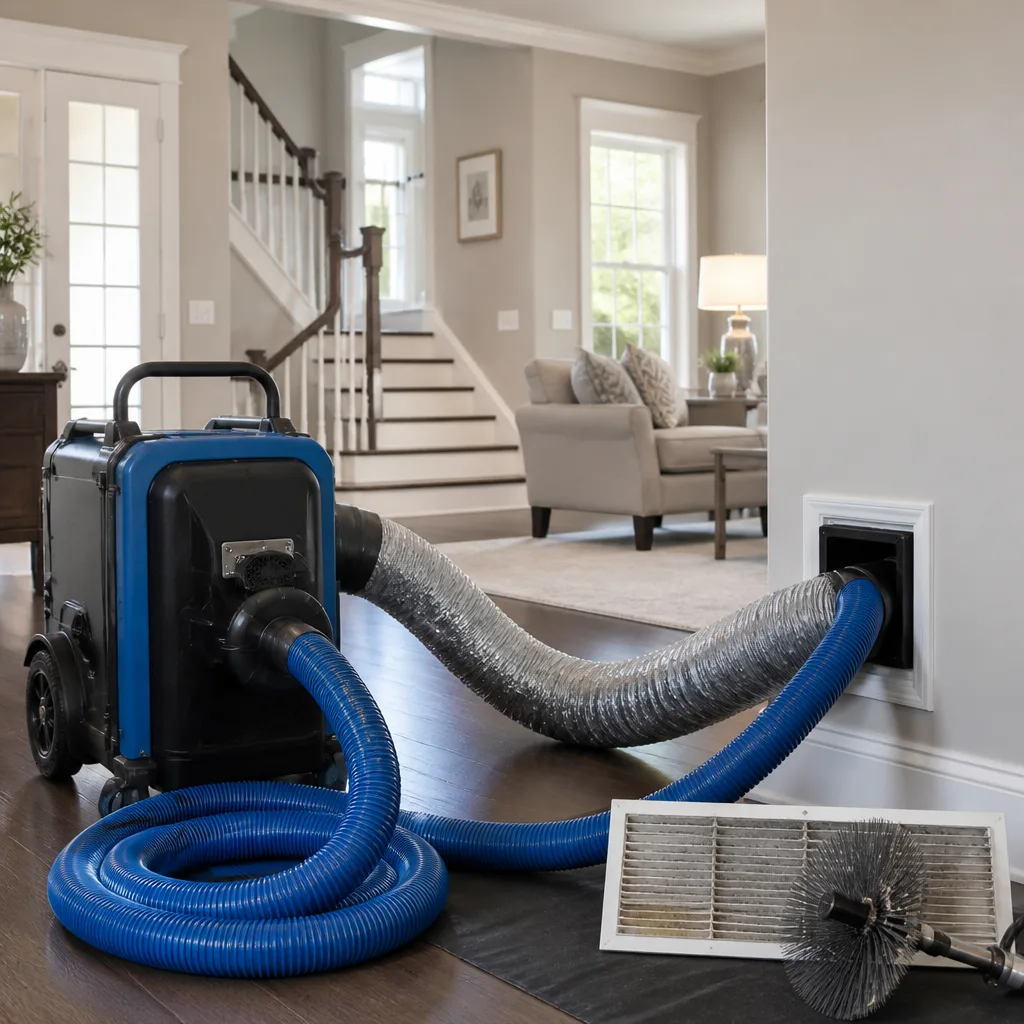 Whole-home duct cleaning
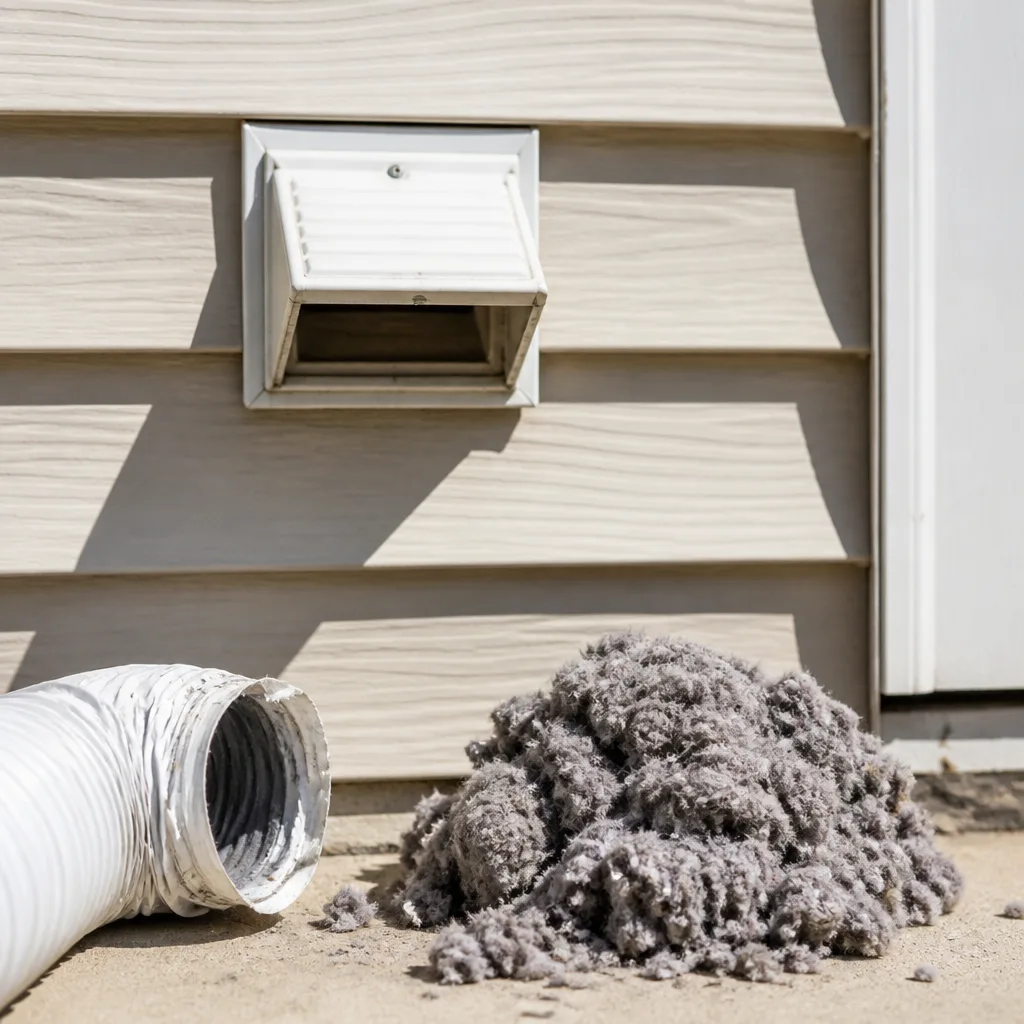 Dryer vent cleaning
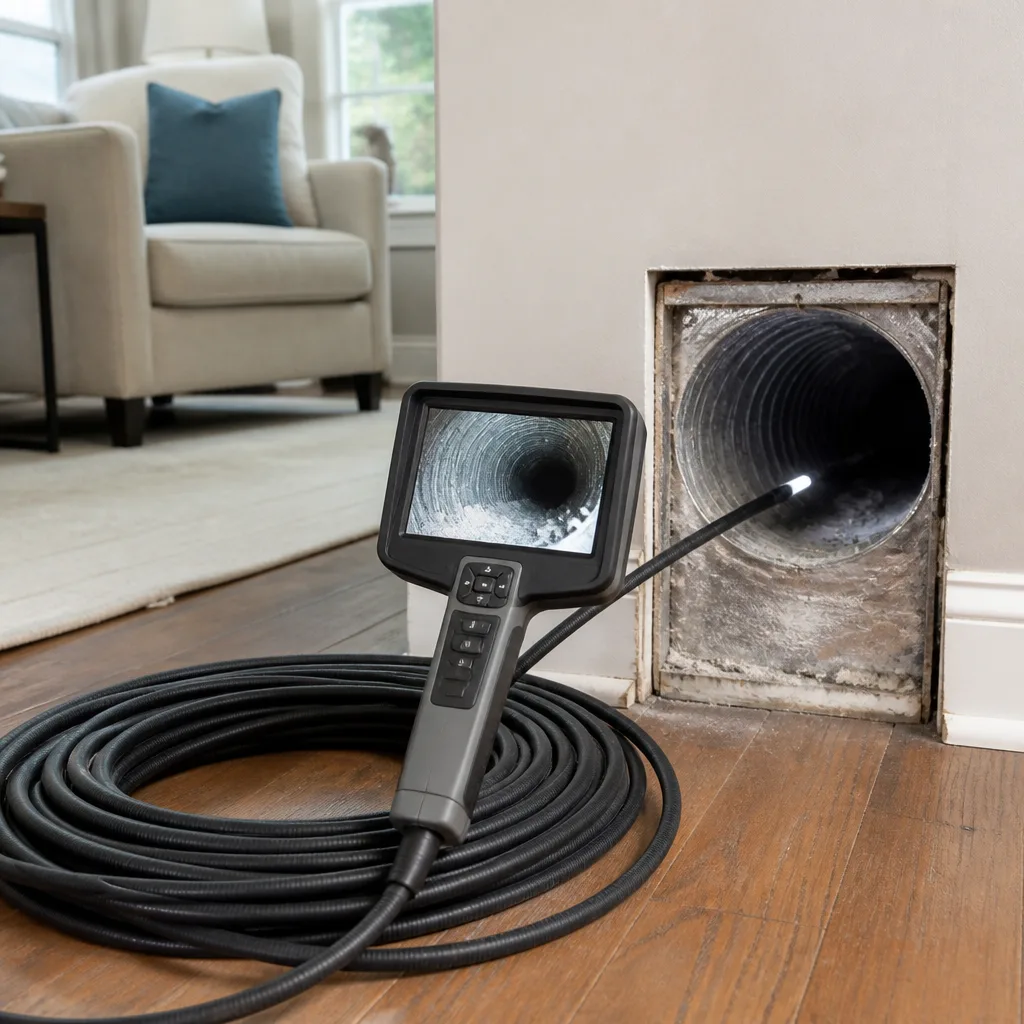 Camera inspection
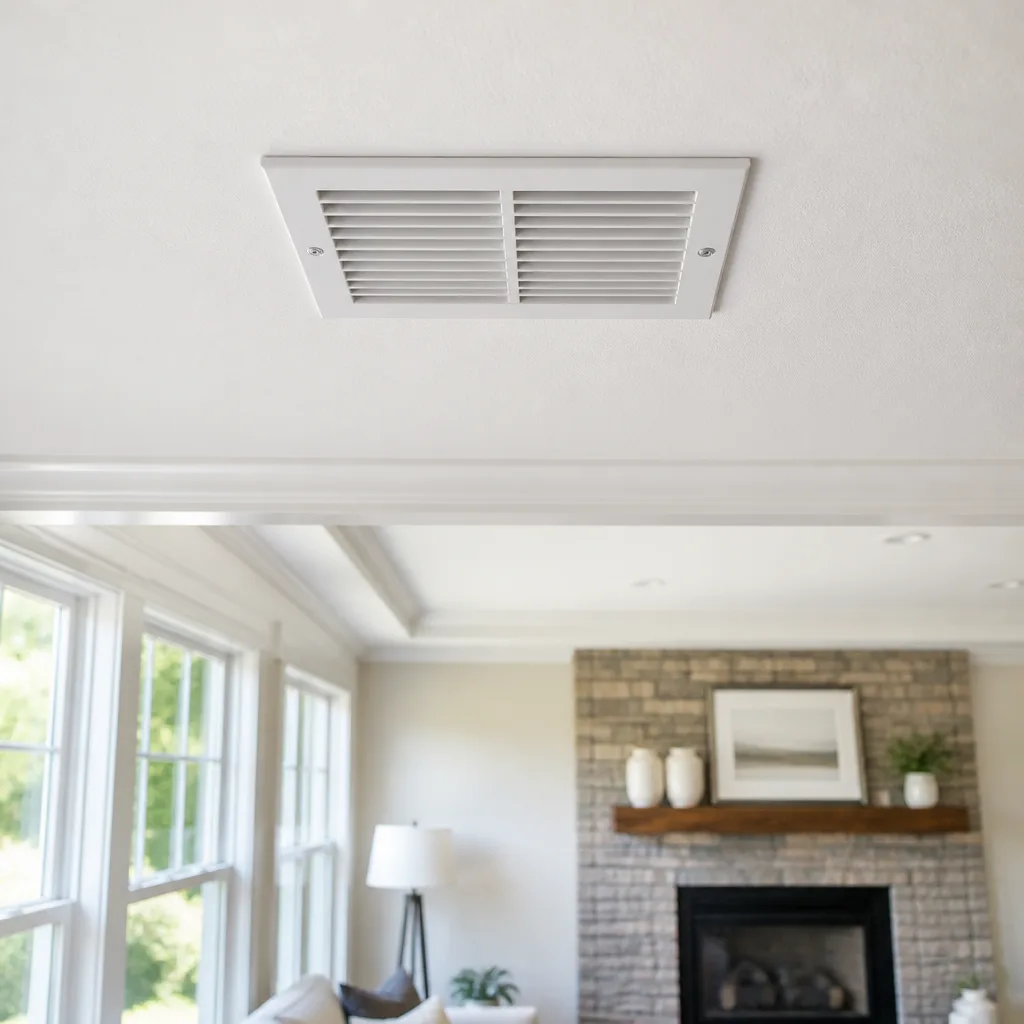 Sanitizing & deodorizing
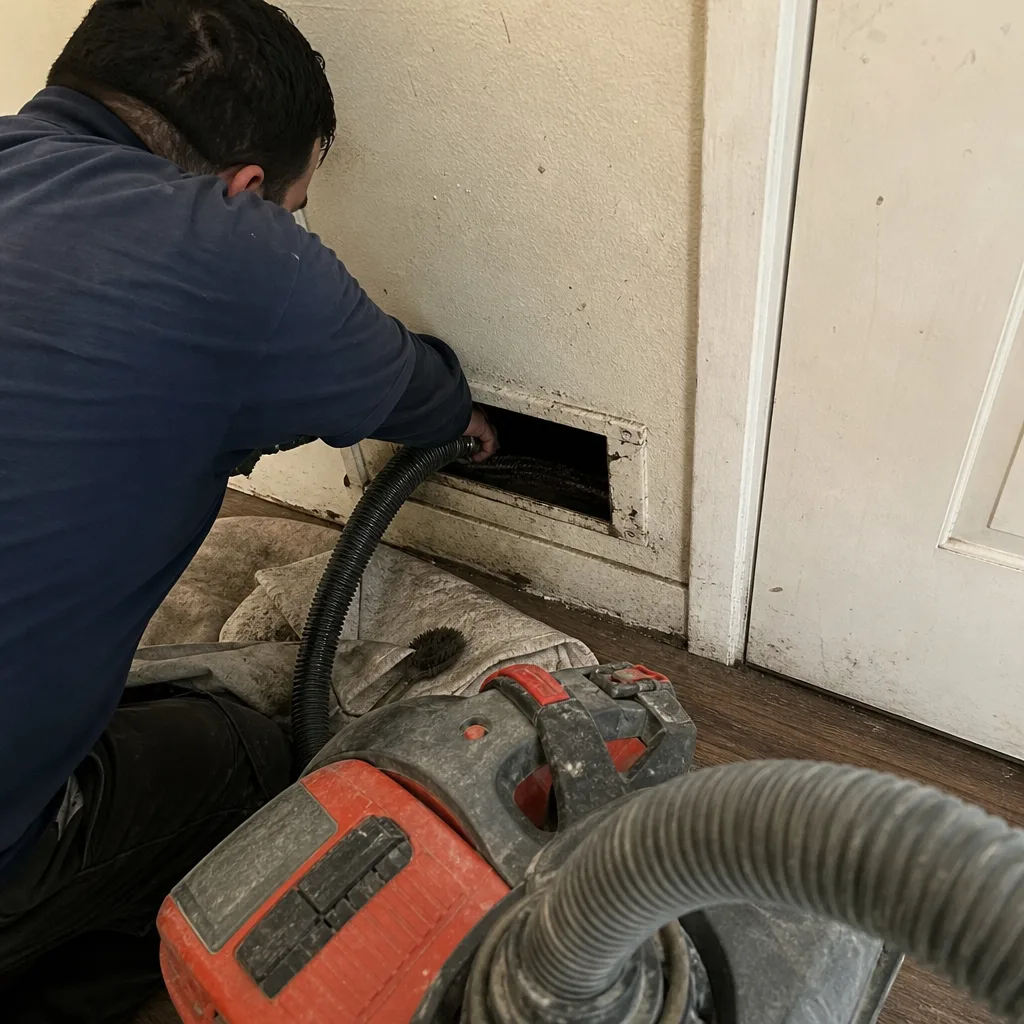
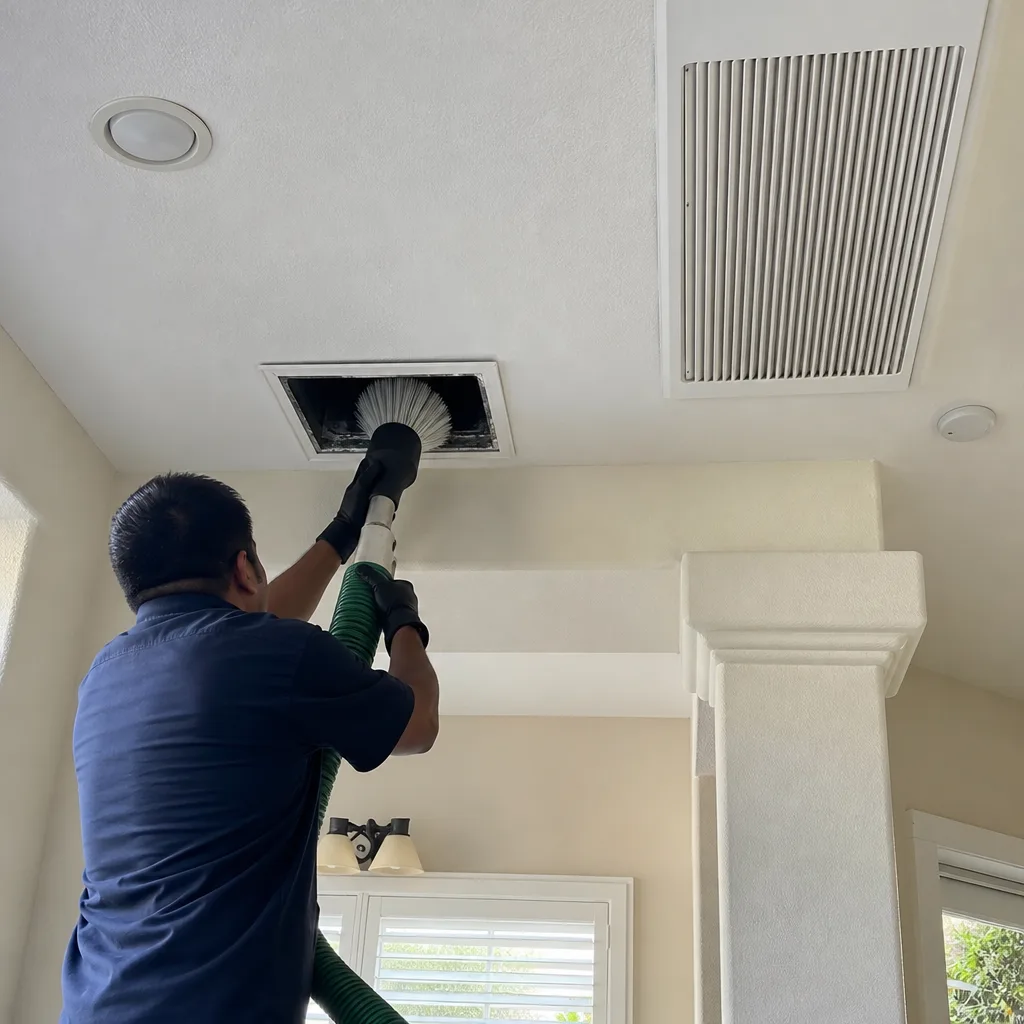
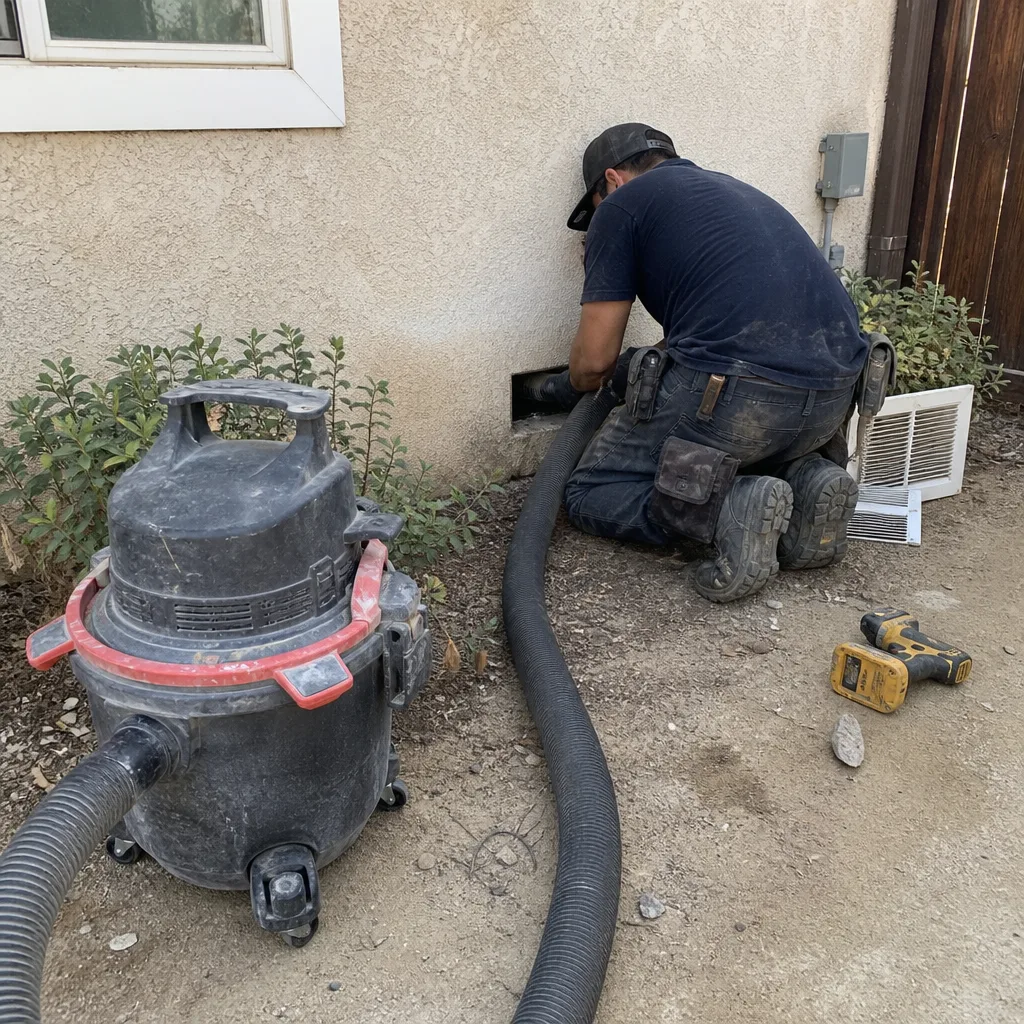
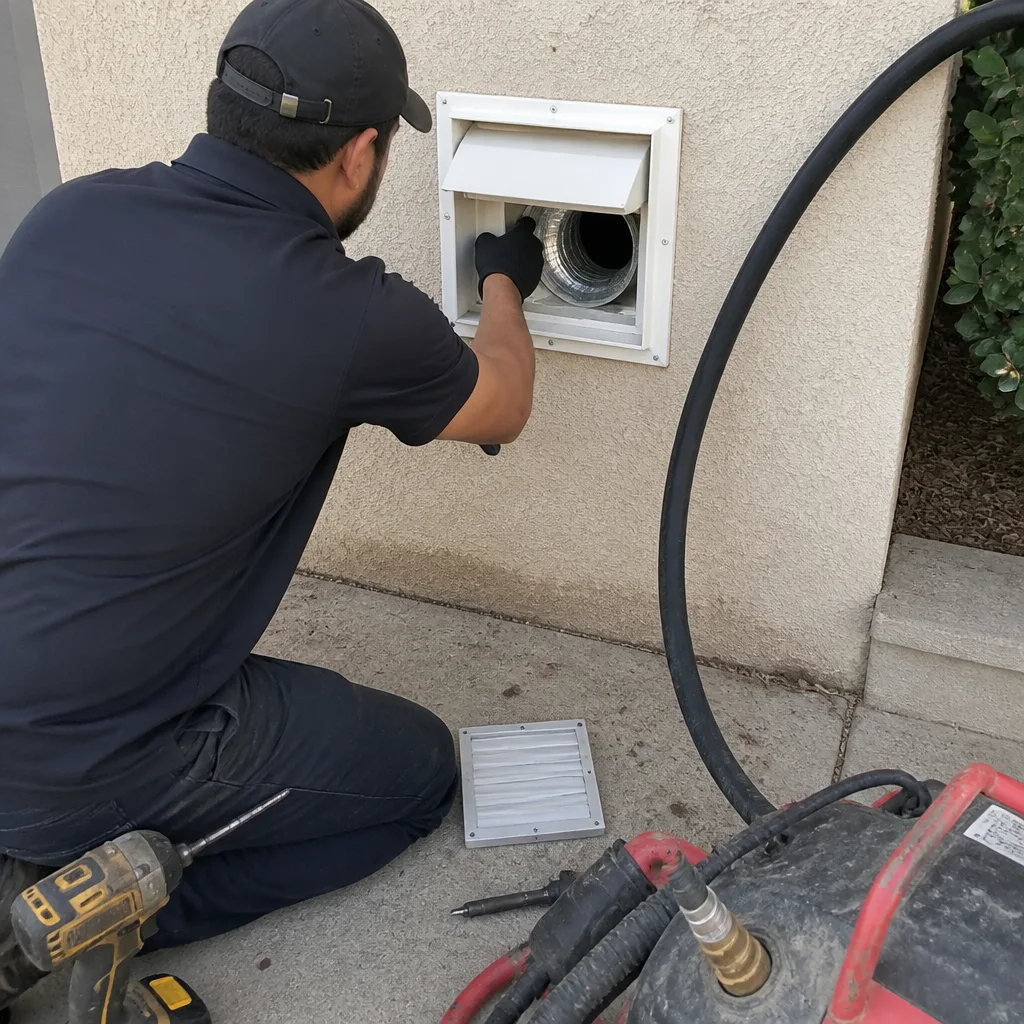
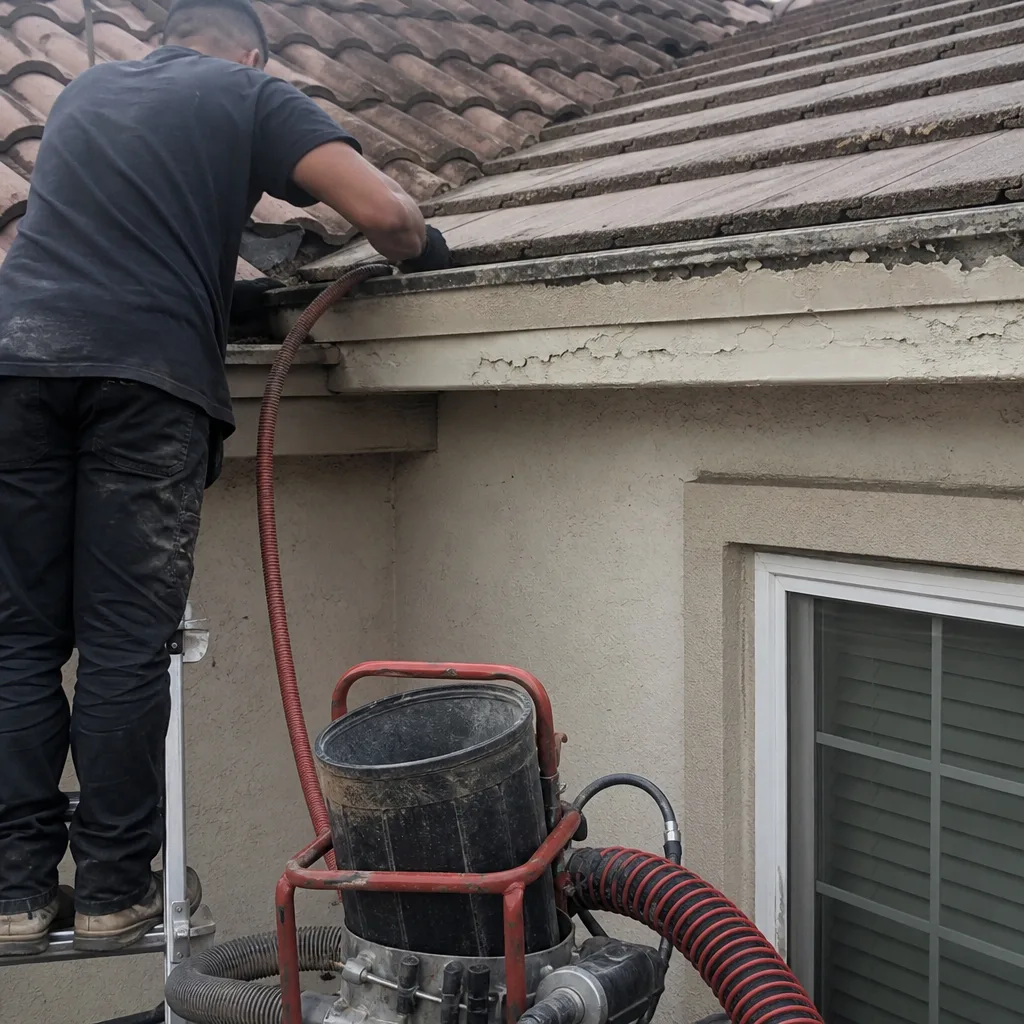
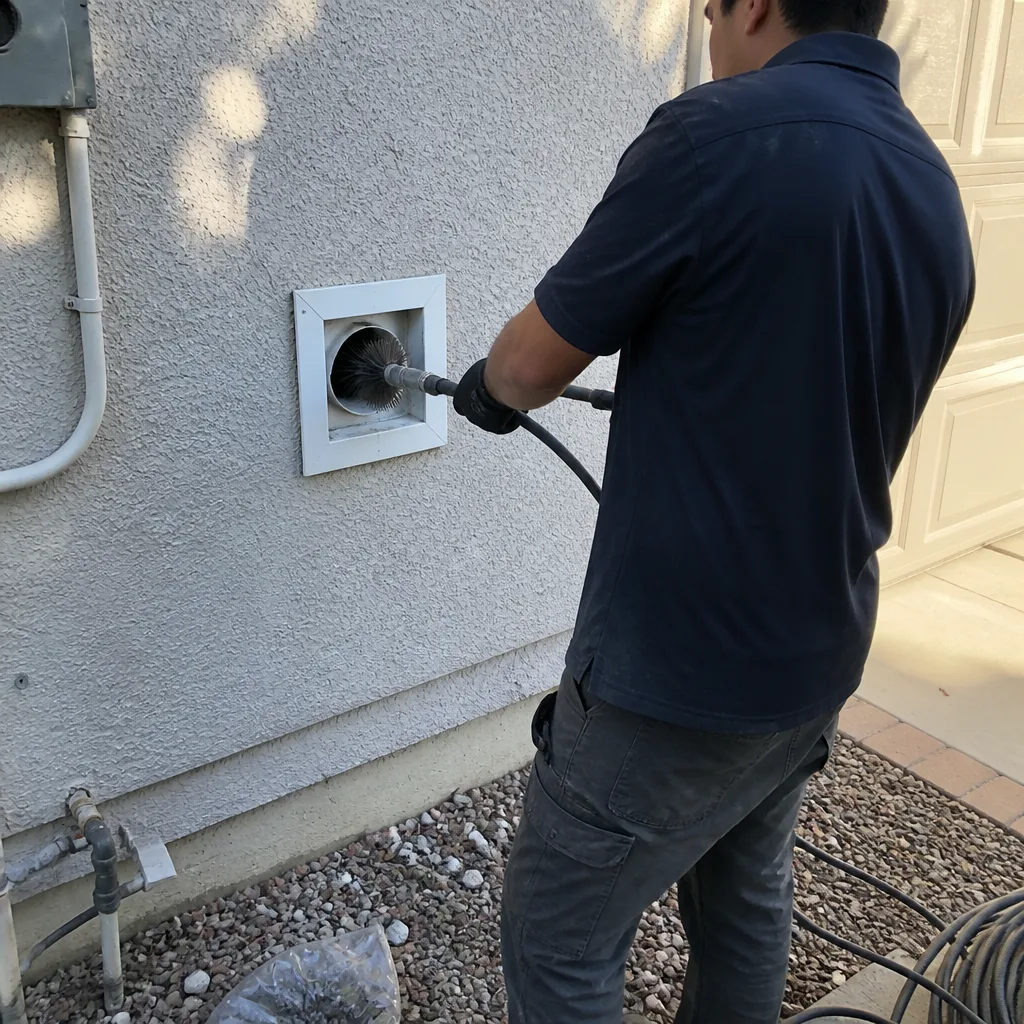
Whole-system duct and dryer vent check with before-and-after photos - you see exactly what came out of your vents
That "$99 whole-house special" is a bait ad - the real number appears once they are in your hallway, or the "clean" is a shop-vac at the register. We photograph the inside of your ducts before and after instead.
Air Duct Cleaning Troubleshooting: Common Problems and How to Fix Them
Most homeowners in Murrieta call a duct cleaning company because something is wrong: a musty odor when the AC kicks on, a film of dust on furniture two days after wiping it down, an allergy flare-up that seems worse indoors than out. They expect the cleaning to fix it. Often it does. But when the same symptom returns two weeks later, the assumption is that the cleaning failed. Here’s the counterintuitive part: in a significant share of these cases, the ducts were never the primary problem. The cleaning worked exactly as intended, and the symptom persisted because the real source, a leaking return plenum, a collapsed flex run, a moldy evaporator coil, was never addressed. This guide – along with our companion piece on Air Duct Cleaning Warning Signs: A Murrieta Homeowner’s Reference Guide – walks through the most common post-cleaning complaints we see, maps each one to its likely root cause, and tells you exactly what to check before you spend another dollar.
Styles & brands we work with
- Whole-home duct cleaning
- Dryer vent cleaning
- Camera inspection
- Sanitizing & deodorizing
Quick Answer
Most persistent air duct problems after a cleaning are not cleaning failures. They are diagnostic signals pointing to a specific mechanical or structural issue the cleaning alone cannot resolve: a duct-system leak pulling attic or crawlspace air into the return side, a collapsed or kinked flex duct restricting airflow, or biological growth on the HVAC coil and drain pan rather than inside the ducts themselves. The fix starts with identifying the source, not re-cleaning the same surfaces.
Table of Contents
- Why Ducts Smell Musty After Cleaning (And What Actually Causes It)
- Dust Back at the Registers Within Days: The Return Leak Problem
- Uneven Airflow After a Cleaning: Collapsed Flex Duct and Other Blockages
- Deodorizers and Sealants: Why Masking Makes the Problem Worse
- The Three Signs of a Drive-By Cleaning Job
- Using Duct Leakage Testing to Diagnose a System That Still Circulates Debris
- How to Document and Escalate a Complaint Against a Duct Cleaning Company
- Common Mistakes to Avoid
- When to Call a Professional
- Frequently Asked Questions
- The Bottom Line
Why Ducts Smell Musty After Cleaning (And What Actually Causes It)
A musty or sour odor that returns within days of a duct cleaning is one of the most common complaints we hear from Murrieta homeowners. The instinct is to blame the cleaning. The more likely culprit sits a few feet away from the ducts themselves: the evaporator coil and its drain pan. In Southern California’s dry climate, condensate evaporates quickly, but during Murrieta’s humid late-summer stretch, the coil stays damp long enough for microbial growth to establish. The smell travels through the duct system whenever the blower runs, which makes it feel like a duct problem when it isn’t.
Here’s the symptom-to-cause mapping we use on service calls:
- Smell strongest when the AC first starts, fades after a few minutes: condensation on the coil rehydrating accumulated debris. The coil needs cleaning, not the ducts.
- Smell present only in certain rooms, absent at the air handler: localized moisture intrusion in one branch run, possibly from a torn flex duct jacket or a disconnected boot in a humid crawlspace.
- Smell constant whether the system runs or not: standing water in a drain pan with a clogged drain line. The pan breeds growth and the blower distributes the odor.
- Smell started immediately after the cleaning, never existed before: either the cleaning dislodged wet debris that then compacted somewhere downstream, or a deodorizing agent was applied that is now breaking down.
The reliable way to tell mold from dust odor is simple, and it’s a test you can do yourself before calling anyone. Take a clean white cloth, dampen it slightly, and wipe the inside of a supply register. If the residue is dark and gritty, it’s dust and soil. If it smears and smells musty or earthy when dampened, that points to biological growth. Mold has a distinct damp-soil smell. Dust smells like, well, dust. This distinction matters because the remedy for each is entirely different. A re-cleaning won’t help a moldy coil, and spraying an antimicrobial into the ducts won’t stop a return leak from pulling attic air into the system.
For Murrieta homes with Honeywell or Aprilaire filtration systems installed at the air handler, we always check the filter cabinet seal during a musty-smell diagnosis. A filter that doesn’t seat properly lets unfiltered air bypass the media entirely and deposit directly onto the coil, which then becomes the odor source. The fix is often a replacement filter frame or a properly sized filter, not another duct cleaning.
Our team runs Rotobrush and Nikro systems for Air Duct Cleaning, and we carry Abatement Technologies equipment for cases where elevated contamination needs containment and air scrubbing during the service. But the tool matters less than the diagnosis. If the coil is the source, cleaning the ducts again will not change the smell. We tell every Murrieta homeowner this before we book the job, because we’d rather solve the problem than sell a repeat visit.
Dust Back at the Registers Within Days: The Return Leak Problem
If you wipe a shelf clean on Sunday and find a visible film by Thursday, and the ducts were cleaned a month ago, the most common cause in Murrieta homes is not dirty ducts. It’s a breach in the return side of the duct system. Return ducts operate under negative pressure. When there’s a gap, a crack, a disconnected joint, or an unlined attic boot joint, the system sucks air from wherever that breach lives: attics full of blown-in insulation fibers, wall cavities packed with decades of dust, or crawlspaces with fine particulate soil. The filter catches some of it. The rest moves through the coil and out the supply registers, coating furniture in a fine gray-white film.
This is the single most underdiagnosed cause of “my ducts were cleaned but I still have dust” complaints. The cleaning removed the debris from the duct interior surfaces. It did not, and cannot, seal the breach that is actively pulling new debris in every time the blower runs.
Here’s how to confirm a return leak in your own home:
- Turn the system fan to “On” at the thermostat, not auto. You want constant airflow.
- Hold a piece of tissue paper or a thin strip of plastic near suspected return joints in the attic or crawlspace. Joints are where flex duct meets sheet metal, where duct sections connect, or where the return plenum meets the air handler.
- Watch for the tissue to flutter or be pulled toward the duct. Return-side suction is strong enough to move a light material. This is a leak.
- Repeat at every accessible joint, especially boot joints where the register connects to the duct in the ceiling.
In Murrieta, homes built during the 1990s and early 2000s construction boom frequently have return plenums made from sheet metal with taped seams. That tape, usually standard foil tape rather than mastic, dries and fails after 15 to 20 years. The seams open up. Attic insulation fibers, which are light enough to stay airborne in the low-density attic air, get drawn in continuously. We’ve seen return leaks pull enough cellulose and fiberglass into the system that the coil face looked like it was coated in gray felt within six months of a cleaning.
The fix is structural, not cosmetic. A return leak requires sealing with mastic and mesh tape, or replacement of the failed section. Our Air Duct Repair in Murrieta service exists specifically for this: we find the breach, seal it, and then the cleaning’s benefits actually stick. Some companies clean well but don’t repair. Others repair but don’t carry professional cleaning equipment. We do both, because in practice the two services are inseparable for a system that stays clean.
If you’re not sure whether your dusty house is a return leak or a cleaning issue, check the dust itself. Attic insulation fibers look different from household dust. Household dust is a mix of skin cells, fabric fibers, soil tracked in from outside, and pet dander. It’s gray-brown and soft. Attic insulation fiberglass is glassy and can irritate skin. Cellulose is gray and papery. Blown-in fiberglass has tiny reflective strands. If you’re seeing fiber-like particles with a glassy sheen on dark furniture, you are almost certainly dealing with a return leak, not inadequate cleaning.
Uneven Airflow After a Cleaning: Collapsed Flex Duct and Other Blockages
A duct cleaning can expose a problem that was there all along but masked by debris buildup. This happens most often with flex duct. Flexible ducts are supported by a spiral wire coil inside an insulated jacket. When the jacket tears or the inner liner separates, the duct loses its structural integrity. It can collapse, kink, or pinch. The restriction has probably been developing for years, and the reduced airflow from that register was gradual enough that nobody noticed. Then the cleaning removes the surface debris that was partially compensating for the problem, and suddenly one room is noticeably warmer than the rest of the house.
In Murrieta’s housing stock, we see this pattern frequently in homes built before 2005. The original flex ducts installed during construction were often inexpensive, and the Southern California attic heat degrades the plastic liner faster than in cooler climates. Attic temperatures in Murrieta can exceed 140°F in July and August. That heat accelerates material breakdown. A ten-year-old flex duct in Murrieta can look like a twenty-year-old flex duct in a coastal climate.
Signs of a collapsed or restricted flex duct:
- One room is consistently warmer in summer and cooler in winter than adjacent rooms served by a different branch.
- Airflow from one register is noticeably weaker than from registers in other rooms, even with all dampers open.
- A whistling or rushing sound at a particular register suggests the air is being forced through a constriction.
- The flex duct in the attic feels soft or flattened when lightly pressed, indicating the inner liner has separated from the insulation jacket.
- A register supplies air only when the main trunk pressure builds, which happens on long blower runs. This suggests a sagging or pinched section that takes time to inflate.
Cleaning equipment cannot fix a collapsed flex duct. A Rotobrush or Nikro system is designed to agitate and extract debris from the inside surfaces of intact ductwork. If the duct has collapsed on itself, the tool cannot restore its shape, and forcing it through can damage the liner further. This is a repair issue. The damaged section needs to be identified, removed, and replaced with a properly sized flex duct, then reconnected with proper fasteners and sealed at the joints.
Sometimes the restriction isn’t a collapse. It’s a disconnected duct that came apart during or before the cleaning. If a duct falls free from its register boot in the attic, the conditioned air blows into the attic space instead of the room. The room gets stuffy, and the attic gets expensive. The Department of Energy has estimated that duct leakage in typical homes wastes 20 to 30 percent of the air that moves through the system. In Murrieta, where summer AC loads are heavy, that’s a real monthly cost, not just a comfort issue.
The Duct Cleaning Murrieta home approach to this is straightforward: after we clean, we check the accessible duct runs for collapse, disconnection, and kinking. We’re not just looking for debris. We’re looking for the mechanical reasons a system underperforms. If we find a collapsed section, we tell you before we leave and quote the repair. No hand-off to another contractor, no “you should call an HVAC company.” We handle the whole duct system, from cleaning to repair, because that’s the only way the cleaning lasts.
Deodorizers and Sealants: Why Masking Makes the Problem Worse
Some duct cleaning companies finish every job with a fog of deodorizer. The truck pulls away and the house smells like an industrial laundry. The customer believes the problem is solved because the old musty odor is gone. Then the fragrance dissipates over two or three weeks. And the mustiness comes back, because the source was never addressed.
Deodorizers, masking agents, and post-cleaning aerosol sealants are popular in the discount end of the duct cleaning market because they’re cheap, quick, and produce an immediate sensory result. What they don’t do is remove biological growth, seal leaks, or fix drainage problems. At best, they buy a few weeks of perceived improvement. At worst, the masking agent itself adds a new layer of chemical compounds to the indoor air, which is the opposite of what the customer paid for.
The distinction that matters is masking versus resolving:
- Masking alters the perception of air quality without changing the source. A deodorizer over a moldy coil is like air freshener in a bathroom with a leaking toilet. The smell is covered, temporarily.
- Resolving removes the source. For biological growth on a coil, that means cleaning the coil, fixing the drain line, and addressing the humidity or filtration issue that caused the growth in the first place.
One specific practice deserves a callout: antimicrobial sealants sprayed into the duct interior after cleaning. If a contractor recommends this as a standard upsell, ask what specific contamination problem the sealant is solving. In many cases, the answer is vague. An antimicrobial application can be appropriate in a targeted way when specific biological contamination has been confirmed and the source has been removed. But as a routine post-cleaning spray, it’s often a high-margin add-on that provides little benefit. NADCA, the industry association for duct cleaning, is explicit on this point: biocides and sealants should only be applied when a specific contamination problem exists and the product is registered with the EPA for that use. Routine application is not recommended.
The test to confirm mold versus dust odor is the one we described earlier: damp cloth wipe, smell the cloth. If it smells earthy or musty, you have biological activity somewhere. If it smells like dust, you have dust. A deodorizer helps neither. Source removal helps both.
We don’t finish our cleanings with a fragrance fog. Our equipment, including Abatement Technologies gear for serious contamination work, is focused on extraction and removal, not sensory cover-up. If your ducts are clean, the air should smell neutral. Not perfumed. Neutral. If a company promises their cleaning will make your house “smell fresh,” understand that fresh is a fragrance, not a measurable air quality outcome. In our experience, Murrieta homeowners who care enough to book a duct cleaning care about what’s actually in the air, not what the air smells like for the first week.
The Three Signs of a Drive-By Cleaning Job
A drive-by cleaning is industry slang for a duct cleaning that looks like work but isn’t. The crew arrives, spends forty-five minutes, waves a vacuum hose at a few registers, and leaves with a check. The homeowner has no way to verify whether anything actually happened inside the duct system. The result: the problem persists, the customer loses trust in duct cleaning as a service, and the real issue goes untreated.
Here are the three signs that your last duct cleaning may have been a drive-by:
Sign 1: No Access Holes Were Cut
Many residential duct systems do not have factory access points large enough for meaningful cleaning. A proper cleaning company will cut access holes in the main trunk line, clean through those openings, and then seal the holes with patches that are mechanically fastened and resealed. If the crew never mentioned access holes, or you never saw patches on the ductwork afterward, ask where the equipment accessed the system. A vacuum hose threaded through a register only reaches a few feet into a branch line. The main trunk, where the bulk of accumulated debris lives, goes untouched.
Sign 2: No Evidence of Brush Agitation
A vacuum alone cannot remove the debris film that adheres to duct surfaces. Professional cleaning, using tools like the Rotobrush or Nikro systems we run, relies on mechanical agitation: a rotating brush or compressed-air whip that physically dislodges the caked-on dust and debris so the vacuum can extract it. Without agitation, only loose dust moves. The sticky film stays. If the crew showed up with what looked like a shop vacuum and a flexible hose, and never referenced a brush or agitation tool, the cleaning capacity was limited regardless of how hard they worked.
Sign 3: No Verification of Negative Pressure
Proper duct cleaning is done under negative pressure. The blower or vacuum unit is connected to the system so that as debris is agitated loose, it’s pulled toward the collection unit, not pushed into the living space. A professional setup includes a vacuum system rated for the job, connected at the plenum or a large access point, maintaining negative pressure throughout the cleaning. If the crew never connected a substantial vacuum unit to the main system, or the equipment looked undersized for the ductwork, debris was likely redistributed rather than removed.
None of this requires specialized training to spot. Ask a contractor before you book: “Where will you cut access holes, what agitation tools do you use, and how do you maintain negative pressure during the job?” A legitimate professional answers immediately with specifics. A drive-by operator stalls, hedges, or changes the subject to price.
We work in Murrieta and the surrounding areas, and we’ve seen the aftermath of drive-by cleanings. The customer paid for a service they didn’t receive, and the real issue, often a return leak or a clogged coil, remains. If you’re not sure whether your last cleaning was legitimate, our Air Duct Cleaning in Murrieta page describes exactly what a full-service cleaning includes, step by step, so you can compare.
Using Duct Leakage Testing to Diagnose a System That Still Circulates Debris
When a freshly cleaned system still circulates visible dust or insulation fibers, the next diagnostic step beyond visual inspection is a duct leakage test. This is the blower door and duct blaster methodology used by energy auditors and building performance professionals. It doesn’t guess at leakage. It measures it.
The test works like this: a calibrated fan is temporarily installed at the air handler or a designated access point. All supply and return registers are sealed. The fan pressurizes or depressurizes the duct system to a standard test pressure, typically 25 pascals, and measures the airflow required to maintain that pressure. That airflow number is the duct leakage, expressed in cubic feet per minute. A leaky system shows high CFM readings at the test pressure. A tight system shows low readings.
For a homeowner troubleshooting persistent dust after a cleaning, the value of this test is empirical proof. You’re no longer guessing whether a return leak exists. The test quantifies it. And the test differentiates between supply-side and return-side leakage, which matters because return leakage pulls dust and attic particulates into the airstream, while supply leakage pushes conditioned air into the attic or crawlspace. Both waste energy, but return-side leakage is the direct cause of the “still dusty after cleaning” complaint.
In Murrieta homes with original 1990s ductwork, leakage rates commonly test between 30 and 40 percent of total airflow. That’s not an exaggeration. We’ve isolated and sealed individual return joints that were pulling so hard the tissue test we described earlier would hold a piece of paper against the duct indefinitely. For a 2,000 square foot home, 30 percent duct leakage means roughly a third of the air the blower moves never reaches the living space or arrives contaminated from unconditioned zones.
Duct leakage testing isn’t typically part of a standard duct cleaning service, and it usually requires a company with building performance experience. But the conceptual point applies even without the test: if the ducts leak, no amount of cleaning fixes the dust problem. The leak is the problem. Cleaning removes accumulated debris. Sealing stops the inflow of new debris. Both are necessary.
We carry our cleaning capability on every job: Rotobrush and Nikro systems for agitation and extraction, Guardsman protection standards for filtration and containment. And because we do air duct repair as a core service, not an occasional accommodation, when the leak is identified we can seal it on the spot. For help selecting a provider, see our Choosing the Right Air Duct Cleaning Brand: A Buyer’s Guide for Murrieta. That’s the practical difference between a cleaning that resets the contamination clock and a cleaning that actually holds.
How to Document and Escalate a Complaint Against a Duct Cleaning Company
If you believe your duct cleaning was a drive-by or otherwise inadequate, you have recourse. But a complaint goes nowhere without documentation. Here’s the step-by-step process we recommend, based on what NADCA standards require and what regulatory agencies expect to see.
- Document the service immediately. Write down the date, crew size, time on site, equipment used, and what you observed. Photos help. If you can safely photograph the duct interior through a register using a phone camera, do it. Before-and-after photos of the same register location are the single most valuable evidence.
- Request the service report. A legitimate cleaning company should provide documentation of what was done: access holes cut and patched, equipment used, before-and-after photos, areas cleaned. If you never received this, ask for it in writing.
- Contact the company in writing. Email is better than phone for this. Describe the specific concern, reference the date of service, and ask what they will do to address it. Give them a reasonable window, typically 10 to 14 days, to respond with a proposed resolution.
- If unresolved, file a complaint with NADCA. NADCA maintains a code of ethics and performance standards for duct cleaning. Companies that claim NADCA certification but fail to meet basic service standards can be reported. NADCA doesn’t mediate individual disputes, but a patterned complaint record affects a company’s standing with the organization.
- File with the California Contractors State License Board (CSLB). In California, many duct cleaning services operate under a contractor’s license, typically a C-20 warm air heating, ventilating, and air conditioning classification. The CSLB accepts complaints against licensed contractors and can mediate or investigate. Include your documentation: dates, photos, written correspondence, and the service report if you received one.
- Dispute the charge if you paid by credit card. If the service was demonstrably not performed, you may have grounds for a chargeback. Be aware that a chargeback is a serious step and the card issuer will require evidence. Your documentation from step 1 is what makes or breaks the case.
- Leave an honest, factual review. Describe what happened, what was missing, and how the company responded. Avoid emotional language. A factual account of what you observed protects other homeowners from the same experience.
The baseline service standard, what NADCA defines as a complete cleaning, is simple to articulate: source removal. The cleaning must remove the debris from the duct system, not just push it around or cover it with fragrance. The standard reference is the NADCA ACR, the Assessment, Cleaning, and Restoration of HVAC Systems standard. A cleaning that doesn’t include mechanical agitation, negative pressure extraction, and access to the full system is incomplete by that standard.
For homeowners in the Murrieta area who want to avoid the complaint process entirely, the strongest protection is knowing what a proper cleaning looks like before you book. Our Dryer Vent Cleaning in Murrieta page is built on the same principle: show the work, document the before and after, and set expectations before the equipment even comes off the truck.
Common Mistakes to Avoid
- Re-cleaning without diagnosing the actual problem. If the symptom is dust at the registers, the issue is likely a return leak, not dirty ducts. Cleaning again won’t stop the inflow. Spend the money on diagnosis instead.
- Accepting a deodorizer as a fix. A fragrance fog changes what the air smells like for two weeks and changes nothing about the source. If the service results include a “fresh scent,” ask what was actually removed from the system.
- Using a shop vacuum or consumer equipment to “finish the job.” Store-bought vacuums are not built for duct systems. They can’t reach the main trunk, and they don’t maintain effective negative pressure. You’ll dislodge debris without extracting it, making the air temporarily worse.
- Ignoring the coil and drain pan. In Murrieta’s climate, with dry heat most of the year but concentrated humidity in late summer, the coil is often the odor source. Clean ducts with a dirty coil still smell musty. The coil and the duct system are different surfaces with different cleaning requirements.
- Sealing registers to reduce dust in specific rooms. Closing supply registers to manage dust or temperature imbalances increases static pressure and can worsen leakage by pressurizing the duct system. The dust is coming from the return side anyway. Closed supply registers don’t touch it.
- Dismissing a small return leak because “it’s just a small gap.” A half-inch gap on a return joint in a 140°F Murrieta attic pulls a continuous stream of insulation fibers into the airstream. Small openings have outsized effects under negative pressure. Seal it when you find it.
- Not verifying equipment and methods before booking. Asking about access holes, agitation tools, and negative pressure takes thirty seconds and screens out drive-by operators. If a company hesitates, take that as the answer.
When to Call a Professional
Call a duct specialist when you’ve confirmed the symptom but can’t access or safely inspect the likely source: a musty smell that persists after a cleaning, dust that returns within a week, or airflow that’s noticeably weaker in one part of the house. These symptoms point to coil contamination, return leaks, or damaged duct runs, all of which require professional equipment and access to the attic or crawlspace to diagnose properly. If the issue involves the air handler, electrical connections, or gas furnace components, stop and call a licensed HVAC contractor, you’re outside the duct system scope. But for the duct pathways themselves, including leaks, collapses, and contamination, the right call is a duct systems specialist who handles both cleaning and repair. Duct Cleaning Murrieta offers free estimates in Murrieta and the surrounding area. Call (855) 341-7672 and describe your symptom. We’ll help you figure out whether the problem is the ducts, the coil, or a breach in the system before you spend money on a fix that won’t hold.
Frequently Asked Questions
In the Murrieta market, a full-system residential air duct cleaning typically runs between $400 and $800, depending on the number of systems, the home’s square footage, and the level of contamination. Discount ads quoting $99 or $149 are usually bait prices that balloon once the crew arrives, or they describe a partial service that doesn’t include full-system access. A legitimate whole-system cleaning involves access holes, agitation tools, and negative pressure extraction, and the price reflects the real labor and equipment involved. Call (855) 341-7672 for an exact quote based on your home, not a teaser rate.
Cheaper quotes usually reflect less work: no access holes, no brush agitation, no negative pressure, and no documentation. The crew arrives with a portable vacuum, spends under an hour, and leaves. The price point looks attractive, but the service doesn’t meet the NADCA standard of source removal. You’re buying the appearance of a cleaning, not a cleaning. In our experience across Murrieta, the homes we service after a bargain cleaning typically need the same cleaning done properly, plus repair work that the original company never inspected for.
Ask for before-and-after photos of the duct interiors, taken through the access holes at the start and end of the job. A legitimate company documents the work. You should also expect to see access holes cut and patched, hear or see the agitation equipment run, and receive a service report describing what was done. If the company can’t provide photographic evidence of the cleaning, assume the work didn’t reach the main trunk line.
For most Murrieta homes, every three to five years is a reasonable interval, adjusted for household factors: pets that shed heavily, a recent remodel that produced drywall dust, smokers in the home, or allergy and asthma sensitivities that make air quality a higher priority. More frequent than that usually signals an unresolved problem, such as a return leak pulling attic debris in, rather than a normal cleaning cycle. If you’re cleaning annually and still fighting visible dust, the ducts probably aren’t the source.
Yes, and this is one of the most common post-cleaning complaints we see in Murrieta. The evaporator coil sits in the airstream. When it’s coated in accumulated organic debris and subjected to frequent condensation cycles, it supports microbial growth. The blower pushes that odor through the entire system. Cleaning the ducts without cleaning the coil removes one source but leaves the primary odor generator untouched. The two surfaces need to be addressed together for a complete result.
Dryer vents are a separate pathway from the HVAC ducts, but the underlying principle is the same: a clogged pathway causes system failure. A restricted dryer vent forces the dryer to work harder, drives up energy use, and compounds lint buildup that can ignite. The National Fire Protection Association identifies dryer vent restrictions as a leading cause of residential fires. We treat dryer vent cleaning as a fire-safety service, separate from air duct cleaning but handled with the same source-removal discipline. If your HVAC ducts need attention and your dryer vent hasn’t been checked, both are worth evaluating.
The Bottom Line
Most persistent air duct problems after a cleaning are not cleaning failures. They are diagnostic signals. A musty smell points to the coil, not the ducts. Dust at the registers points to a return leak, not a dirty interior. Uneven airflow points to a collapsed flex run, not debris. The fix starts with identifying the source, and that requires a company that understands the whole duct system, not just the cleaning step. Murrieta homeowners who treat post-cleaning symptoms as clues rather than disappointments end up with cleaner air, lower energy bills, and a system that works. Duct Cleaning Murrieta offers free estimates in Murrieta and the surrounding area. Call (855) 341-7672 and tell us what you’re seeing. We’ll figure out what’s actually happening before you spend another dollar.
Written by the team at Duct Cleaning Murrieta, serving Murrieta since 2015. For more guides & resources, visit our blog.
See the difference
 Before
 After
 Before
 After
 Before
 After