
Last updated November 2, 2026
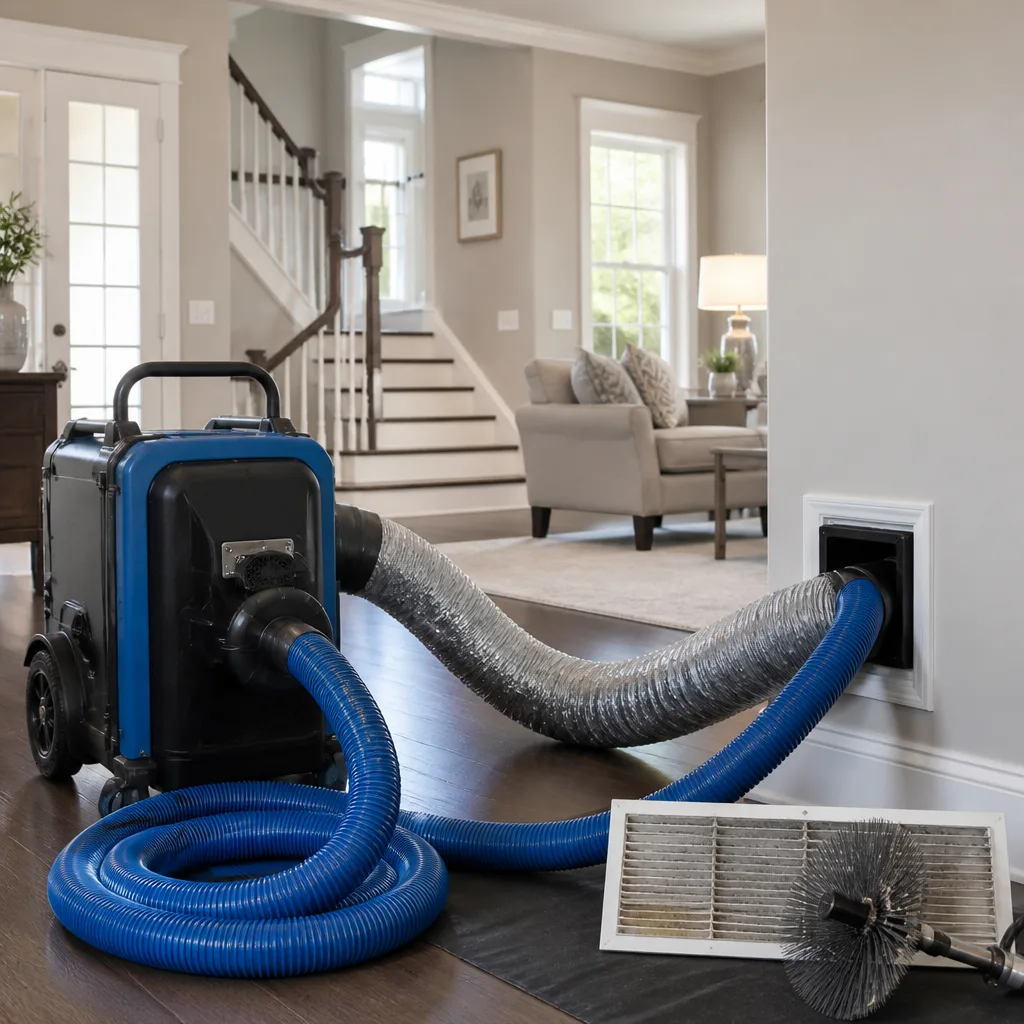 Whole-home duct cleaning
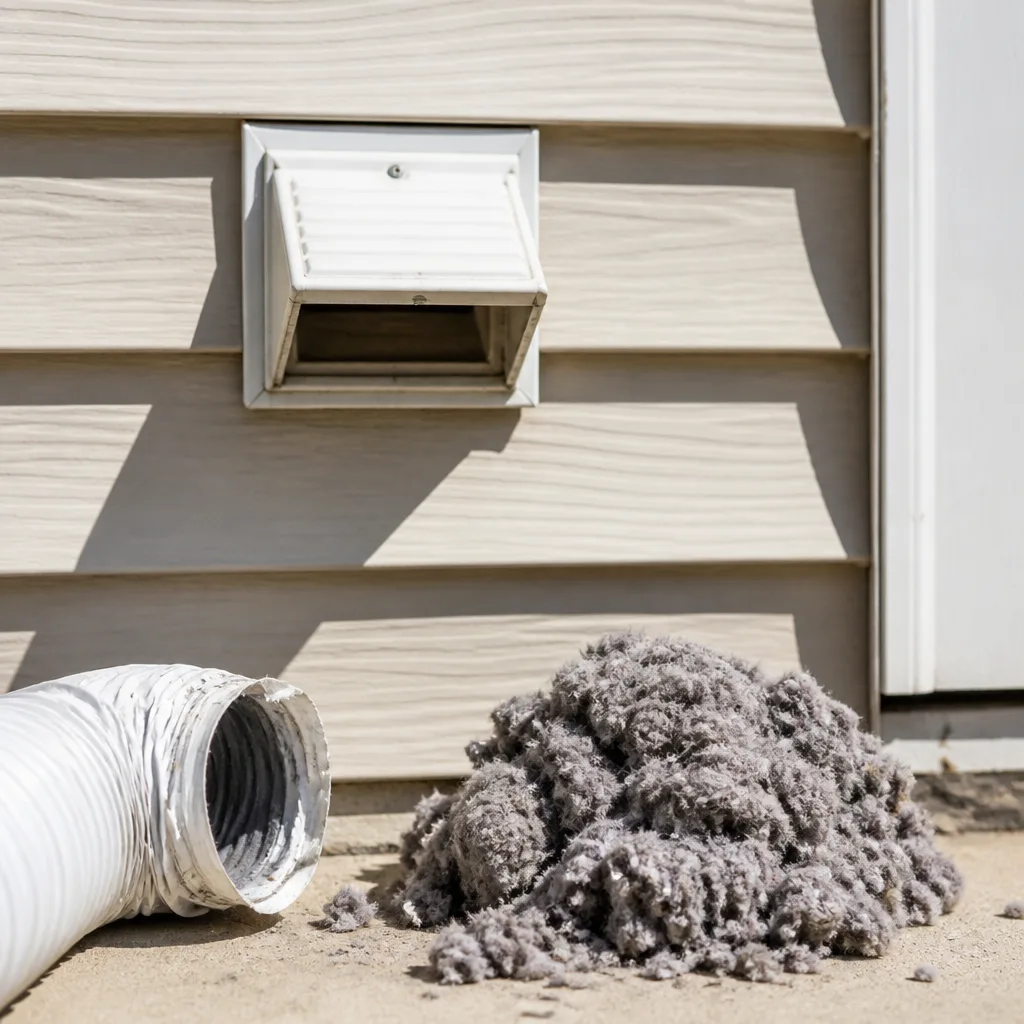 Dryer vent cleaning
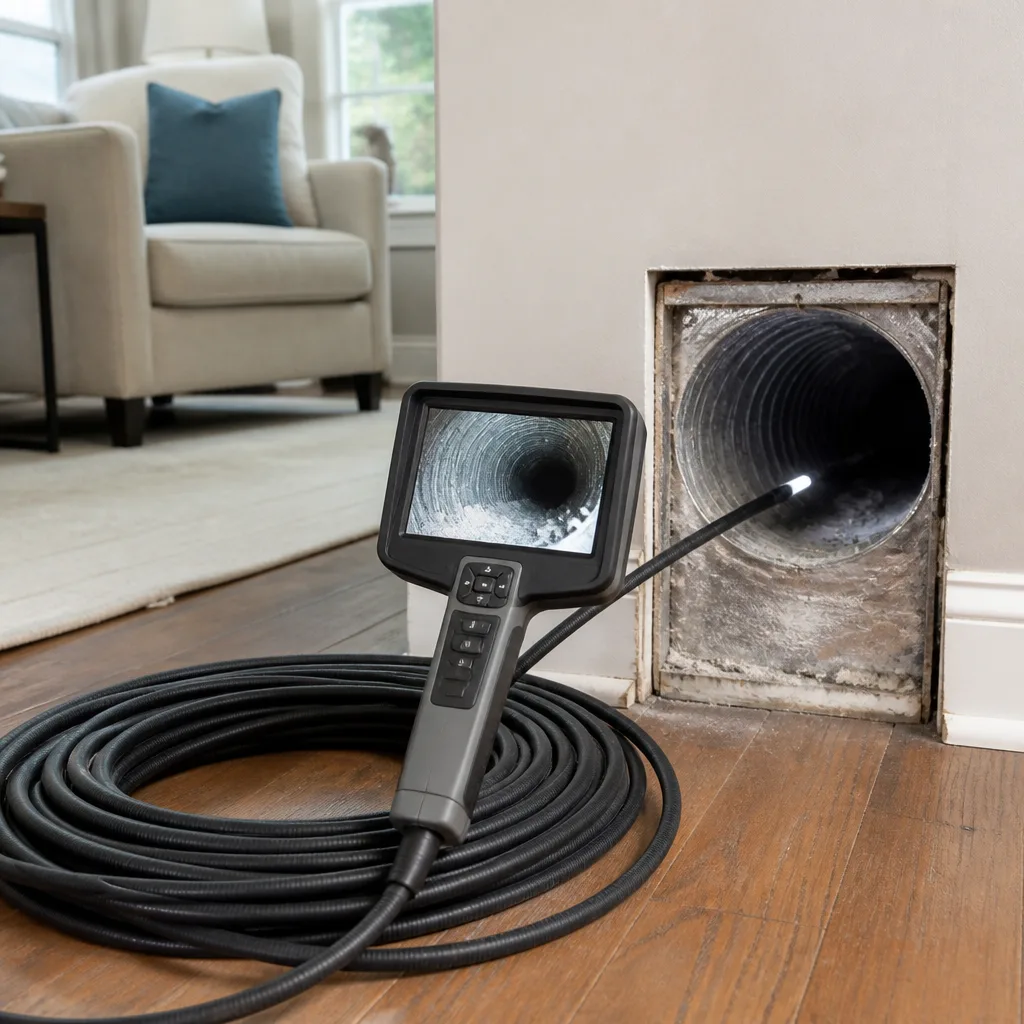 Camera inspection
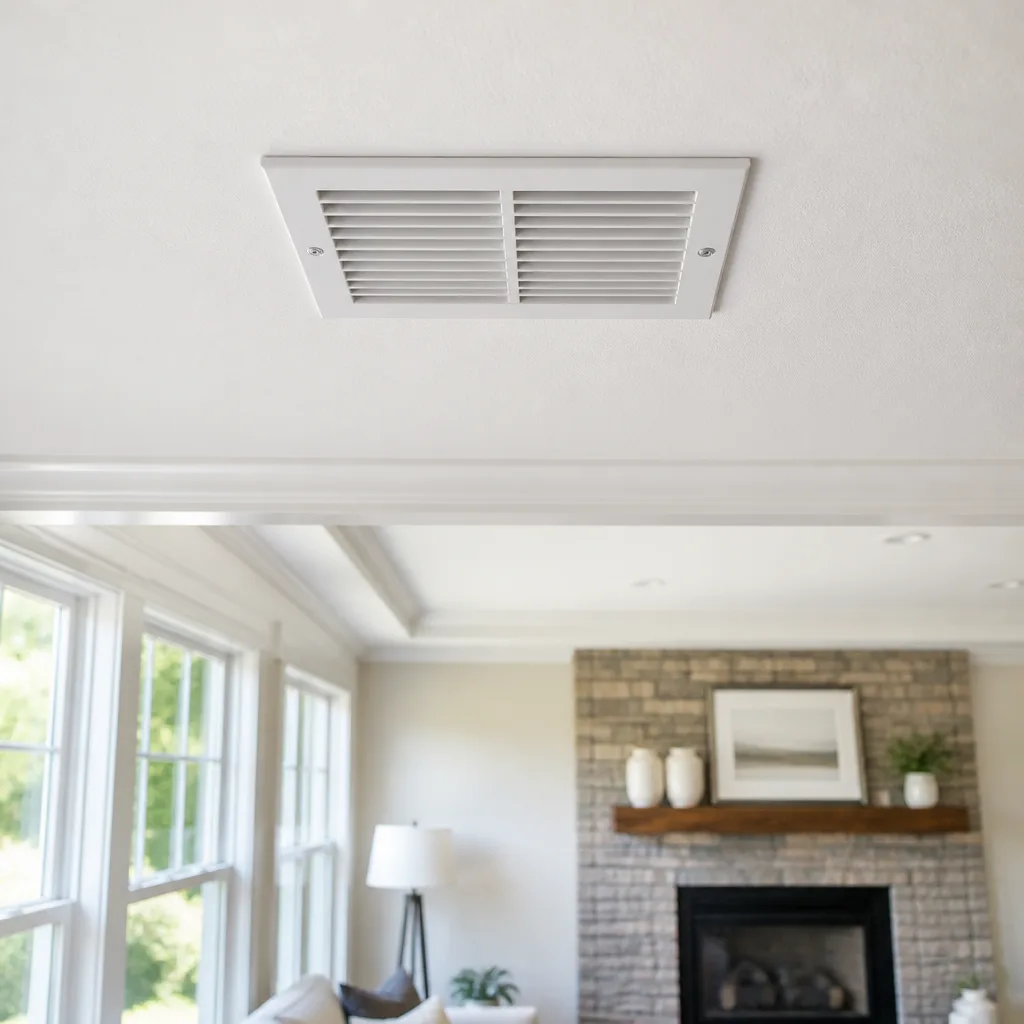 Sanitizing & deodorizing
Whole-system duct and dryer vent check with before-and-after photos - you see exactly what came out of your vents
That "$99 whole-house special" is a bait ad - the real number appears once they are in your hallway, or the "clean" is a shop-vac at the register. We photograph the inside of your ducts before and after instead.
How to Hire an Air Duct Cleaning Contractor in Murrieta: A Step-by-Step Guide
Most homeowners in Murrieta assume that any contractor with a California C-20 HVAC license knows how to clean air ducts properly. That assumption is the single biggest reason people overpay for an ineffective job. Here’s what almost no one tells you: the C-20 exam does not test duct cleaning competency. Not one question. A contractor can hold a warm-body license and have zero training, zero specialized equipment, and zero experience cleaning duct systems. This guide is built to close that gap. We’re going to walk through the exact equipment questions to ask, how to spot a bait-and-switch quote, what credentials actually matter, and how to read a contract so you hire the right contractor the first time.
Quick Answer
To hire a legitimate air duct cleaning contractor in Murrieta, skip the license check as your primary filter and instead verify three things: the contractor’s equipment (professional-grade vacuum systems pushing at least 2,000 CFM with HEPA filtration, not consumer shop vacs), their training credentials (NADCA membership with an Air System Cleaning Specialist on staff is the only meaningful third-party standard in this trade), and their quote structure (per-system or per-square-footage pricing, never per-vent pricing, which signals bait-and-switch). The estimate should be preceded by a real pre-job walkthrough of your actual duct system, and the scope of work should be written, specific, and tied to measurable results.
Styles & brands we work with
- Whole-home duct cleaning
- Dryer vent cleaning
- Camera inspection
- Sanitizing & deodorizing
Table of Contents
- Step 1: Understand Why the Murrieta Duct Cleaning Market Is So Hard to Navigate
- Step 2: Ask the Three Equipment Questions That Separate Specialists From Pretenders
- Step 3: Verify Training Credentials the Right Way
- Step 4: Read a Quote Structure Like a Professional
- Step 5: Demand a Pre-Job Walkthrough Before Any Numbers Are Discussed
- Step 6: Review a Written Scope of Work Before Signing Anything
- Step 7: Confirm What Happens on Service Day and How You’ll Know the Job Was Done
- Step 8: Consider the Whole Duct System, Not Just the Cleaning
Step 1: Understand Why the Murrieta Duct Cleaning Market Is So Hard to Navigate
The air duct cleaning market in Murrieta is not a level playing field. It is flooded with three types of operators, and only one of them is worth hiring.
The first are HVAC generalists. These are furnace and air conditioning companies that added duct cleaning to their menu because it is a simple upsell during a maintenance visit. Their technicians are trained on refrigerant lines and compressors, not on negative-air extraction or brush-drive systems. The equipment they bring is often the same portable vacuum they use for drain pans, adapted with a hose. Technically, they can clean a duct. Practically, they cannot get the depth of debris, biological film, and lint buildup that a focused extraction system removes. Duct cleaning for them is not a practice. It is a line item.
The second type is the coupon operation. These companies run aggressive local ads and direct mail with per-vent pricing that looks impossibly affordable: $39 for 10 vents, $59 for 12, and so on. The business model is built on the reality that once a tech is standing in your Murrieta living room, the upsell pressure begins. That low price covers a surface-level blow-and-go, not a real extraction. The heavier charges follow for “extra sanitizing,” “special access,” “mold treatment,” or “system enhancement.” The homeowner who called for a $99 whole-house job often writes a check for $700 by the time the tech leaves. This is not an exaggeration. It is the dominant pattern in the industry.
The third type is the dedicated duct-system specialist. These contractors clean ducts, repair ducts, and clean dryer vents. That is the entire practice. The equipment is purpose-built: Rotobrush and Nikro extraction systems that pull 2,000+ CFM at the collection unit, HEPA-filtered to trap the fine particulates that basic filters recirculate into the home. The technicians are trained on the airflow dynamics of duct systems, the materials they are cleaning, and the containment protocols that keep debris from spreading during the job. In Murrieta, where summer temperatures push AC systems to run for months at a stretch, this distinction matters. Dust, construction debris from the city’s continued residential growth, pet dander, and the fine particulate that settles in ductwork after peak fire season all accumulate faster than homeowners expect. A specialist approach is not a luxury. It is the only approach that achieves the actual result you are paying for.
The takeaway: the license check alone is not enough. The C-20 credential you verify on the Contractors State License Board website confirms the company can legally operate. It does not confirm the company knows how to clean a duct system. For that, you need the filters in the next steps.
Step 2: Ask the Three Equipment Questions That Separate Specialists From Pretenders
When you call a duct cleaning company in Murrieta, the first few questions you ask should not be about price. They should be about equipment. Here is why: the equipment is the job. A duct cleaning service is only as good as the extraction system doing the work. A consumer-grade shop vacuum attached to a hose cannot create the negative air pressure required to pull debris from the main trunk line and branch runs of a residential duct system. It makes noise. It moves air. It leaves most of the debris in place.
Ask these three questions before you book anything.
Question 1: What is the CFM rating of your vacuum system?
CFM stands for cubic feet per minute, the measurement of airflow volume through the collection system. A legitimate professional-grade duct cleaning system operates at 2,000 CFM or higher at the point of extraction. That is the airflow velocity needed to dislodge and capture compacted dust, pet hair, and construction debris from the interior surfaces of ducts. Systems running below that threshold, including most portable units and every consumer shop vacuum, simply stir the dust around. Ask the question directly. Listen for a number. If the contractor cannot answer, or describes their equipment as “powerful” without giving a rating, that is a disqualifying answer.
Question 2: What brush drive system do you use, and who makes it?
The brush drive is the mechanical agitation component. It loosens debris from the duct walls so the vacuum can extract it. Professional contractors use purpose-built rotary brush systems from recognized manufacturers. Rotobrush is the most widely used in the professional market, with pneumatically driven brush heads that aggressively contact the duct surface. Nikro is another established brand with strong penetration in commercial and restoration contexts. When a contractor names a brush-drive brand, that tells you they invested in professional tooling. When they describe a “spinning brush attachment” without a manufacturer, or worse, tell you they use compressed air alone, that is a red flag. Air-driven cleaning without mechanical agitation cannot remove the biofilm and caked debris that attaches to duct surfaces over time.
Question 3: Do you run a HEPA-filtered collection unit?
This is the separation between surface cleaning and actual indoor air quality protection. A HEPA-filtered collection unit captures 99.97% of particles at 0.3 microns, including mold spores, pollen, and the fine particulates that trigger allergy and asthma responses. Without HEPA filtration at the collection point, the vacuum system becomes a disperser: it pulls particulate from the ducts and blows the fine fraction back into the living space. In our experience, this is the most overlooked equipment question in Murrieta. Homeowners ask about brushes and vac power. They do not ask about filtration. The filtration is the health component of the job. If a contractor does not know what HEPA filtration means, or cannot confirm their unit includes it, take them off the list.
One further marker: professional contractors with serious contamination capability carry Abatement Technologies equipment. That brand is associated with air scrubbing and containment in restoration contexts. Its presence in a duct cleaning company signals capacity for elevated situations: mold colonization in ductwork, heavy allergen buildup, post-construction dust, remediation-adjacent work. It is not a requirement for every job. But it is a meaningful signal when you see it.
Step 3: Verify Training Credentials the Right Way
The license is the floor. The credential is the signal.
NADCA, the National Air Duct Cleaners Association, is the only third-party organization in this trade that maintains a meaningful certification program. Its Air System Cleaning Specialist (ASCS) credential requires training, an exam, and continuing education to keep current. Unlike the C-20 license, the ASCS credential is specifically about cleaning HVAC system components: ducts, coils, blowers, and collection systems. It covers the actual work, not the legal permission to operate.
Verifying a NADCA membership is a two-minute exercise. Go to NADCA’s public directory on their website, search for the company by name and city, and confirm the membership is active. Do not accept a logo on a truck or a badge on a website. Logos are easy to borrow. The directory is the only verification that counts.
When a company carries an ASCS credential, that tells you something about how the business thinks about the trade. It signals investment in technical training, adherence to NADCA’s published standards for source removal, and a baseline of professional accountability. When a company does not, that is not automatically disqualifying. Some solid contractors operate without NADCA membership. But absent the credential, the burden of proof shifts entirely to the equipment questions and the walkthrough. You need to work harder to validate competency.
In Murrieta specifically, NADCA membership is less common than homeowners assume. The local market includes plenty of HVAC generalists and carpet cleaners who list duct cleaning as a side service. None of them carry ASCS credentials. The filter works. Run it.
Step 4: Read a Quote Structure Like a Professional
How a company structures its quote tells you more about its business model than any marketing language ever will. There are three structures you will encounter in Murrieta. Two are warning signs. One is legitimate.
The Red Flag: Per-Vent Pricing
This is the signature of the bait-and-switch operator. The quote reads “$39 for up to 10 vents” or “$69 for each additional vent.” On its face, it seems transparent. In practice, per-vent pricing creates a pressure environment. Once the technician is in your home, every vent, return, and access point becomes a negotiation. The count was wrong. The main trunk line requires special access. The system needs sanitizing. The original price was a hook, and the hook is set. Legitimate professional duct cleaners do not quote per vent. They quote per system, because the job is a system: the supply side, the return side, the trunk line, the plenum, the coil. Negotiating per vent is like an auto mechanic pricing an engine rebuild per spark plug.
The Yellow Flag: Flat-Rate Without a Walkthrough
Some companies quote a flat rate over the phone without ever seeing the home. “$450 for the whole system.” This seems straightforward. The problem is that the price was invented without knowing anything about the system: how many supply runs, how many returns, the age of the ductwork, the type of material, the access points, the contamination level. A legitimate quote requires this information. A flat rate without a walkthrough is either a placeholder that will change on service day, or a company that does not actually care about the condition of your system. Both are problems.
The Legitimate Structure: Per-System or Per-Square-Footage After a Walkthrough
Professional duct cleaning companies in Murrieta quote per system, not per vent, and they quote only after a physical walkthrough or a detailed virtual assessment. The price reflects the size and condition of the actual system in the actual home. A typical single-family residence in Murrieta with two supply runs per bedroom, returns in the hall and main living areas, and a single HVAC unit will fall within a predictable range. The quote includes the collection and extraction, the agitation pass, the vent re-securing, and often a post-cleaning inspection. No per-vent games. No surprise access fees. One system, one price, written and agreed before the work starts.
Ask the pricing question directly: “Do you quote per vent or per system?” The answer tells you which type of company you are speaking with.
Step 5: Demand a Pre-Job Walkthrough Before Any Numbers Are Discussed
A pre-job walkthrough is the single most predictive step in the hiring process. A specialist conducts one. A generalist or coupon operator does not.
During a legitimate pre-job walkthrough, the estimator should ask to see the system. Not in passing. Specifically:
- Access points: Where is the furnace or air handler located? Where are the supply registers and return grilles? Are there any access panels in the ductwork already, or will openings need to be created and re-sealed?
- Duct material: Are the ducts flex duct, sheet metal, or a mix? Flex duct in newer Murrieta construction tears more easily and requires different brush pressure and tooling than rigid sheet metal in older homes.
- System age and condition: When was the HVAC system installed? Are there visible leaks, sagging sections, or disconnected joints at the registers?
- Last cleaning date: Has the system been cleaned before? If so, by whom, and was any documentation provided? Ducts that have never been cleaned in a 20-year-old home present a different job than ducts cleaned two years ago.
- Contamination indicators: Visible dust accumulation at the registers, musty odor from the supply vents, pet hair clumping at the returns, or evidence of previous pest activity inside the duct runs.
- Filter situation: What type of filter is currently in place? Does the homeowner use high-MERV filtration or a basic fiberglass filter? This affects how much debris has passed through or been trapped at the point of entry.
A specialist asks these questions because the answers determine the approach, the tooling, and the time. A contractor who quotes without ever asking about the system is not planning a real job. They are planning to arrive, run a hose through some vents, and leave. The walkthrough is also the moment to spot whether the company is a specialist at all. Listen for questions about the duct system. If none come, the contractor is not planning to clean the duct system. They are planning to clean the visible parts of a few vents.
This step is where our recommendation changes from process to practice. For homeowners in Murrieta who want a thorough assessment, the walkthrough is the point at which the estimate becomes reliable. Everything else until that point is marketing.
Step 6: Review a Written Scope of Work Before Signing Anything
After the walkthrough, the contractor should provide a written scope of work. This is a legal document, but it is also a diagnostic tool. What it includes, or conspicuously omits, reveals how the company protects itself, and what it intends to deliver.
A legitimate written scope of work for a residential duct cleaning job includes, at minimum, these items:
- System boundaries: A clear statement of what is included. The supply run, the return run, the main trunk lines, the plenum, and the blower assembly. Any component excluded should be explicitly listed, not left to assumption.
- Access method: How the contractor will access the interior of the duct system. Will they cut access holes and re-seal them? Will they work through existing registers and grilles? The method should be stated and any patching should be included in the price.
- Equipment and process: A description of the method: rotary brush agitation with negative-air extraction, HEPA-filtered collection, and any sanitizing or deodorizing agents if requested. The process should be specific enough that a second contractor could read it and understand what was done.
- Containment protocol: How the contractor will prevent debris from leaving the ductwork and entering the living space. This includes floor protection at access points, sealing of unused registers during extraction, and the use of Guardsman-level protection standards on filtration and surface protection.
- Duration and crew: A realistic time estimate for the job. A full residential system with 10-15 supply runs and multiple returns takes 2-4 hours with a two-person crew. If the scope says 45 minutes, the contractor is not performing a real source removal.
- Payment terms: The total price, the payment schedule, and any conditions that modify the price. The total should match the quote from the walkthrough. No fine print reserves the right to add charges for “unforeseen access issues” or “deeper than expected contamination.” Those are exactly the clauses bait-and-switch operators use.
The language in the contract tells you who the company is protecting. Legitimate contractors include specifics because they intend to be held to them. Bait-and-switch operators write vague contracts because vagueness is their escape hatch. If a term is not in the scope, it does not exist. Get it written down.
Step 7: Confirm What Happens on Service Day and How You’ll Know the Job Was Done
The hiring process does not end when the contract is signed. The final step before service day is confirming two things: what the crew will do when they arrive, and how you will verify the work afterward.
On service day, a professional crew arrives with the equipment stated in the scope. That means the extraction unit, the brush system, the HEPA collection unit, and the containment materials. Before any work begins, the crew should protect the access path: drop cloths or floor protection from the entry point to the HVAC system. Unused registers should be sealed during extraction to direct the negative air pressure through the duct system, not through the living room. The access method described in the scope should match the work being done. If the scope says access holes and the crew never cuts one, they are not reaching the entire system.
After the work, verification should be visible. A professional contractor provides before-and-after photos of the interior of the duct system, not just the register openings. You should see the condition of the main trunk line before extraction and after. The difference is usually dramatic: dark, dusty surfaces versus bare metal or clean flex duct. If the contractor cannot provide interior photos, ask why. The technology exists. There is no legitimate reason to withhold them.
For homeowners with premium IAQ systems, this verification matters doubly. If you run a Honeywell or Aprilaire whole-home filtration system, the duct cleanliness directly affects how well that equipment performs. A high-MERV filter or air purifier on the supply side can only protect air quality if the ducts delivering the air are not recontaminating it. The post-cleaning photos and air-quality context matter. This is also the moment to ask about air duct repair, if the walkthrough identified leaks, sagging flex runs, or disconnected joints. A true specialist can handle the repair on the same visit. A generalist hands off the problem.
Step 8: Consider the Whole Duct System, Not Just the Cleaning
One of the biggest mistakes homeowners in Murrieta make is treating duct cleaning as a standalone event disconnected from the rest of the system. The ductwork in a home is a connected pathway. It moves air from the return grilles, through the return runs, into the air handler, past the coil and blower, and back out through the supply plenum and branch runs. A cleaning that ignores any part of that pathway is a partial job. A cleaning that reveals damage the company cannot fix leaves you with unresolved issues and another contractor to hire.
A specialist considers three interconnected services as part of the same system.
our Air Duct Cleaning services is the core service. It removes accumulated debris, improves airflow, and reduces the particulate load that circulates through the home. In Murrieta, where HVAC systems run hard during long, hot summers, the debris load builds faster than in milder climates. Dust from Indian summer conditions, fine particulates, pet hair, and the everyday shed of a modern household all collect in the duct runs.
Dryer vent cleaning is the fire-safety service. The NFPA documents thousands of residential fires each year caused by dryer vent failure, and lint accumulation is the primary culprit. It is not an optional add-on. It is a core service with a life-safety justification. Many duct cleaning companies skip it or outsource it. A specialist performs it as part of the practice, with the same extraction equipment.
Air duct repair is the resolution service. Duct systems in older Murrieta homes may have separated joints, crushed flex sections, or improperly sealed connections. Cleaning a system with existing damage is like mopping a floor with a leaking roof. The specialist’s ability to diagnose, clean, and fix the system in one engagement is a differentiator that matters in practice. It means the job is completed, not handed off.
When you hire, evaluate the contractor’s capacity across the full duct system, not just the cleaning menu line. The specialist who handles all three is positioned to deliver a coherent result. The generalist who cleans and then shrugs at the damaged return run you paid them to reveal is creating a second hiring process you never planned for.
Common Mistakes to Avoid
- Checking the license and stopping there. The C-20 license confirms legal operation, not duct cleaning competency. Most Murrieta homeowners who hire a bad contractor verified the license first. It gave them false confidence.
- Falling for per-vent pricing. Per-vent quotes are the structural foundation of bait-and-switch operations. The price is designed to get a tech in the door, not to clean a system. Insist on per-system pricing.
- Skipping the NADCA directory check. A logo on a website proves nothing. The NADCA public directory takes two minutes to search. If the company is not there, demand stronger equipment and process evidence before booking.
- Accepting a phone quote without a walkthrough. No legitimate contractor can accurately price a system they have not seen. Phone quotes are placeholders that change on service day. Refuse to book without a real assessment.
- Not asking about HEPA filtration at the collection unit. Without HEPA filtration, fine particulates extracted from the ducts are re-released into the living space. This is the health component of the job. Ask directly.
- Not requesting before-and-after photos of the duct interior. Register-level photos prove nothing. The work happens inside the duct runs. Any professional can provide interior photos before and after extraction. If they cannot, the job was not done thoroughly.
- Treating dryer vent cleaning as optional. Lint accumulation is a documented fire risk. A duct cleaning company that does not include dryer vent services is not a specialist. The service is part of the same air pathway.
See the difference
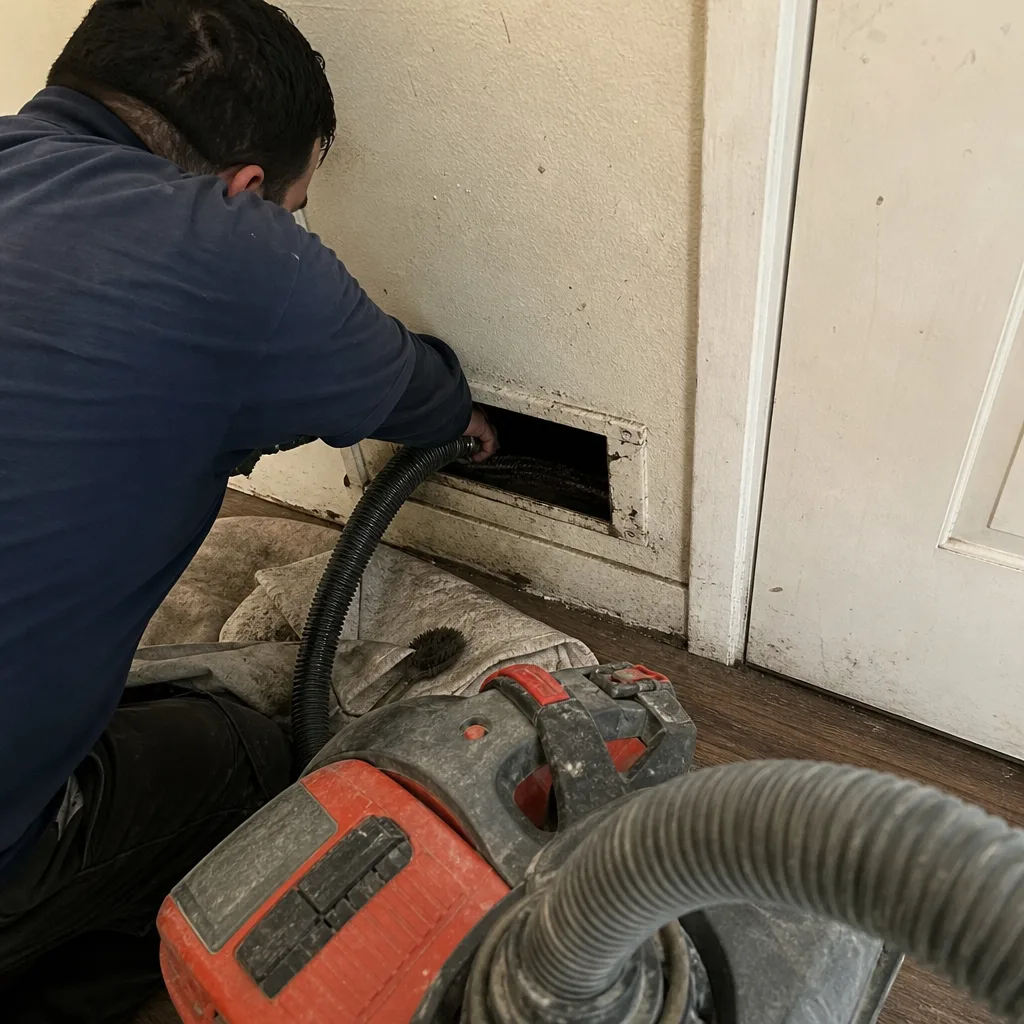 Before
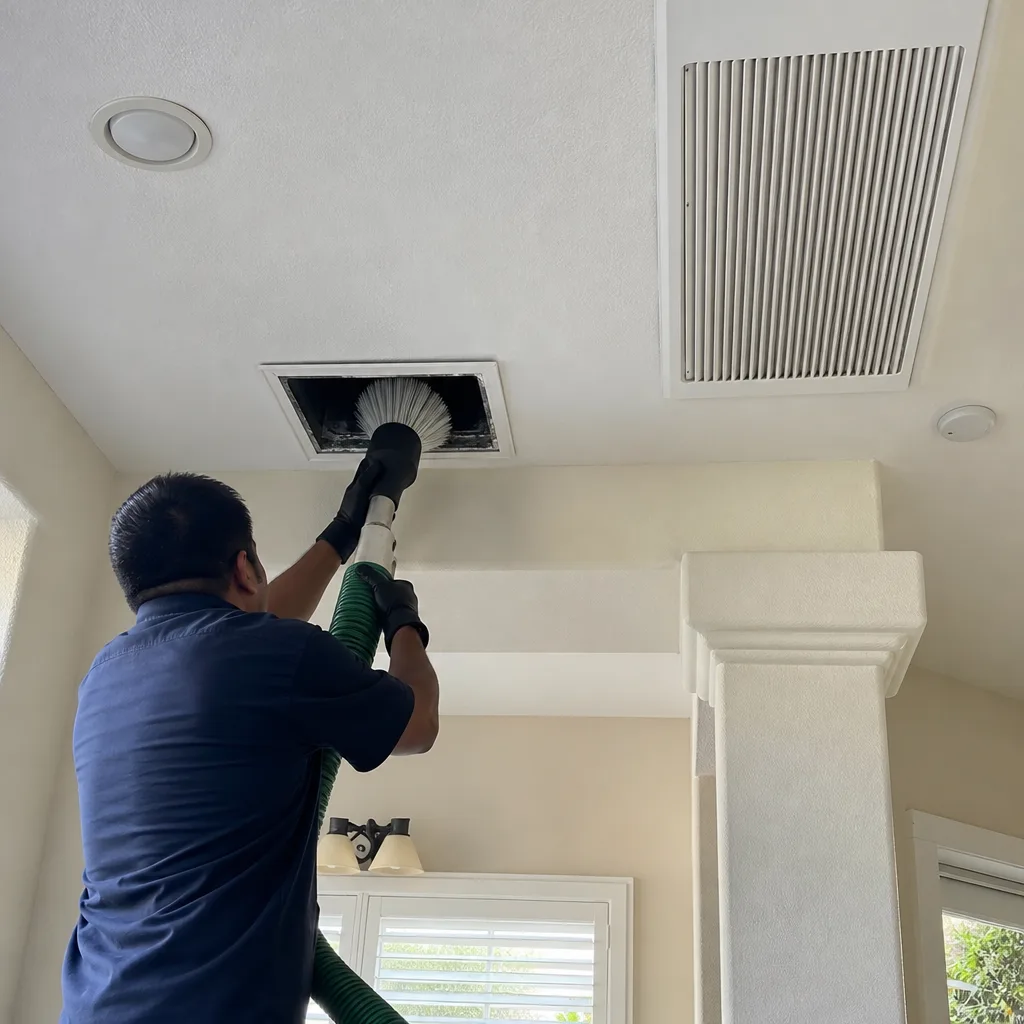 After
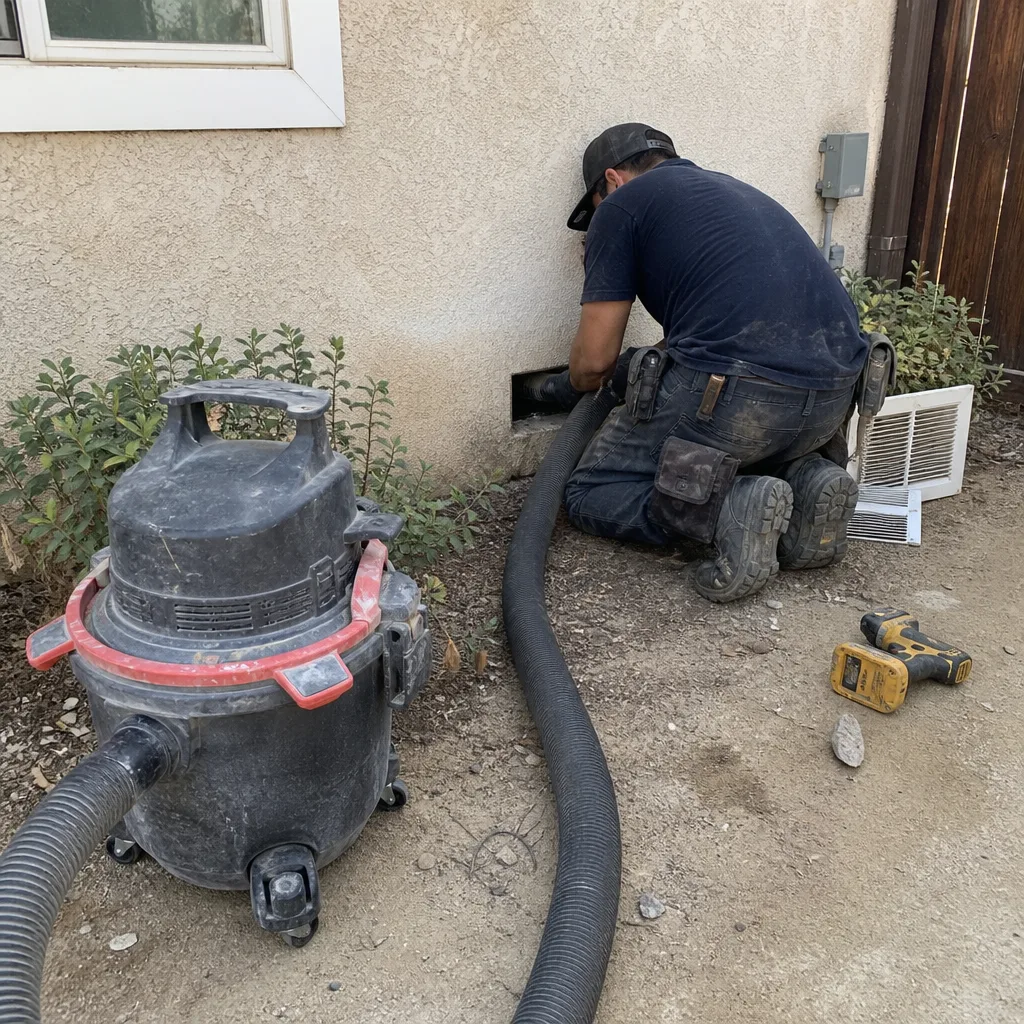 Before
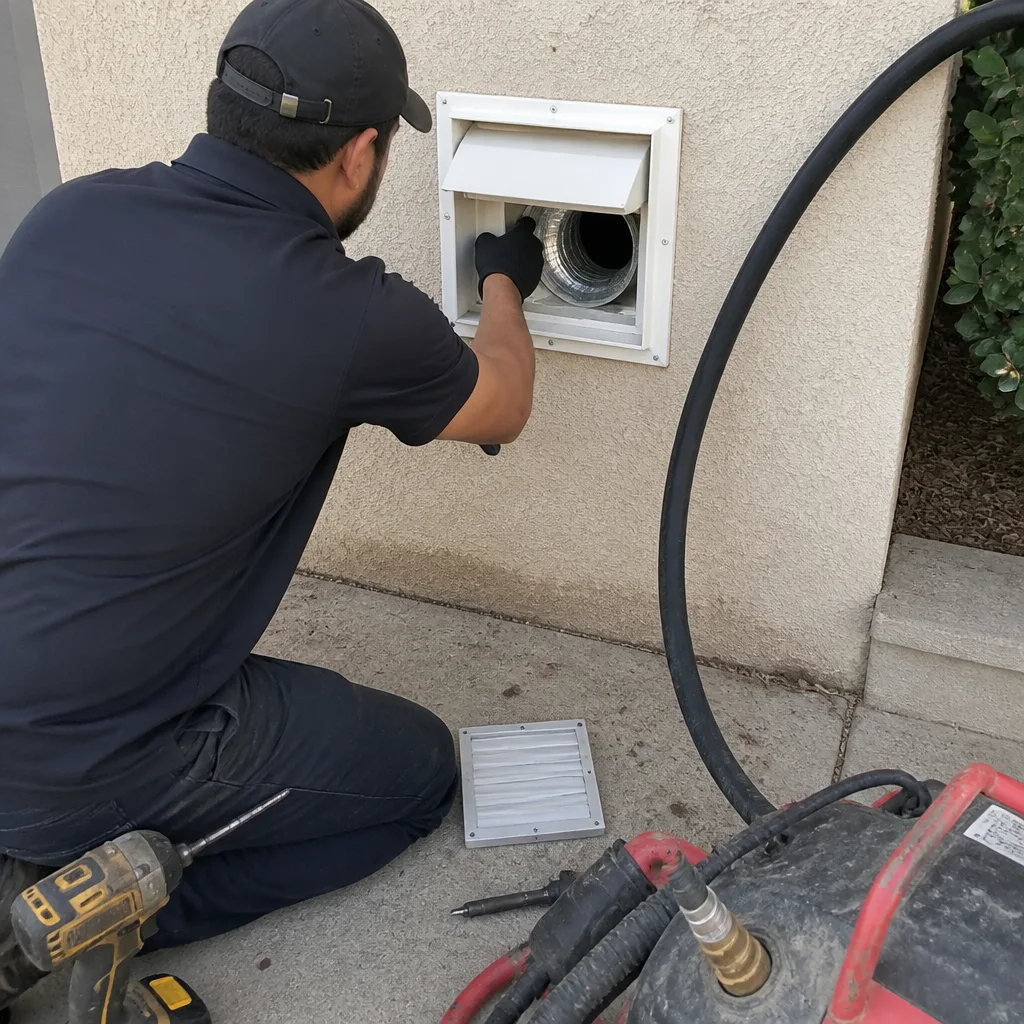 After
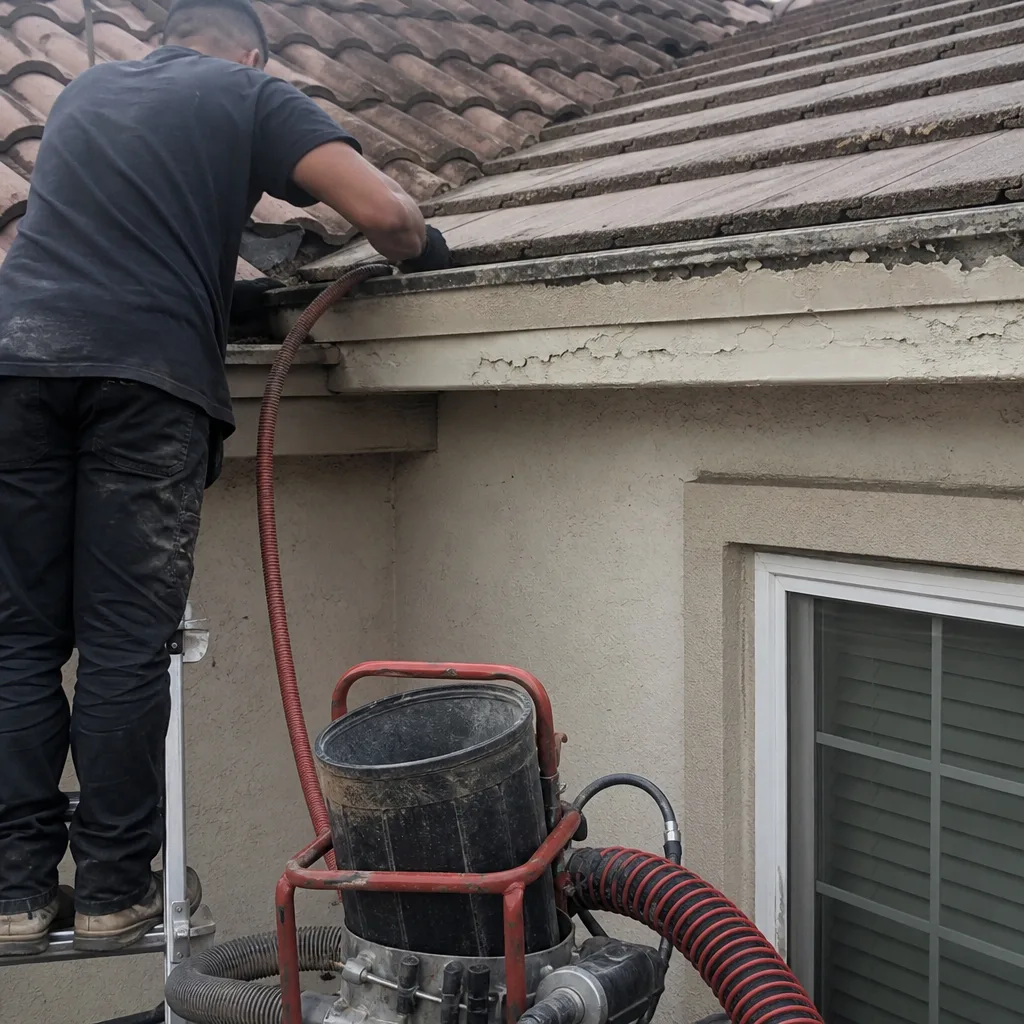 Before
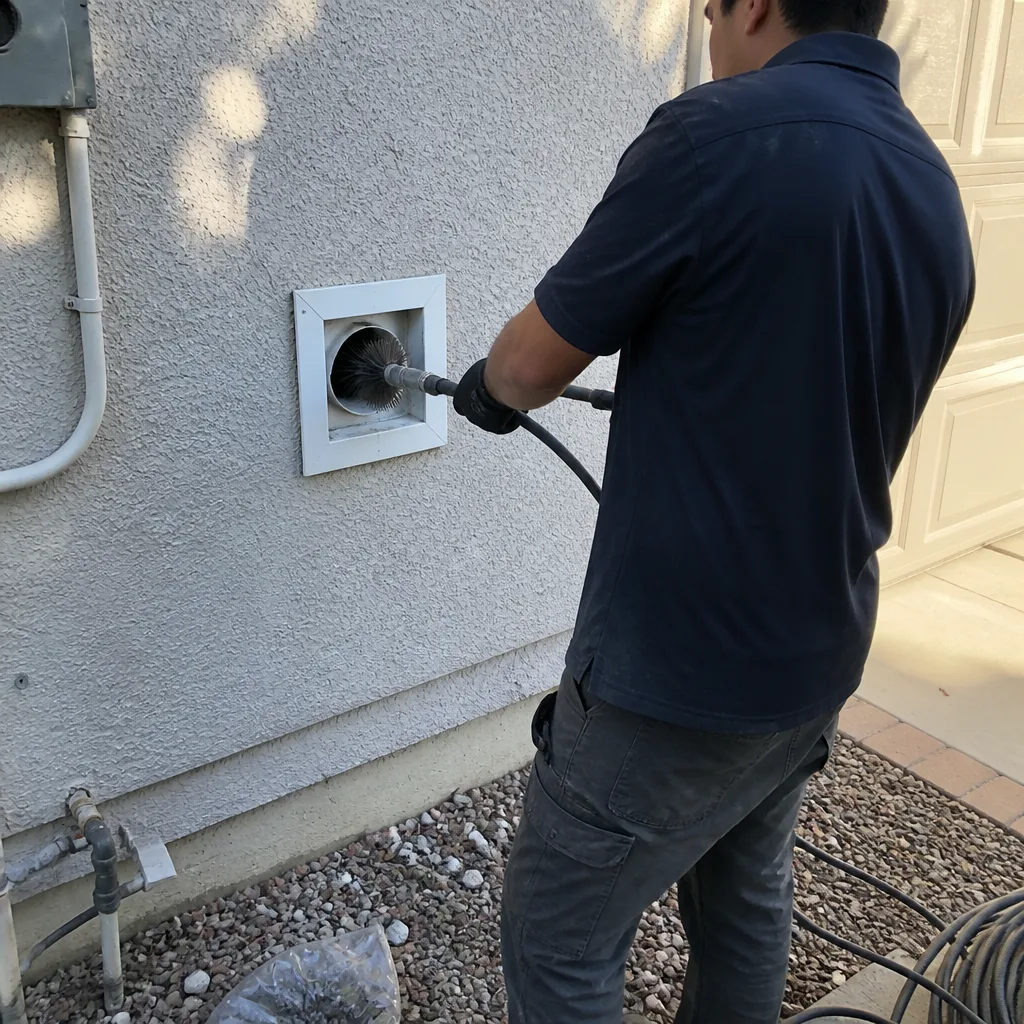 After
When to Call a Professional
Call a professional duct cleaning contractor when you see visible dust buildup at supply registers, when a musty odor follows airflow from the vents, when family members experience allergy or asthma symptoms that worsen indoors, when you have recently completed a renovation in the Murrieta area (drywall dust and construction debris settle in duct runs and circulate for months afterward), when your dryer takes longer than 40-45 minutes to dry a normal load, or when the HVAC system has not been cleaned in over five years. These are clear signals that the air pathway needs professional attention. For more guides & resources, visit our more guides & resources page. Duct Cleaning Murrieta offers free estimates in Murrieta, with a pre-job walkthrough at no charge. Call (855) 341-7672 to schedule one.
Frequently Asked Questions
Professional air duct cleaning in Murrieta typically ranges from $400 to $800 for a complete single-system residential job, depending on the number of supply runs, returns, the system’s age and contamination level, and whether the home is single or multi-story. For a detailed breakdown, see our Air Duct Cleaning Cost Breakdown: The Murrieta Homeowner’s Reference for 2026. Prices below $300 for a whole system are almost always bait-and-switch hooks. The quote should be per-system, not per-vent. Call (855) 341-7672 for a free estimate based on your actual system.
Cheap quotes are cheap because the company is not performing a real source removal. They are running a surface-level blow-and-go with underpowered equipment, no mechanical agitation, and no HEPA filtration, then recovering their margin through upsell pressure once the tech is in the home. The low price is the lead-generation cost. The final invoice is the real price. Legitimate companies quote a real price upfront, because the work is real.
Ask for before-and-after photos of the interior of the main trunk line and a sample of branch runs. A professional extraction leaves visibly different surfaces, and the photos will show it. If a contractor cannot provide interior photos, that is a sign the work did not reach the system interior. The photos are the verification, not a verbal report.
Every three to five years is the standard interval for homes without unusual conditions. Homes with pets, allergy-sensitive occupants, recent renovation work, or that go through repeated wildfire smoke seasons in the Temecula Valley corridor may benefit from more frequent cleaning. Have the system assessed before committing to an interval. The condition of the ductwork is the only real basis for the timing.
The specialist’s entire practice is built around the duct system: cleaning, repairing, and protecting the air pathways. The generalist’s practice is built around HVAC equipment, and duct cleaning is one line item among many. The equipment, the training focus, and the depth of service are different. When the duct system reveals damage, the specialist can fix it. The generalist hands off the problem.
Visit NADCA’s public directory and search for the company by name and city. Membership should be active, and the directory listing will confirm whether the company employs an Air System Cleaning Specialist. Do not rely on badges or logos. The directory is the verification.
The Bottom Line
Hiring a duct cleaning contractor in Murrieta is not about finding the lowest price or the first name in a search result. It is about filtering the market deliberately. Skip the license-only check. Ask the equipment questions: CFM rating, brush drive system brand, HEPA filtration at the collection unit. Verify NADCA membership on the public directory. Refuse per-vent quotes. Demand a pre-job walkthrough. Get a written scope of work with specific access methods, containment protocols, and a total price that matches the walkthrough quote. Confirm verification on the back end with interior before-and-after photos. Do those things in sequence, and the decision makes itself. The right contractor is the one who answers the questions clearly, writes the scope specifically, and treats the duct system as a system, not a series of vents to be vacuumed. For a full Duct Cleaning Murrieta home, read our detailed Air Duct Cleaning in Murrieta page, and for the fire-safety side of the trade, see Dryer Vent Cleaning in Murrieta. If your system has known damage, review Air Duct Repair in Murrieta before booking a cleaning.
Written by the team at Duct Cleaning Murrieta, serving Murrieta since 2015.